
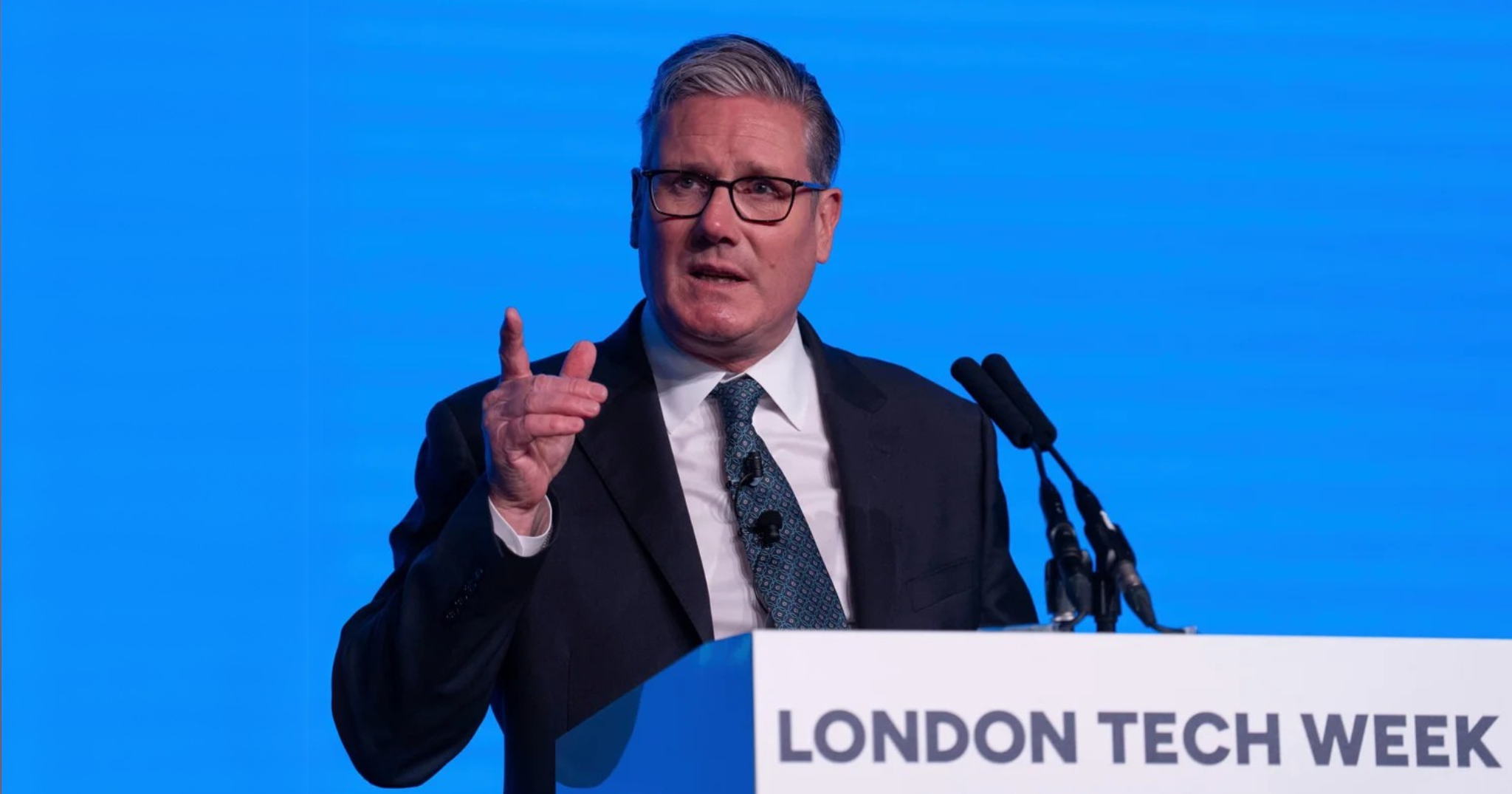
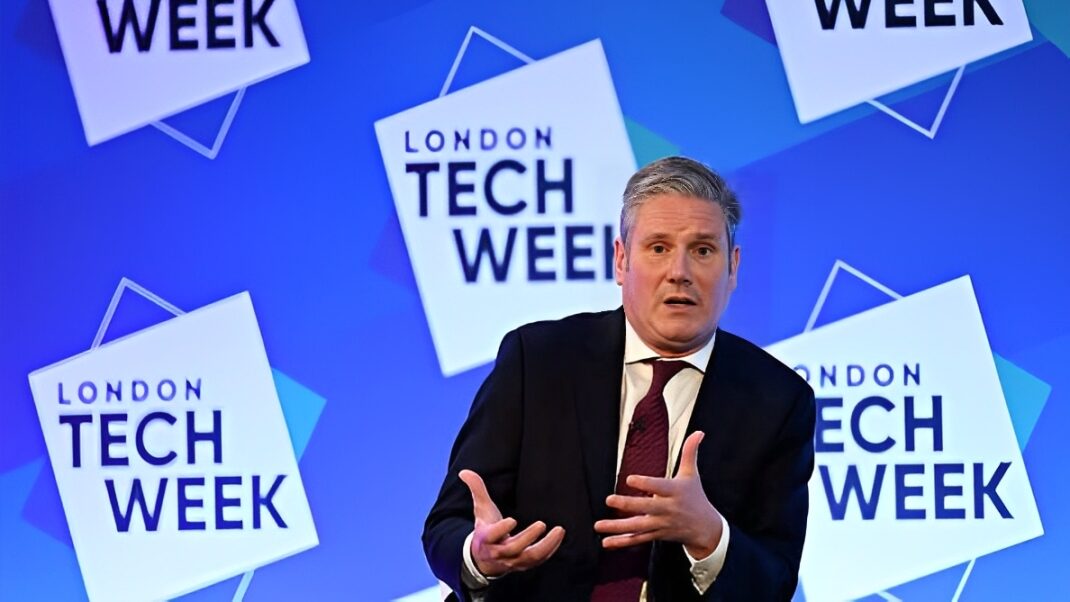
At London Tech Week 2025, UK Prime Minister Keir Starmer stepped onto the stage not simply to open a conference, but to define a new national mission. Framed against a backdrop of rapid AI acceleration and growing public uncertainty, Starmer laid out a vision that was confident, strategic and human-centred. “AI and technology will not make us less human,” he said in a moment that reverberated across the UK’s political and tech communities. “They will make us more human.” It was a line of reassurance, yes—but also a call to arms: to engage with this moment, not retreat from it.
His vision is built on five powerful foundations—compute, skills, services, ethics and energy—woven together into what he calls a plan for “responsible AI made in Britain.” Far from hype or hand-wringing, Starmer’s approach is rooted in real infrastructure, industrial strategy, and a sweeping social mandate. From cloud chips to classroom coding, the UK is retooling itself to lead—not trail—in the next technological revolution.
The Infrastructure of Sovereignty
Starmer’s first declaration was unmistakable: “We will be an AI maker, not an AI taker.” These words signalled a historic pivot. Rather than relying on foreign platforms and outsourced innovation, the UK will actively develop and control its own compute capabilities. This national shift began with the launch of the Sovereign AI Industry Forum, developed in partnership with NVIDIA and joined by British heavyweights such as BT, BAE Systems, and Standard Chartered. The Forum aims to align government priorities with private sector capabilities and academic research to drive sovereign AI adoption.
As part of this bold repositioning, the UK government has committed £1 billion to scaling up domestic compute power by 2030. NVIDIA is leading on the hardware front, deploying tens of thousands of GPUs to UK-based data centres and launching a dedicated UK AI Lab. Starmer framed this not as a race against China or Silicon Valley, but as an industrial strategy for British resilience. “We must seize this moment to build a future where Britain leads the world in the safe and responsible development of AI,” he told the audience, setting a tone that blended economic intent with moral clarity.
A Digital Nation Built on People
Yet, as Starmer made clear, no amount of GPUs can build a future without people to shape it. “Everyone must have a stake in this future,” he said, pivoting toward one of the most ambitious skills programmes in a generation. Enter TechFirst—a £187 million national initiative aimed at training 1 million school-age students and upskilling 7.5 million adults by the end of the decade. This isn’t just classroom coding—it’s a comprehensive pipeline connecting education, industry and opportunity across all regions of the UK.
Backing this effort are corporate giants including Microsoft, Google and NVIDIA, each of whom have committed resources and platforms to support digital literacy and AI fluency. But Starmer wasn’t content to let the market decide: he personally urged NVIDIA CEO Jensen Huang to invest directly in British AI talent. “It’s not just about computers and algorithms,” Starmer said during his keynote. “It’s about people. It’s about jobs, communities, opportunities.” That emphasis—on inclusive growth and digital justice—marks the TechFirst programme as not just economic policy, but social reform.
A Government That Runs on Intelligence
Starmer’s third pillar brings AI directly into the machinery of the state. “Our public services are still running on 20th-century systems,” he admitted, outlining plans to overhaul bureaucracy and increase efficiency with smart automation. The flagship innovation in this area is Extract, a tool co-developed with Google’s Gemini that uses AI to streamline planning approvals, cut down wait times, and unlock development projects. For a nation grappling with housing delays and infrastructure bottlenecks, this is a meaningful and measurable intervention.
But the ambitions go further. Starmer has pledged to embed AI across Whitehall, potentially saving £45 billion through the automation of administrative and clerical processes. Importantly, he reframed the use of AI in government not as a threat to jobs, but a liberation from repetitive, low-value tasks. Public servants, under this plan, will focus more on strategic roles and citizen engagement. “We will bring [our services] into the 21st century using AI that works for people, not against them,” Starmer promised—signalling a new model of digital governance defined by both efficiency and empathy.
Guardrails, Not Guesswork
While the UK pushes forward on infrastructure and services, Starmer’s strategy is anchored in regulatory foresight. “We will not allow the technology of tomorrow to be governed by the rules of yesterday,” he said, addressing concerns around algorithmic bias, data protection, intellectual property and democratic oversight. The government is now working on a comprehensive AI bill—a legal framework designed to embed rights, responsibilities and protections into every layer of the AI ecosystem.
Rather than rush legislation for the sake of headlines, Starmer has opted for consultation and calibration. Portions of the earlier Data Protection and Digital Information Bill have been paused to allow more time for stakeholders—including technologists, ethicists, and civil society groups—to contribute. “We must act now to protect rights, promote innovation, and ensure AI is deployed in the public interest,” Starmer explained. This measured pace is both a message and a model: trust isn’t assumed—it’s built, transparently, through governance.
The Power Beneath the Platform
The AI revolution is data-intensive—but also energy-hungry. That’s why, in parallel with his AI announcements, Starmer unveiled a £18 billion investment in nuclear energy, including the development of Sizewell C and multiple small modular reactors. These facilities are designed not only for climate goals, but to power the massive growth in data centres and compute clusters that AI demands. “Clean, secure energy is not just an environmental goal,” Starmer said. “It is an economic necessity for our AI future.”
This dual-purpose strategy—decarbonising the grid while fuelling digital growth—positions the UK as a leader in sustainable AI. It also sends a message to investors: Britain is building the backbone for industrial-scale innovation. Nuclear power isn’t just about energy independence; it’s now also about data sovereignty. Starmer’s message was clear—there will be no AI leadership without energy leadership, and no green future without digital alignment.
The Ethics of Leadership
In closing, Starmer made his pitch not to tech elites, but to the public. “Britain will be the home of responsible AI,” he declared. This wasn’t a branding line—it was a principle. In a world caught between techno-utopianism and automation anxiety, Starmer offered a third way: bold ambition guided by ethics, growth underpinned by governance, and a digital economy shaped by democratic consent.
This is not about catching up. It is about catching a wave early—and building it with intention. For Starmer, AI is neither a silver bullet nor a looming threat. It is a tool—powerful, complex, and transformative—that must be owned, shaped and distributed for the many, not the few.

Recommend for you: