


Agriculture in South Asia and Africa has long been caught in a paradox: farmers are both victims of climate change and, unintentionally, contributors to it. Conventional tilling, fertilizer overuse, and monoculture practices have depleted soils and released vast amounts of carbon into the atmosphere. While global conversations rage about net-zero and emissions caps, millions of smallholder farmers still struggle to keep food on the table.
Into this broken system walks Madhur Jain, CEO and co-founder of Varaha, a climate-tech startup that’s quietly flipping the agricultural model on its head. His mission? Pay smallholder farmers to not extract from the earth, but to restore it.
“We’re not just compensating farmers for planting trees. We’re compensating them for planting hope. Real, rooted, measurable hope,” Madhur says.
At its core, Varaha is a platform that links regenerative agriculture practices with voluntary carbon markets, enabling farmers to earn carbon credits simply by nurturing their soil, not exhausting it:
“When a farmer is rewarded for protecting the land, it’s not just an income shift — it’s a systemic transformation. From South Asia to Africa, true climate action should not be built on the sacrifice of smallholder farmers, but should begin by addressing the realities of their daily lives.”
From Data Architect to Soil Activist
Madhur Jain’s journey to climate leadership wasn’t linear. With a background in economics and data science, he spent years working at the intersection of finance and tech. But it was a persistent question, “What if soil could be a solution?” that changed his course.
He co-founded Varaha in 2022, named after the Sanskrit word for the boar, a mythical guardian of the Earth. The company was built around a bold idea: that farmers in South Asia and Africa, often overlooked and underserved, could become frontline defenders of the climate.
The process is elegant and powerful. Varaha equips farmers with low-barrier regenerative practices like no-till farming, cover cropping, and organic soil enrichment. These techniques reduce carbon emissions and increase soil carbon storage. Using satellite imaging, AI models, and on-ground monitoring, Varaha verifies the impact and issues certified carbon credits, which are sold to global buyers and translated into income for the farmers.
“Most climate tech talks about emissions,” says Madhur. “We talk about income. Because if you want to change farming, you must change the farmer’s bottom line.”
The result is a new kind of agriculture, where each composted seed, mulched leaf, or reduced plough stroke is an act of carbon justice.
Where the Earth is Rich, So Are Its Stewards
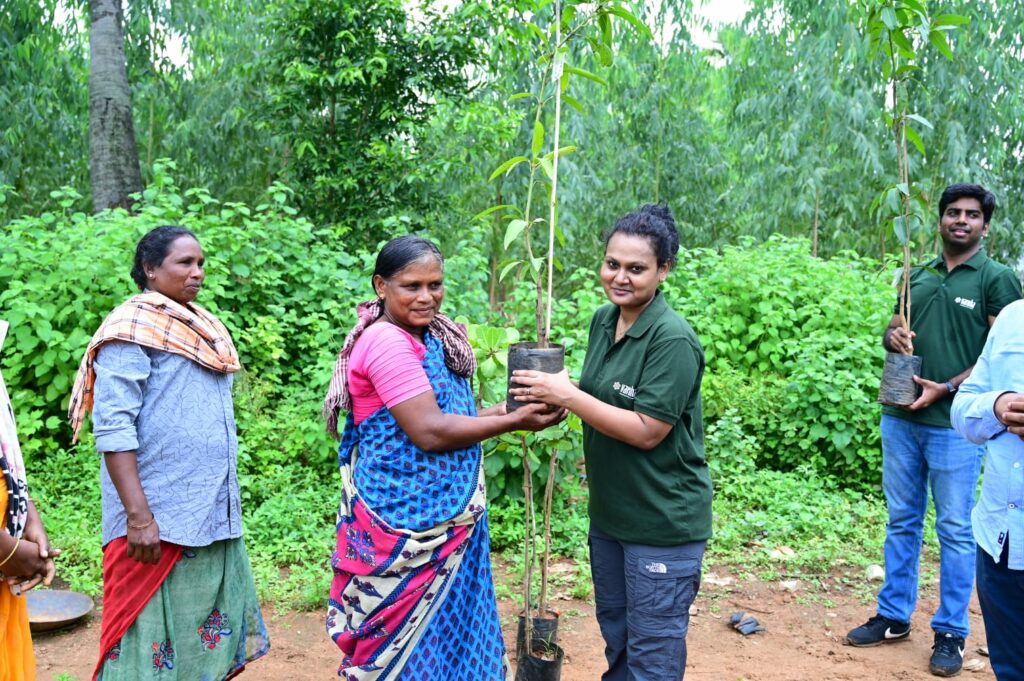
In villages across Uttar Pradesh, Tamil Nadu, Kenya, and Ghana, Varaha is quietly planting the future, not just through crops, but through contracts. Smallholder farmers, many earning less than $3 per day, are now receiving supplemental income for simply farming better.
This money isn’t a subsidy, it’s an investment. Farmers are guided by local field agents, educated on regenerative practices, and supported with tools to track progress. But it’s not about forcing change; it’s about making change rewarding.
“When a farmer knows she’ll earn more by keeping carbon in the ground, she becomes not just a cultivator, but a climate custodian,” Madhur explains.
What makes Varaha revolutionary is that it doesn’t require farmers to buy expensive new tools or fertilizers. Instead, it reintroduces ancestral practices, with modern science behind them, and provides a tangible financial return. It’s climate action that speaks the language of rural economics.
And it’s working. Thousands of farmers have already adopted Varaha’s system, collectively removing and avoiding thousands of tonnes of CO₂ emissions. In return, they’ve earned money to pay school fees, invest in new seeds, or weather unpredictable droughts.
Carbon Markets with Roots in Local Justice
Sustainability, for Madhur, isn’t a product or a press release—it’s a value chain. From the way carbon credits are measured to how farmer contracts are written, Varaha is building a carbon economy that is fair, inclusive, and deeply grounded in community ownership.
Their credits follow Gold Standard and Verra methodologies, and their algorithms are built with both scientific precision and cultural empathy. Field agents speak local languages. Contracts are explained, not buried in fine print. Carbon data is transparent, and so is farmer impact.
The company’s name is more than a metaphor. In Hindu mythology, Varaha lifted the Earth from chaos. Madhur believes that climate regeneration can and must begin with those who live closest to the soil.
“Tech is important. But trust is essential,” he says. “We don’t just model carbon sequestration—we model accountability.”
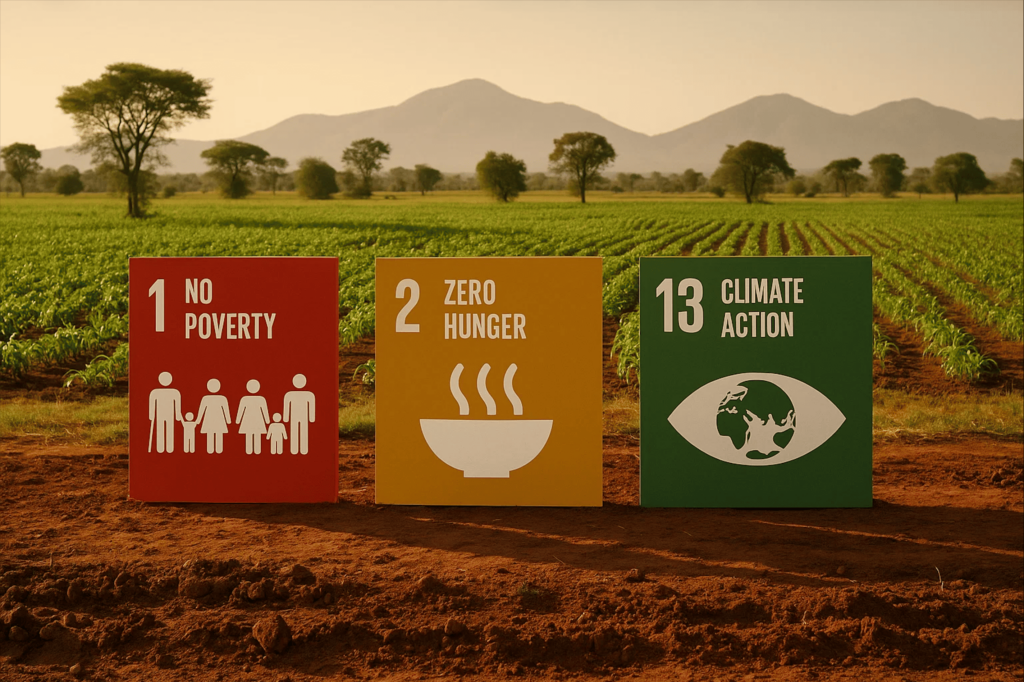
The startup’s approach aligns with three of the UN’s core Sustainable Development Goals:
Every seedling planted supports SDG 1 (No Poverty) by creating income, strengthens SDG 2 (Zero Hunger) through better soil and yields, and drives SDG 13 (Climate Action) by restoring ecosystems. For Mohamed, the SDGs aren’t just global goals, they are lived realities in every field, every season, every tree.
By converting climate action into rural income, Madhur is not only changing carbon markets he’s changing lives.
Madhur Jain: Leadership is Restoring What’s Been Depleted
To Madhur, leadership is not about offering solutions — it’s about listening. Listening to those who have never been invited into the conversation. He believes that restoration is not only about land, but about dignity; and that trust, like carbon tonnage, must be measurable and verifiable.
He is now working to cultivate a new generation of “climate leaders in agriculture” — young people from local communities who embody both technological literacy and indigenous wisdom, becoming future bridges in the climate movement. Through this initiative, Varaha is no longer just a platform, but a movement embedded deep within the social fabric.
“The future of agriculture doesn’t lie in fertilizers, but in fairness — and that should begin by paying farmers to protect the land, not to exploit it.”
While global climate movements often overlook smallholder farmers, Madhur Jain never has. His work reminds us that the most powerful tools for climate action are not always satellites or dashboards, but a hand touching the soil, a conversation in the fields, and a promise to restore what our ancestors lost:
“Leadership is not about standing above and crafting strategy — it’s about walking onto the land and listening to the quietest voices. True climate justice begins when we learn to reward farmers for their stewardship, rather than applaud the extraction of land. What we are restoring is not just the soil, but the fundamental trust and dignity between people.”
Recommend for more: