
He was twelve when it all began. A documentary titled Why Poverty opened a window to another side of the world. On the screen, a barefoot Somali child trudged under the scorching sun for four hours, just to fetch a bucket of muddy water. The image stayed with him. While other children were busy with games, homework or social media, he kept asking himself: “If I do nothing, doesn’t that mean I’m accepting the world as it is?”
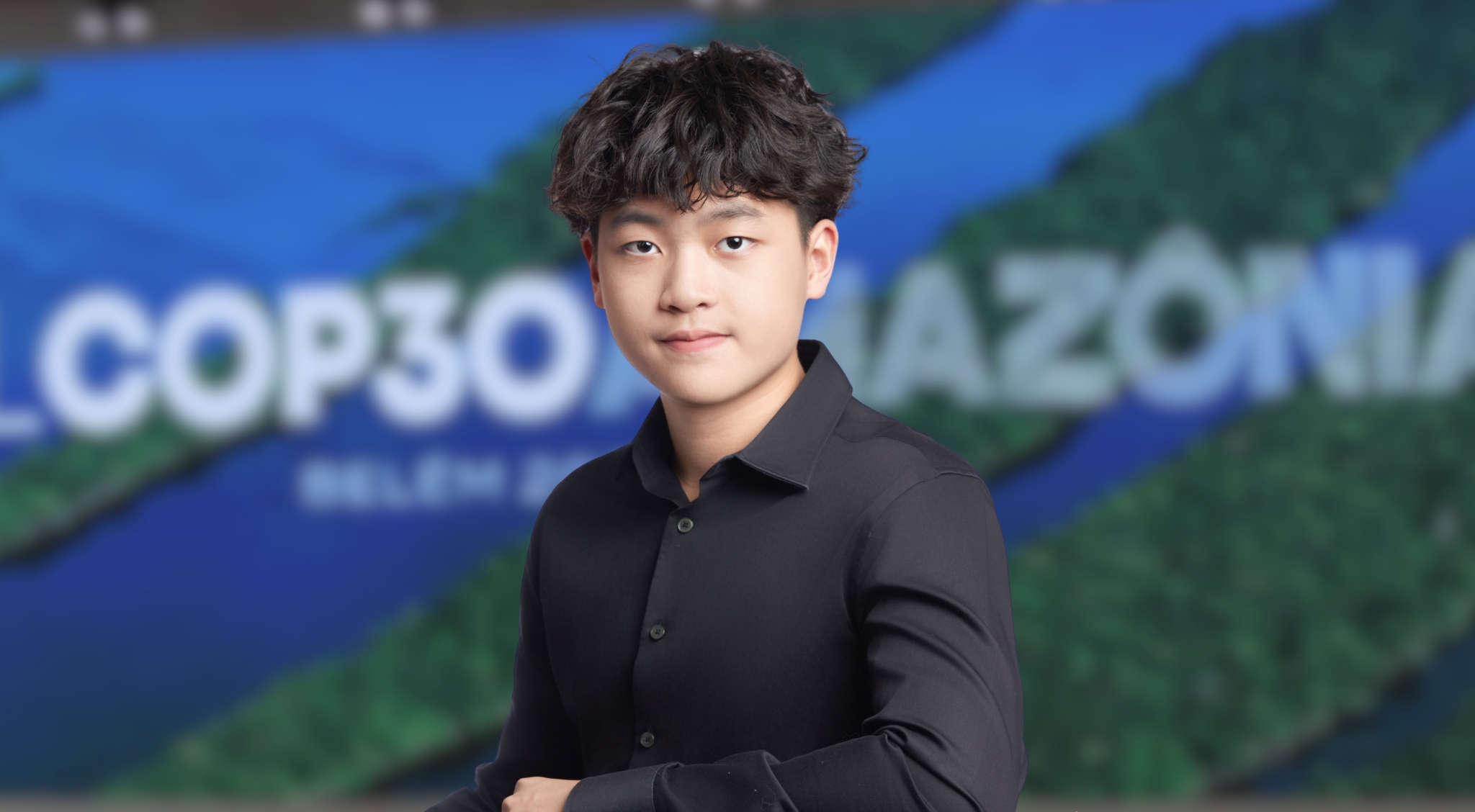
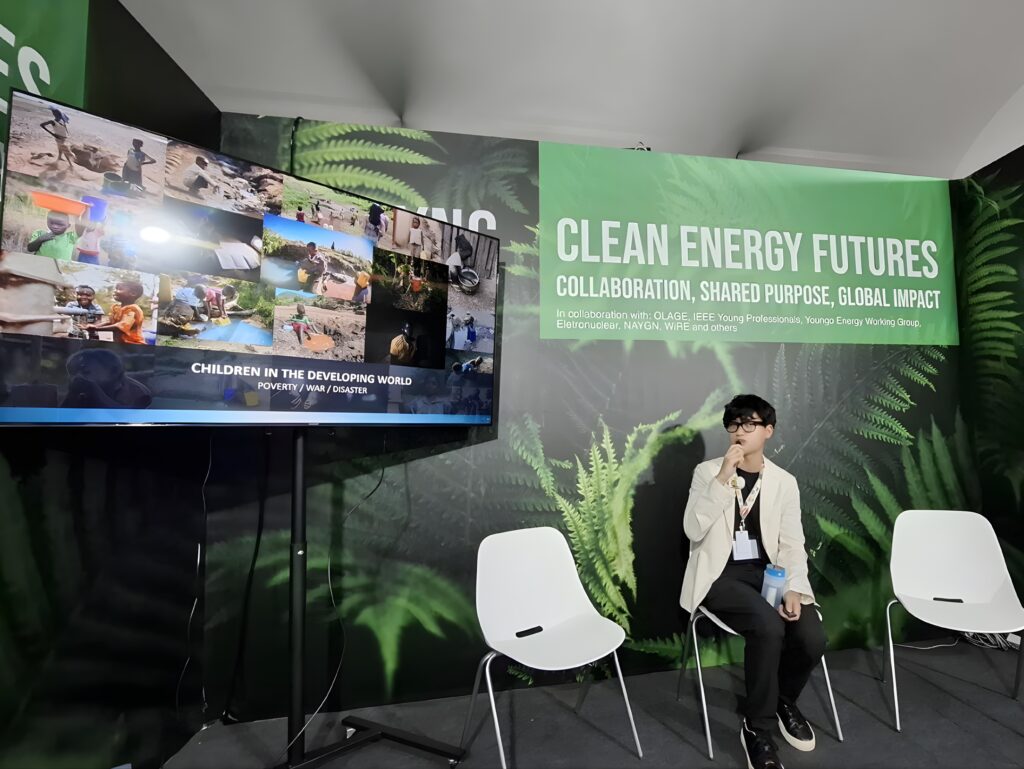
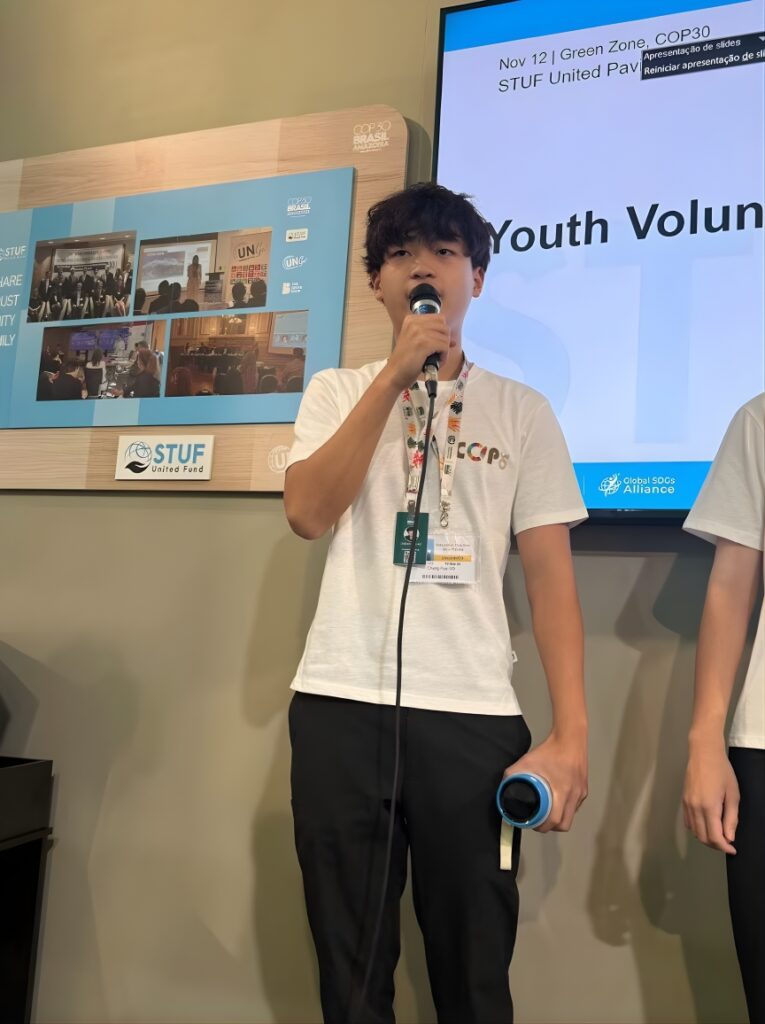
Four years later, sixteen-year-old Ray Ko stood on stage at the 30th United Nations Climate Change Conference (COP30), held in Belém, Brazil. It was a moment where the world’s eyes converged – government leaders, youth delegates and international media filled the hall. When he began to speak, his voice was calm but carried a quiet conviction that instantly drew the room in.
“They often have to walk several kilometres barefoot just to reach the nearest water source,” he said, “and the water they collect is often murky, filled with silt, bacteria and microorganisms. This greatly increases their risk of diarrhoea and parasitic infection – it can even threaten their lives.”
He paused briefly, then continued in the same steady tone: “Some children even set off before sunrise to fetch water. In places without reliable electricity or lighting, that journey can be extremely difficult.” The audience fell silent. There were no dramatic gestures, no ornate words – just the simple honesty of someone describing what he had seen and felt.
After visiting Africa himself and witnessing the hardship of these children up close, Ray found his life’s purpose distilled into two words: light and water. And on the day he took to the COP30 stage, what he brought with him wasn’t a slogan, but a tangible solution created by a young team’s own hands — the Aquacendo LightUp Filtered Bottle.
One Design, Two Needs for Survival
During his presentation at COP30, Ray Ko held up a transparent water bottle. Its clean, minimalist design featured a small solar panel neatly built into the lid. This was the Aquacendo LightUp Filtered Bottle — an innovation that took over a year for him and his team to complete, combining water purification and lighting in one design. At first, the audience thought it was just another tech product, until he began to speak.
“Inspired by global climate change and public health issues,” he said, “I realised that light and clean water are the two most essential needs for human survival.”
He continued, his tone composed but bright with youthful conviction: “So I gathered a few friends and founded Aquacendo. ‘Aqua’ means water in Latin, and ‘Accendo’ means to light up. That’s our original intention — to shine a light on the most basic human needs.”
Explaining the bottle’s features, he spoke with the confidence of someone who had built every part himself. “The first function is a dual-layer ultrafiltration system. The hollow-fibre membrane removes 99.999% of bacteria and microorganisms, including E. coli, and filters out larger particles like silt. Each filter can purify around 4,000 litres of water, reducing the spread of waterborne diseases. The straw also contains an activated carbon filter to remove chlorine, improve taste, and eliminate odour and discolouration.”
Lifting the bottle, his tone turned lively. “The second feature is at the top — a solar-powered LED light. It charges during the day, and at night, you can flip the bottle upside down, and it lights up. I wanted to make sure children could still have light at night — to read, to walk, or to fetch water before dawn.” His voice wasn’t loud, but the sincerity in it reached everyone in the room. Applause broke out — not for the technology itself, but for the kindness behind it.
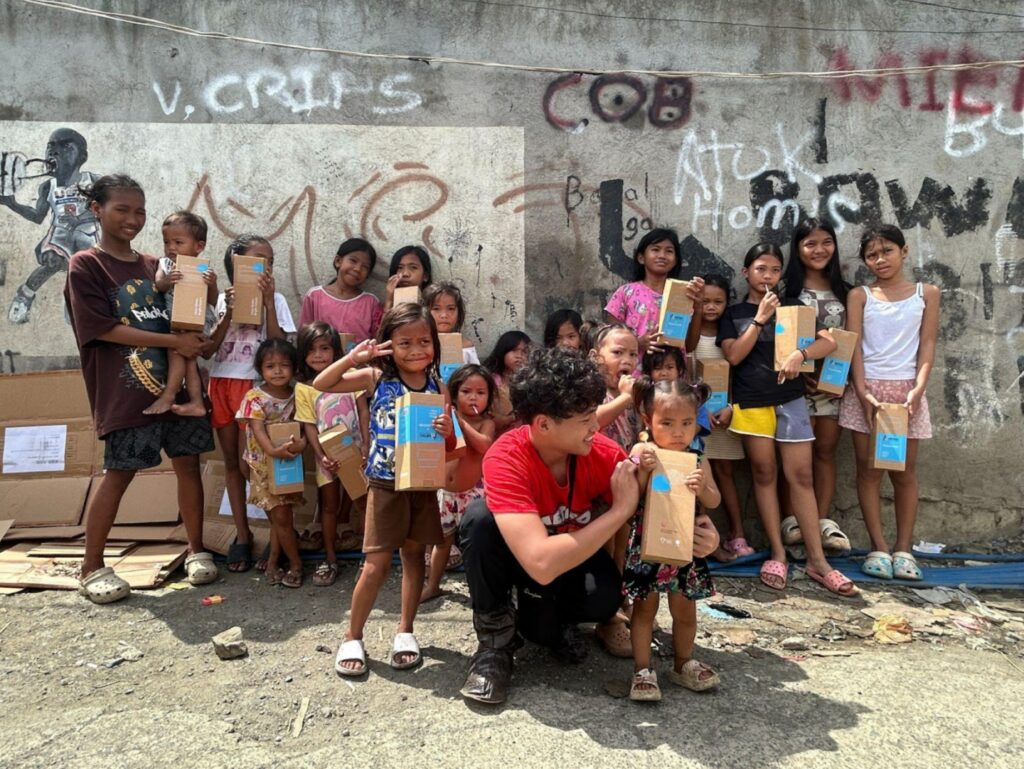
In a short video played during the COP30 Youth Forum, children in Burkina Faso and Manila held their Aquacendo bottles high, the soft glow of light shimmering against the night. There was no music, no narration — just light, movement, and quiet joy. At that moment, technology became something gentle, human, and deeply moving.
When Youth Becomes the Voice of Action
As the session ended, journalists quickly gathered around him. Dubbed the “youngest inventor at COP30,” Ray Ko seemed both poised and genuine. “Inventor, designer — it doesn’t really matter,” he said with quiet conviction. “I just want the world to know that even when you’re young, as long as you have determination, you can create something meaningful.”
He recalled the early days of his project: “When I started imagining what life was like for those children, I realised I wasn’t solving a technical problem — I was solving a life problem.” In those days, he spent nearly all his time shuttling between the classroom, his home, and the lab — sketching designs, testing materials, 3D-printing models, and searching for filter suppliers. “We didn’t have much,” he said with a smile, “but we had passion and belief — and honestly, that mattered more than anything.”
“One day, when we can truly feel what others are going through, innovation will finally find its direction.” That line, later quoted by several media outlets, became one of the most moving moments of the entire youth forum. For Ray, the speech wasn’t just about presenting a product — it was proof that youth is not the audience of the future, but the driving force of the present.
From Awards to Alliances: The Journey of Light and Water Spreads On
Along the way, Ray Ko has received invitations from several NGOs and foundations, including UNICEF, Beijing Polar Foundation, Fosun Foundation, World Vision, and Metro World Child. “I believe what they see isn’t just a product,” he said, “but a language of action that can keep growing and spreading.”
When he spoke about his project results at COP30, his eyes lit up. “Last November, we completed our first batch of production and, together with the Fosun Foundation and the Shanghai People’s Association for Friendship with Foreign Countries, delivered the bottles to children in Burkina Faso. In the first half of this year, we sent more batches to Honduras, Manila in the Philippines, and the Kakuma Refugee Camp in Kenya. So far, we’ve distributed 2,840 bottles!” He paused briefly, then added with a determined tone, “A single foundation can reach millions of children — that makes me certain this is only the beginning.”
With growing excitement, he continued, “We also received the Red Dot Design Award – Best of the Best, the highest recognition in design. This bottle embodies SDG Goals 6 and 7, making it not just a product, but a meaningful tool for real change.”
Across the COP30 exhibition floor, the Aquacendo LightUp Filtered Bottle became a tangible symbol of climate action. It wasn’t a souvenir from a speech, but the beginning of something real — helping children in remote areas walk four kilometres less each day, breathe less smoke from kerosene lamps, and gain a little more light, a little more clean water.

From a Phrase to a Belief
“Lighting Up Hope.” These were the words Ray Ko projected at the end of his COP30 speech — not just a slogan, but a quiet promise to the world. When a journalist asked how he managed to stay so committed, he answered with simple conviction: “Because I believe that one small light, and one bottle of clean water, can change a child’s world.”
On the COP30 stage, he wasn’t seen for his age, but remembered for his action. That same determination continues to shape his vision for the future. When The Icons COP30 interview team asked what he hoped Aquacendo would become, he thought for a moment before replying:
“Ten years from now, I hope Aquacendo isn’t just a product, but a way of doing things that others can carry forward. People in different countries could create their own versions of Aquacendo based on their culture and needs — bringing water and light to more corners of the world. If one day I hear someone far away say, ‘We’re also doing an Aquacendo-style project,’ that would be the happiest thing I could imagine.”
At sixteen, Ray Ko answered one of the great questions of his generation with a single bottle — proving that to change the world, you don’t need permission from age, only the courage to begin.
Recommend for you: