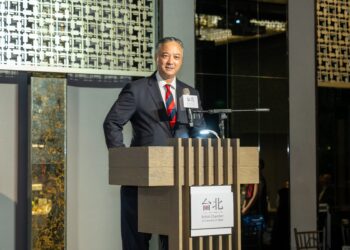

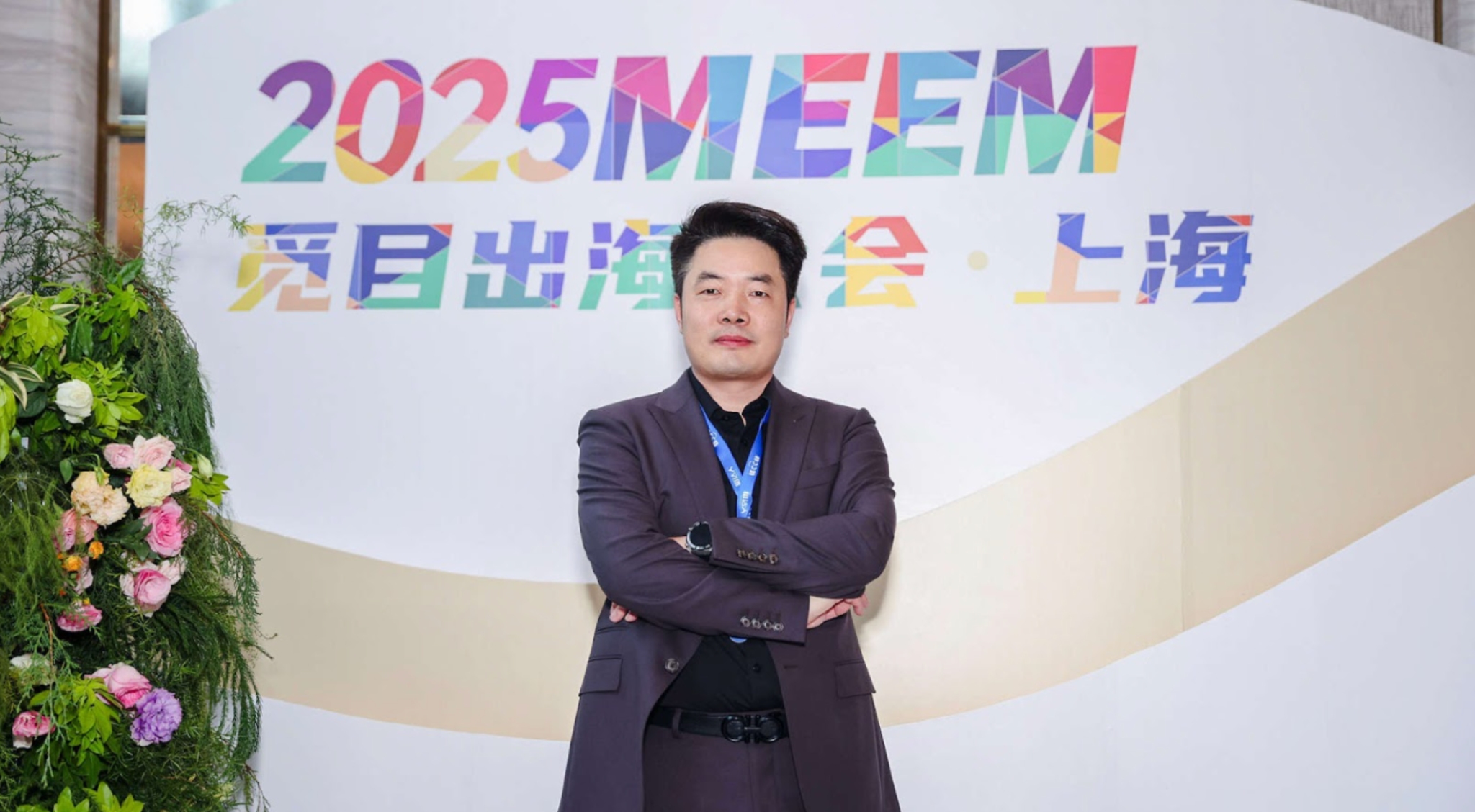
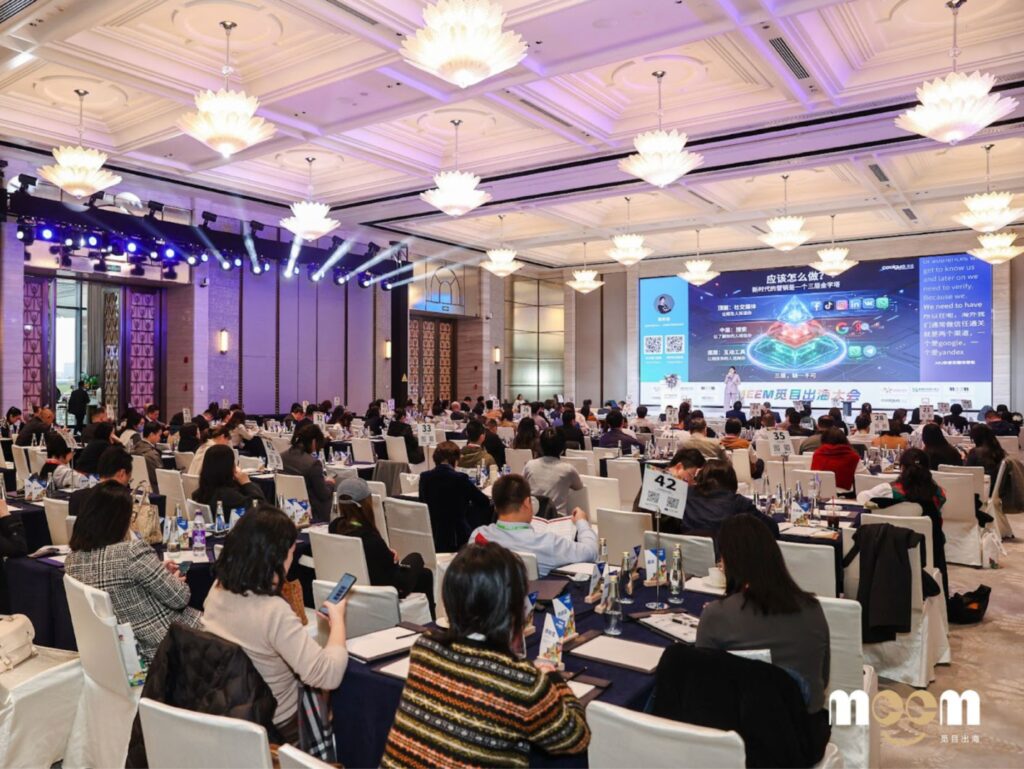
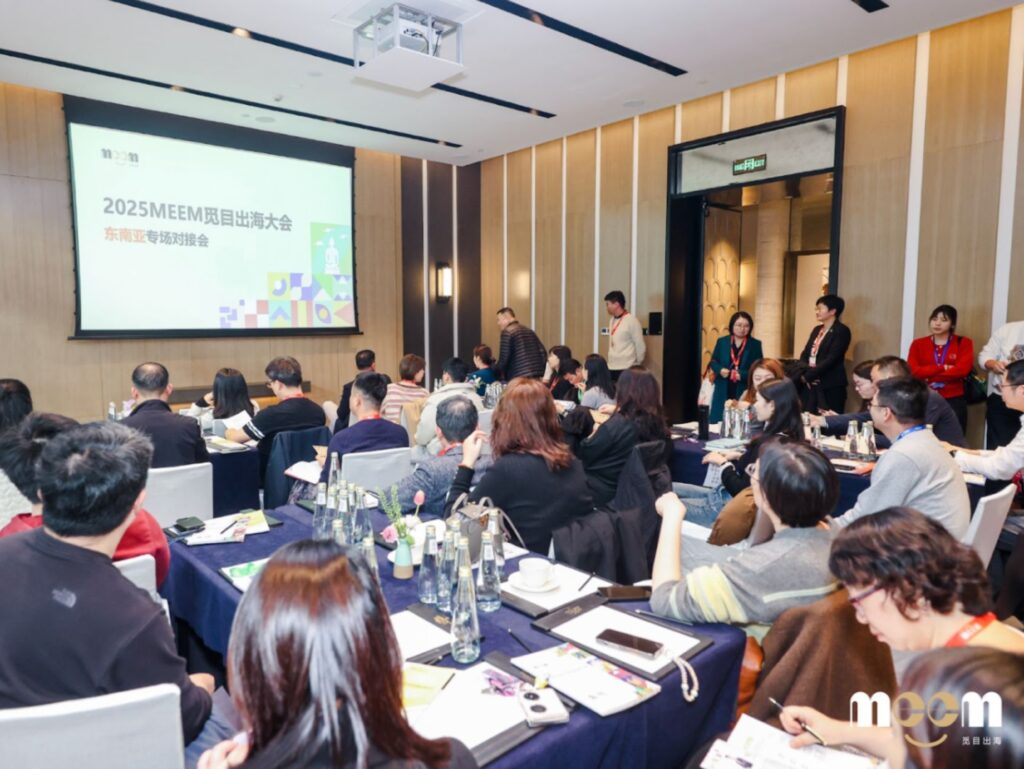
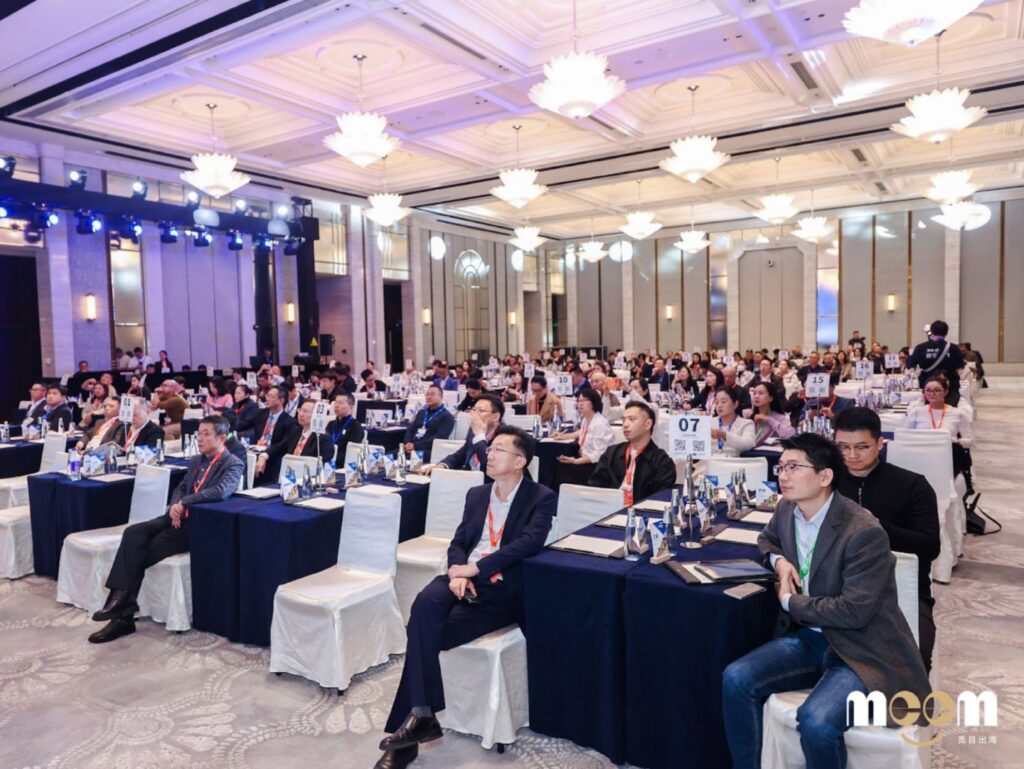
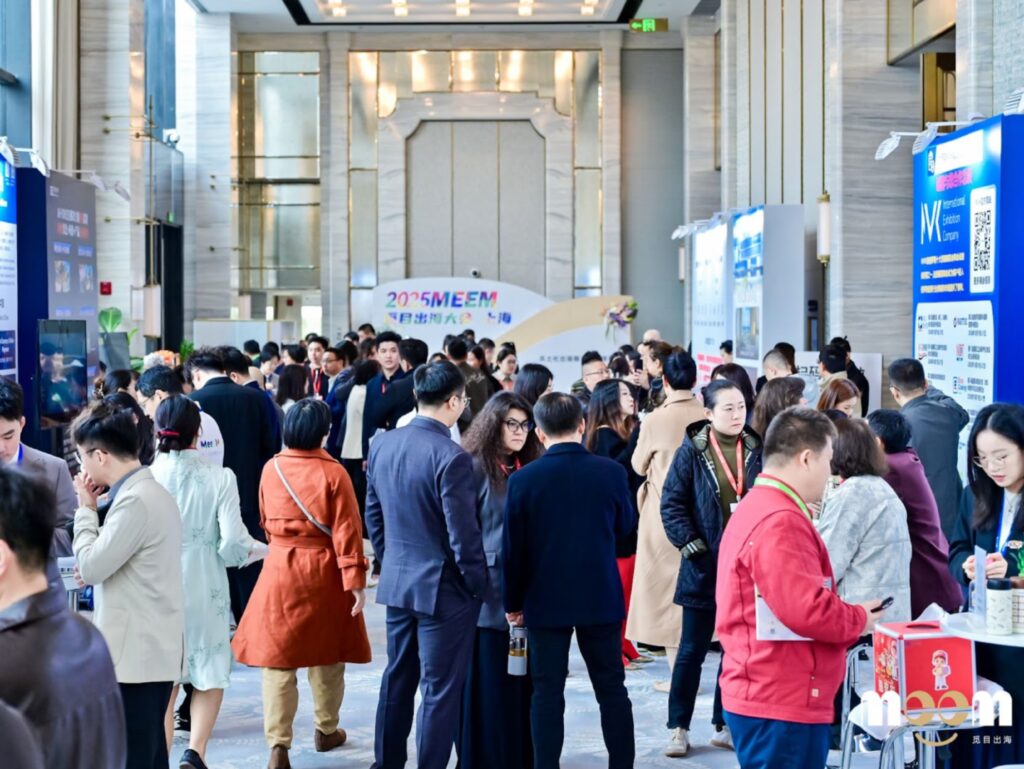
On December 1, 2025, the Shanghai Hongqiao Airport Shangri-La Hotel hosted a high-density gathering focused on going global. The “2025 MEEM Go Global Conference,” organized by the China Convention/Exhibition/Event Society and co-hosted by Coolgua, brought together local service providers, industry representatives, and enterprises from hot markets such as the Russian-speaking regions, Southeast Asia, the Middle East, and India in one venue. Through segmented sessions and multiple rounds of business matching, the conference steered the discussion on “going global” back to a more realistic decision-making approach.
Under such an event design, what was presented on-site was not just the hype surrounding the trend of going global, but a more straightforward reality. As global supply chains and market orders continue to shift, going global is no longer just an option for expanding sales into a few more markets. It has become a structural issue that requires enterprises to re-understand cross-cultural operations, build local trust, and develop capabilities for long-term viability.
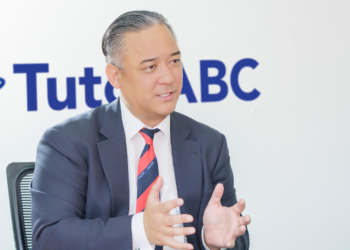
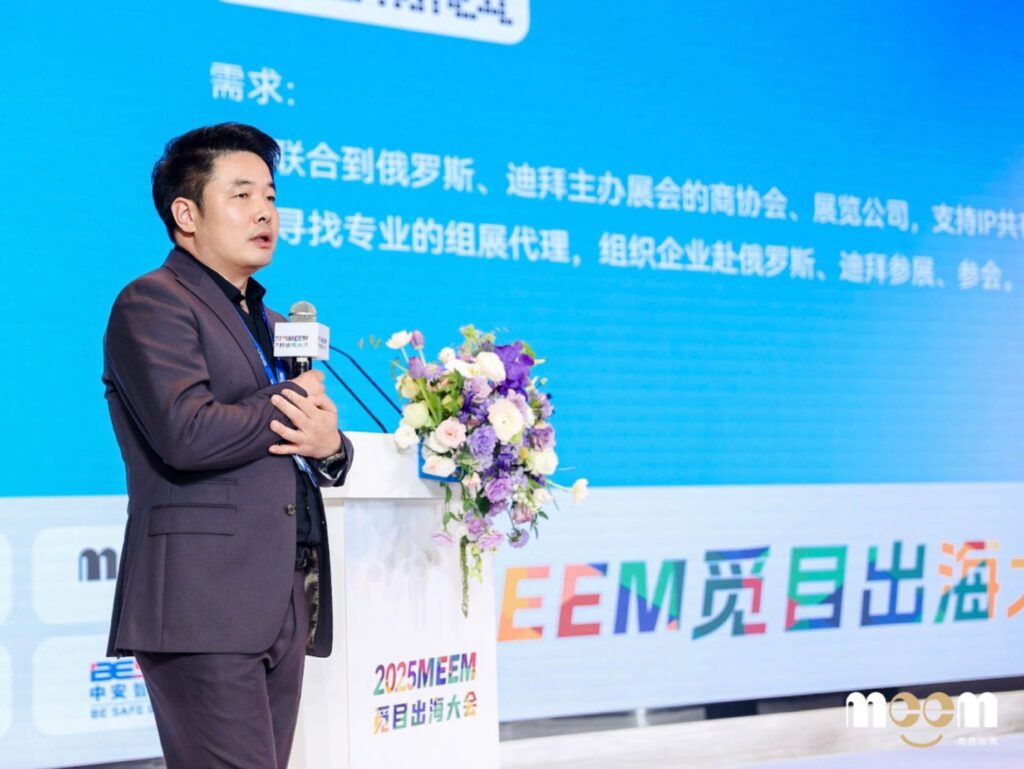
Toby, Founder of MEEM and Coolgua, pointed out in an interview with The Icons that for enterprises to survive in volatile overseas markets, they must have a deeper psychological preparation. It is not about treating overseas markets as a battlefield for a short-term sprint, but rather as a second home where one can live and operate for the long term.
“Going global is by no means a simple transnational journey, nor should it be seen as a trade speculation for short-term profits. True ‘Glocal’ (Global + Local) requires founders to deeply cultivate overseas markets just like they operate their businesses at home, treating them as a ‘second home.’ If you are not there physically, and your heart is not there, then you will always remain an outsider.”
Toby also defined the conference held in Shanghai as a tool designed to bridge cultural gaps. The focus is not merely on taking people overseas, but on helping enterprises establish symbiotic, long-term ecosystems and relationships locally.
“What we see at the MEEM Go Global Conference has long surpassed the level of order matching; it is more about cultural understanding. Only through in-depth communication can enterprises evolve from ‘going global’ to ‘staying global,’ ultimately achieving a true win-win situation.”
Exhibition Digitalization Becomes the Starting Point for Understanding Global Markets
Looking back at Toby’s entrepreneurial journey, each of his choices has revolved around the question of “how to operate after reaching scale.”
In 2006, he founded Coolgua, initially focusing on exhibition digitalization. When exhibitions still heavily relied on manual management, he chose to use systematic approaches to solve the efficiency and operational problems of large-scale events, providing full-process management capabilities for projects with attendances often exceeding 100,000.
“When we founded Coolgua, our core task was to help large exhibitions solve efficiency problems. When the scale reaches over 100,000 people, data, business operations, and management simply cannot be supported without digital management. This was our first cornerstone for later understanding the world and grasping the logic of global traffic.”
By 2011, Coolgua’s focus gradually extended to global digital marketing. At this stage, the company no longer only handled back-end management but directly faced traffic acquisition, brand communication, and user decision-making in different markets. Over years of accumulation, his team interacted with numerous enterprises and global exhibitions, allowing Toby’s understanding of “traffic” to move from a tool level to a structural level.
“We realized back then that traffic is just a means; the real value lies in the insights behind the data. This experience made us understand that no matter how technology changes, accurately understanding customer needs will always remain the core.”
It is also because of these experiences that Toby believes MEEM is not a concept packaged from a sudden pivot, but rather the result of years of previous technical and market practice, gradually accumulated to a point where systematization became necessary. Exhibition digitalization allowed him to understand the structure of large-scale operations; global marketing allowed him to understand the costs and rhythms of market entry; and finally, it came back to the most critical question of going global: How can an enterprise operate long-term in an unfamiliar market?
Lack of Trust is the Biggest Cost of Going Global
As the global trade landscape continued to change from 2022 to 2024, Toby sensed a shift in enterprise needs. Many clients no longer only wanted online placement and exposure; they urgently needed to find truly reliable local resources in markets like Saudi Arabia, Thailand, and Russia, including reception, legal, tax, execution, and business matching.
“Initially, I just helped clients create groups. I created over a hundred groups in one year, helping them find local reception, legal, and tax contacts. Later, I realized that simply ‘creating groups’ could not solve structural problems. What enterprises needed was a structured service platform that could truly cultivate local markets. That is the origin of ‘MEEM’.”
To systematically address these pain points, Toby proposed the “MEEM” framework. M (Media) represents media, the lowest-cost tool for trial and error; the two E’s in the middle are Event and Expo, used to build offline trust; the final M (Meeting) represents precise business matching, putting needs on the decision-making table.
He emphasized that while this structure seems simple, it actually solves a very core problem. Transactions in overseas markets often fail not due to lack of information, but due to lack of trust.
“Many people wonder why we still need offline events in the digital age. Because in overseas markets, trust is a prerequisite for transactions. Meeting face-to-face, shaking hands, demonstrating your product strength firsthand at an exhibition—this kind of trust can never be achieved through a screen. By holding this matching event in Shanghai, we aim to create a chain reaction of this trust.”
Toby: The Real Risks Lie in Cultural Details
Throughout the various sessions at the MEEM Go Global Conference, the most frequently mentioned keyword was not orders, but implementation.
Toby repeatedly pointed out that the biggest risks enterprises face in overseas markets are often not product-related, but underestimating the cost of cultural and institutional details. Different markets have different understandings of colors, symbols, festivals, social distance, and negotiation rhythms. If you apply domestic habits to overseas markets, it is easy to step on landmines in the most unconscious places.
He cited Singapore and Thailand as examples. In high-end event settings in Singapore, black is often seen as restrained, sharp, and textured. But if you do not understand taboos in the Thai market, excessively using certain colors and elements, or even displaying symbols like chrysanthemums in specific contexts, can trigger negative associations, as they are often linked to funerals or memorial services there.
For Toby, localization is not surface-level adjustment, but a translation of the brand’s soul. You need to be able to speak in a language locals understand, design your presentation from a local perspective, and gradually transform yourself from an outsider into a trusted market participant.
“You must learn to design and curate from a local perspective. Only when you are recognized as ‘an excellent international brand,’ not ‘a foreign company selling stuff,’ has your going global truly succeeded. This sensitivity to culture is the key we continuously emphasize at the MEEM conference in Shanghai.”
Structure First for Long-Term Market Success
Discussing MEEM’s next steps, Toby focused on two levels: “how services are organized” and “how resources are utilized.” He believes that the reason enterprises waste significant time and costs in their initial attempts to go global is often not due to wrong direction, but a lack of a foundational structure that can be quickly activated and adjusted with the market.
Therefore, Toby led his team to reintegrate scattered foundational capabilities like logistics, marketing, legal, and tax into a set of configurable, decomposable service modules, sliced and reorganized according to the decision-making logic of different industries. The purpose of this design is not to provide more services, but to enable enterprises entering overseas markets to establish a workable basic structure faster, with lower trial-and-error costs.
Toby used “USB drive” as a metaphor to describe the role of this modular service system:
“We hope to organize the key capabilities needed for going global into a system that is already prepared. As long as an enterprise has a mature product and a clear position, by plugging into this module, they can quickly start operating locally, instead of starting from scratch and re-exploring every time they enter a new market.”
Under this logic, MEEM is also gradually moving towards in-depth layout in vertical industries. Industries such as new energy and healthcare, due to their long decision-making chains and many participating roles, have much higher requirements for regulations, trust, and local resources than general consumer markets, and cannot be handled with general templates. Toby believes that only by reclassifying globally accumulated resources according to industries and combining them with modular configuration can enterprises truly improve connection efficiency.
“The decision-making paths for each industry are different. If you still use the same approach to handle them, you will only waste time. We will continue to deeply cultivate vertical industries in the future, such as the MEEM New Energy Conference and the Healthcare Go Global Conference, slicing the resources we have accumulated globally according to precise industry needs, and then reconfiguring them through modular methods, so that enterprises do not have to take detours when connecting and can build their own overseas operational structures faster.”
In MEEM’s overall strategy, new media is also being repositioned as part of this structure. It is no longer just an auxiliary promotional tool, but an important validation mechanism before brands enter the market. Through content testing, data feedback, and the superposition of local resources, enterprises can understand whether there is a substantial market reaction before investing heavily, and then decide on the depth and pace of their investment.
For Toby, the thinking behind this design actually responds to the same core question: “Going global should not rely solely on intuition and luck, but must have structure and method. When you can set up the system well from the beginning, every subsequent step can be steady and go far.”
When Industrial Capabilities Begin to Be Re-Evaluated
Discussing the future trade landscape, Toby’s judgment appears relatively clear. In his view, the certainty of going global is increasing. For many industries, this is no longer a strategic option but an inevitable result of structural changes.
He pointed out that some enterprises still expect the environment to return to familiar ways of operating, but the reality is that the operational logic of global supply chains has already shifted. Especially in most light industrial fields, Chinese enterprises have long accumulated significant advantages in supply chain efficiency, research and development iteration speed, quality control, and production capacity organization. These capabilities are not the result of short-term stimulus, but the refinement of years of manufacturing experience, technical accumulation, and market competition.
“The trend is actually very clear. There is no room to return to past practices,” Toby stated directly. “In most light industrial fields, Chinese enterprises already possess world-leading strength. When technical capabilities, supply chain response speed, and production organization all come together, the global market will naturally re-select the most effective system.”
In Toby’s view, this change does not mean the success of a single enterprise, but the beginning of a whole set of industrial capabilities being re-evaluated in the international market. As the pace of market operation continues to accelerate, the original supply models that relied on long chains and low flexibility are gradually showing their limitations:
“This is not about whether a particular enterprise can grow big, but about the overall competitiveness being reordered. When technology and production capacity reach a critical point, the underlying logic of the global supply chain will be pushed forward. This process is not deliberately led by anyone, but a naturally formed result of the market.”
Against this backdrop, Toby also reminds that going global does not mean lowering the threshold. When the advantages in manufacturing and supply side gradually become consensus, the real gap will be widened by brand building, localization capabilities, and the patience and responsibility for long-term operation.
Treat Overseas Markets as a Second Home
Beyond the expansion of business territory, Toby also deliberately places going global within a longer time frame for consideration. In his view, truly sustainable globalization is never about exploitative resource development, nor is it about one-way output and dumping. It is a value symbiotic relationship built on long-term mutual trust.
Toby pointed out that if enterprises genuinely choose to take root in overseas markets, they must confront foundational work like institutional compliance, talent cultivation, supply chain cooperation, and social connections—things that seem slow but are unavoidable. In the short term, these investments may not immediately reflect on financial statements, but from a longer time perspective, they often determine whether an enterprise can establish a firm foothold locally and continue to be trusted in a changing market environment.
In Toby’s understanding, this mindset towards going global aligns with the United Nations Sustainable Development Goals (SDGs), which are not abstract slogans but exist in the daily choices of enterprises. Whether they are willing to comply with local systems, whether they are willing to cultivate local talent, whether they treat partners as long-term collaborators rather than short-term tools—these seemingly minor decisions ultimately accumulate into the long-term market evaluation of an enterprise.
He believes that whether going global can be sustainable depends not on how fast enterprises move, but on whether they are willing to undertake the responsibility of “staying.” Treating overseas markets as a second home means not only profit and growth, but also understanding, respect, and investment. When enterprises truly accept this role transformation, globalization will no longer remain at the strategic level, but will become a business approach that can be practiced long-term:
“My biggest hope is to ensure that every enterprise founder aspiring to go global does not have to explore alone in unfamiliar markets. At MEEM, we want to accompany enterprises in understanding markets, building connections, and shouldering responsibilities. As long as you are willing to treat overseas markets as a ‘second home,’ this journey will not be a solitary one, and the world will gradually open up to you.”
Recommend for you: