The Icons
  • SDG
  • ESG
  • Leadership
  • Business
  • World
  • Health
  • Succession
  • Innovation
  • More
    • Women
    • Entertainment
    • Academic
    • Culture
    • Lastest
    • Lifestyle
    • Tech
    • Opinion
    • About《The Icons》
  • 简中
  • 繁中
Login
No Result
View All Result
The Icons
No Result
View All Result
Home Culture

Flowerroad Founder Victoria: Starting with a Piece of Hakka Floral Fabric, Bringing Taiwanese Memories to the World

Ricky Wang by Ricky Wang
February 15, 2026
Victoria, Founder of Flowerroad. (Photo: Flowerroad)

Victoria, Founder of Flowerroad. (Photo: Flowerroad)

In Victoria’s creative world, stories don’t begin with titles or achievements, but with a seemingly ordinary piece of fabric.

You might also like

A Century Is Not a Milestone, But the Beginning of Responsibility! Leo International Group Chairman and Founder Leo Wang: Designing Systems for the Next Century

Flipping the IP Mindset, Rewriting the Rules of Competition! Miir Chen, Founder of FZ Patent & Trademark Ltd.: Bringing Patents into Business and Capital is Key for Companies to Seize the Initiative

The Light He Brought to COP30: Ray Ko and the Story of Water and Hope

It’s Hakka floral fabric, once a common sight in many Taiwanese households—draped over tables, covering cabinets, accompanying the lives of elders. For her, it’s not history, nor a symbol, but an extremely familiar, lived-in memory.

“In my memory, Hakka floral fabric is something from my grandmother’s era,” Victoria described in an interview with《The Icons》.

It wasn’t a grand cultural mission, but a simple yet profound feeling that became the starting point of her creative journey. As these fabrics gradually became seen as outdated with the changing times and slowly disappeared from daily life, what Victoria felt wasn’t nostalgia, but a hard-to-ignore sense of regret.

This emotion later found its way into her art and became the core creative principle of Flowerroad.

Giving a Voice to a Forgotten Culture

In Victoria’s work, Hakka floral fabric is never merely a decorative visual element.

She consistently emphasizes that the fabric’s importance lies not in the pattern itself, but in the traces of life and emotional warmth it carries. “For me, Hakka floral fabric is like a forgotten language.” This statement could be seen as the essence of her creative philosophy.

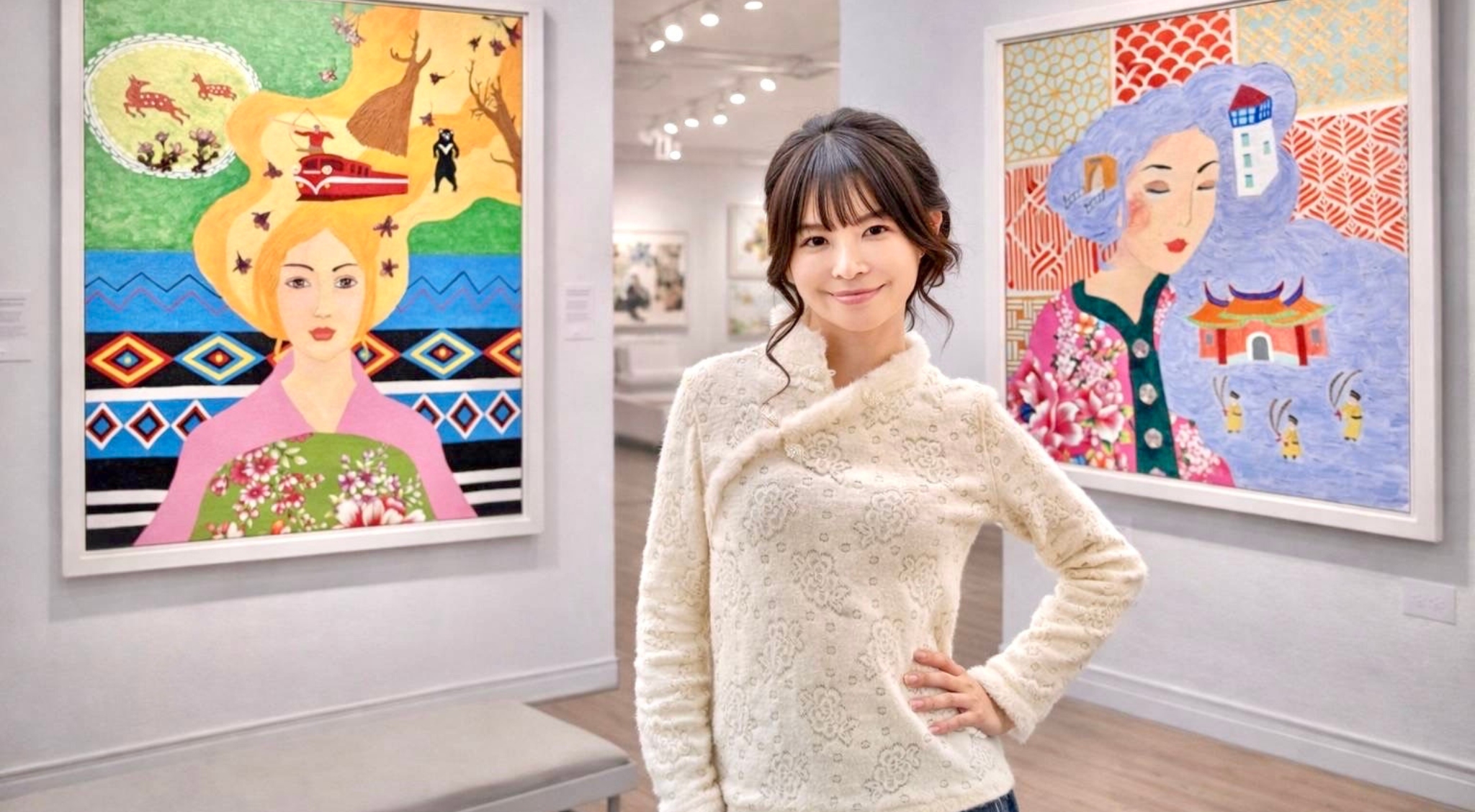
In her artwork, the fabric is juxtaposed with images of women, the land, and emotions, creating a quiet yet weighty narrative. It is no longer just a symbol of the past, but an entity capable of engaging in a contemporary dialogue.

From an external perspective, this creative approach doesn’t “symbolize” culture, but returns it to the realm of feeling. Critics often point out that her work resonates with people precisely because she refuses to simplify tradition into a nostalgic emblem, instead allowing viewers to reconnect with their own memories within the image.

“I don’t want to turn it into a nostalgic symbol; I hope to rediscover its vitality,” Victoria says.
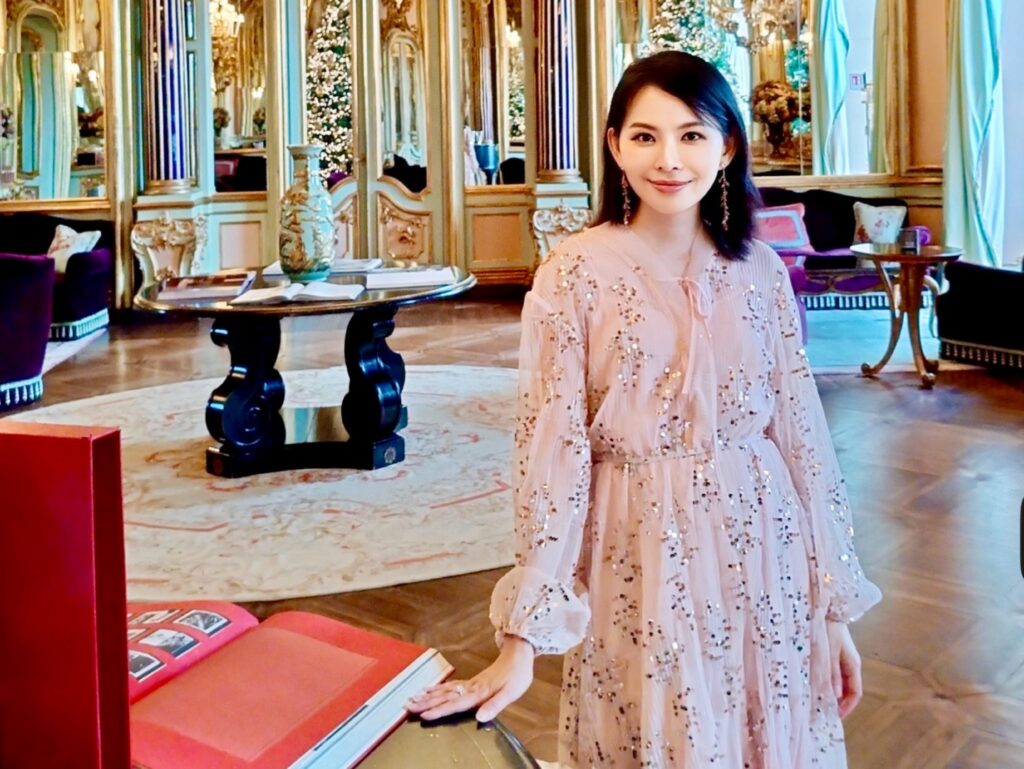
Victoria firmly believes that culture should not be just a symbol on display, but a language that can be re-felt. Through the creative practice of Flowerroad, she allows the life traces and emotional warmth carried by Hakka floral fabric to be heard again in a contemporary context, enabling once-forgotten memories to re-engage in a dialogue with the world. (Photo: Flowerroad)

An Artistic Language Where Emotion Comes First

Victoria’s creative method doesn’t start with form; she lets emotion lead the way.

Throughout her creative process, memories of the land, the strength of women’s lives, or subtle yet genuine feelings from daily life enter the picture first, becoming the core of the work. Only after the emotion has found its place does she begin to consider what form can best carry it, rather than letting form dictate the outcome.

“For me, the balance between form and emotion isn’t pre-designed; it’s gradually felt during the creative process.” This attitude infuses Victoria’s work with a constant sense of breathability.

The placement and proportion of the floral fabric in her images are carefully considered, allowing it to be seen without overpowering the composition. For Victoria, the fabric is a language that needs to be placed gently.

As mentioned in many media interviews and external critiques, the white space in Victoria’s work is an invitation to the viewer. When form remains restrained, emotions have the space to flow naturally, allowing the audience to bring their own memories and feelings into the picture, completing the true balance of the work.
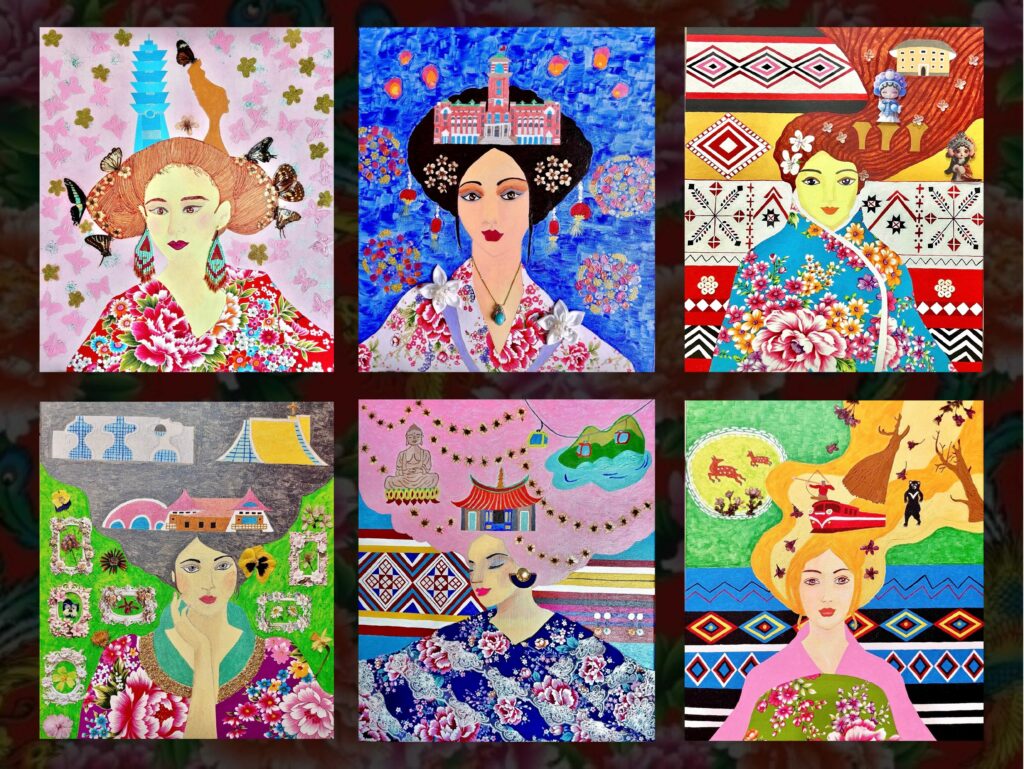
Victoria’s creations always begin with emotion, letting memories of the land and the strength of women’s lives settle into the picture first, then quietly carried by form. She doesn’t let a pre-designed structure dominate the work, but seeks balance throughout the creative process, making the floral fabric a gently placed language, and reserving a space for viewers to rest their hearts and memories. (Photo: Flowerroad)

Victoria: Bringing Taiwanese Hakka Culture to the International Stage

When it comes to the international stage, Victoria isn’t eager to discuss “exporting” culture.

“What truly transcends cultures isn’t symbols, but emotion.” In her view, women, land, memory, and life experiences are shared across different cultures. The key to international development isn’t being labeled as “exotic,” but finding a way to engage in a dialogue with those who can understand the language of her work.

Therefore, Victoria’s vision for international reach is more like a natural expansion. Through exhibitions, curatorial collaborations, and cross-cultural exchanges, she allows her work to be placed in different cultural contexts, rather than being deliberately packaged for export.

In her plans for the next three to five years, she proposes a “one country per year” creative direction. Starting with Taiwan and Italy, she aims to understand another culture’s life experiences, allowing the two cultures to naturally meet in her work. Next could be the UK, then India. This isn’t about collage, but a process of first understanding, then integrating, and finally reinterpreting.

From an observer’s standpoint, this international strategy prioritizes depth over speed. Where the work travels and whether it is understood depends on whether the emotion it carries is trusted.

“As long as it remains rooted in Taiwan, it can naturally extend outward,” Victoria concludes.
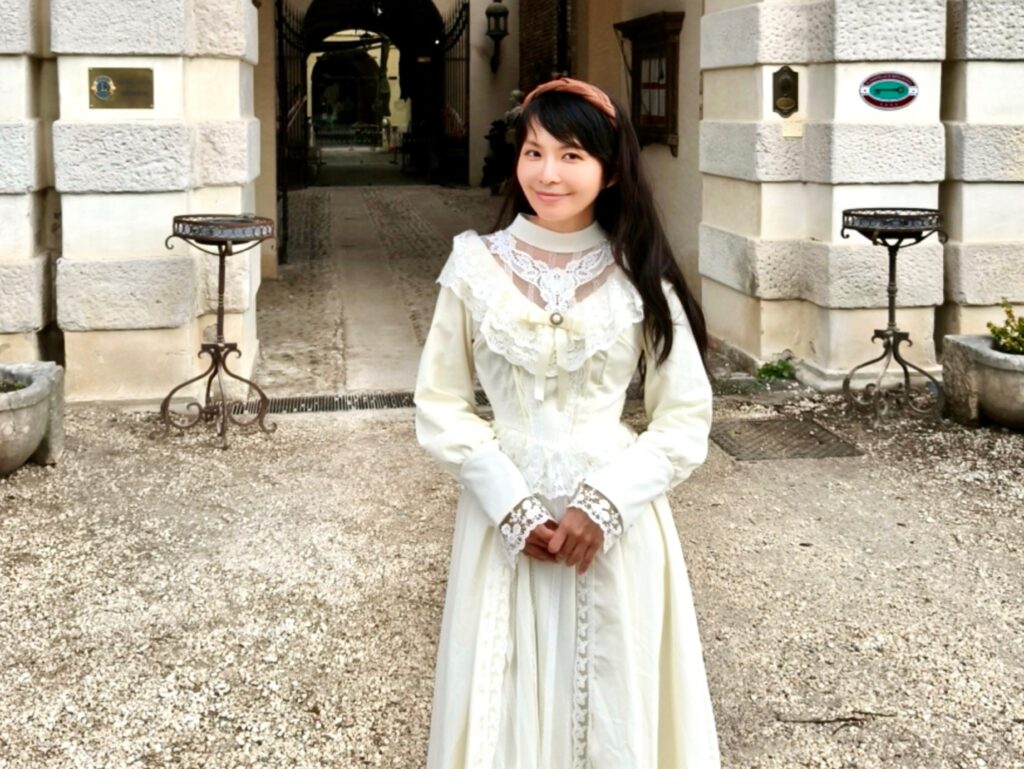
Victoria believes that what truly crosses borders is not cultural symbols, but emotion itself. Rooted in Taiwanese Hakka culture, she enables her work to be understood and trusted in different contexts through exhibitions and cross-cultural dialogue. Starting locally and extending naturally to the world, she lets the language of the land and memory reach a broader international stage. (Photo: Flowerroad)

Guardianship, Companionship, and Cultural Sustainability

When Victoria talks about “guardianship,” her tone becomes particularly soft.

For her, guardianship isn’t about confrontation or declaration, but a form of sustained companionship. In a rapidly changing world, choosing to look back, to remember where one comes from, is a choice in itself.

Victoria doesn’t try to speak for the land; she lets it be seen and felt within her art. The imagery of women, floral fabric, and the land forms a dialogue between her and this place.

From the perspective of SDGs and ESG, this creative practice corresponds to cultural sustainability and the continuation of social values. It’s not about preserving culture as a static artifact, but allowing it to continue breathing and being understood in contemporary life.

“As long as these memories can still be felt, they haven’t truly left.” This statement might be the deepest belief underlying Victoria’s creations.
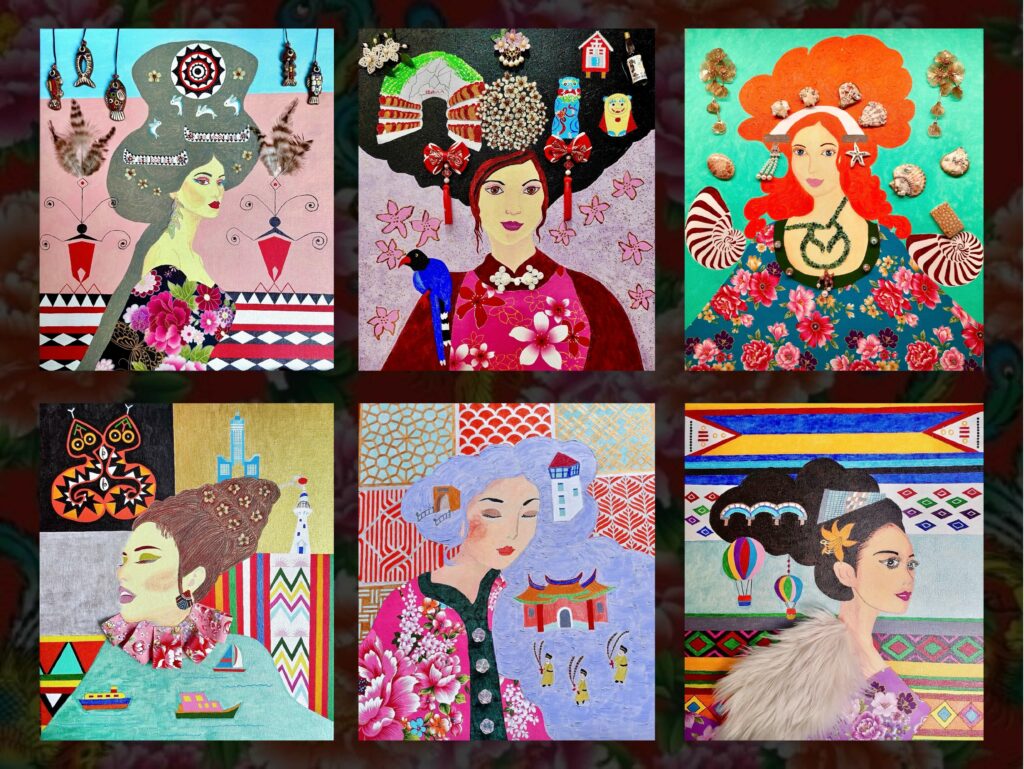
Victoria’s work, guardianship is a gentle, enduring companionship. Through the intertwining of women, floral fabric, and the land, she prevents culture from being sealed in the past, allowing it to continue breathing and being understood in contemporary life. This lets the memories of Taiwan extend their value and meaning through the passage of time. (Photo: Flowerroad)

A Path Not Rushing to Be Understood

Reflecting on this path of art and cultural preservation, Victoria admits that the biggest challenge is not rushing to be understood.

Continuing to move forward without immediate response or applause requires constant self-affirmation. But it is precisely through this process that she understands more clearly why she creates.

The real reward isn’t in the number of works completed, but when someone pauses before a painting, feels a familiar yet unfamiliar emotion, and rediscovers the value of their culture.

If asked to summarize the mark Flowerroad hopes to leave on the world, Victoria’s answer is quiet yet firm:

“Not just the artwork, but a warmth that helps people remember where they came from.”
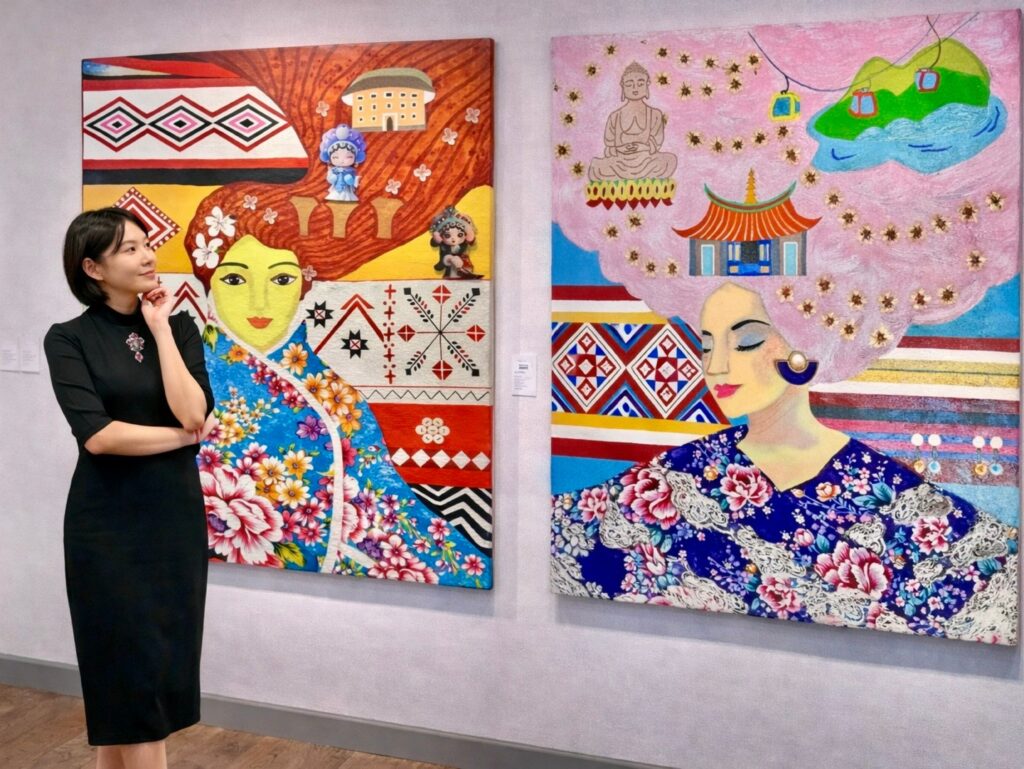
On this path where art and culture intertwine, Victoria chooses not to rush towards recognition, but to continuously reaffirm her original creative intention. For her, true value lies not in applause, but in someone willingly stopping to reconnect with the warmth of their culture and remember where they came from. (Photo: Flowerroad)

Recommend for you:

Art Is Not Just Performance, It’s the Power to Transcend Borders! Andy Lin, President of the World Taiwanese Chambers of Commerce Junior Chapter: Let Music Become the Language That Changes the World

Beyond the Ethics of Viewing: Artist Szuchi Huang on Creation as a Gentle Response to Sustainability and Equality

Tags: FlowerroadHakkaVictoria
ShareShareTweet
Ricky Wang

Ricky Wang

"Mastering the balance between innovative spark and strategic precision. The Goal: turning brand potential into a lasting global legend."

Recommended For You

Leo International Group Chairman and Founder Leo Wang. (Photo: Leo International Group)

A Century Is Not a Milestone, But the Beginning of Responsibility! Leo International Group Chairman and Founder Leo Wang: Designing Systems for the Next Century

by Kawin Lee
February 11, 2026

...

Miir Chen, Founder of FZ Patent & Trademark Ltd. (Image: FZ Patent & Trademark Ltd.)

Flipping the IP Mindset, Rewriting the Rules of Competition! Miir Chen, Founder of FZ Patent & Trademark Ltd.: Bringing Patents into Business and Capital is Key for Companies to Seize the Initiative

by Gary Kung
December 11, 2025

...

Aquacendo Founder Ray Ko. (Photography: Aquacendo)

The Light He Brought to COP30: Ray Ko and the Story of Water and Hope

by Daniel Carter
December 9, 2025

...

Violist and Erhu Virtuoso Andy Lin. (Photography: Andy Lin)

From the Concert Hall to the Global Chamber, Violist and Erhu Virtuoso Andy Lin Unites the World Through Culture and Vision

by Daniel Carter
December 4, 2025

...

2025 Better Business Awards – How Can Sustainability Become the Common Language of Business? BCCTaipei Executive Director Vicki Wu: Confidence Comes from a Commitment to Society

2025 Better Business Awards – How Can Sustainability Become the Common Language of Business? BCCTaipei Executive Director Vicki Wu: Confidence Comes from a Commitment to Society

by Gary Kung
October 30, 2025

...

Top Views

Takashi Idezawa, Chairman of LY Corporation (Photography: Yahoo News Singapore)

Takeshi Idezawa, Chairman of LY Corporation Who Spearheaded the LINE and Yahoo Japan Merger: We Are Advancing Human Rights Among Global Stakeholders!

August 20, 2024
Victoria, Founder of Flowerroad. (Photo: Flowerroad)

Flowerroad Founder Victoria: Starting with a Piece of Hakka Floral Fabric, Bringing Taiwanese Memories to the World

February 15, 2026
Dr Bruce Wang Lei, Founder and CEO of EcoFlow. (Photo: EcoFlow)

We’ve Talked About the Future of Energy for Too Long — Dr Bruce Wang Lei, Founder and CEO of EcoFlow: Smart Home Energy Solution is Becoming the answer

December 8, 2025
Robert O'Mahony, Logitech’s Head of Sustainability (Photography: Logitech)

Achieving the 2030 Net-Zero Target! Logitech’s Sustainability Chief, Robert O’Mahony: We Are All Key Players on the Global Stage of Sustainable Development!

September 16, 2024
Council of Indigenous Peoples Minister Icyang Parod: Let the World Come to Experience Taiwan Indigenous Tourism

Council of Indigenous Peoples Minister Icyang Parod: Let the World Come to Experience Taiwan Indigenous Tourism

March 22, 2023
Single Dad Paints His Way from Taiwan to the World! Taiwanese Illustrator BLUE: “A Brush Isn’t Enough to Express My Concern and Care for Son”

Single Dad Paints His Way from Taiwan to the World! Taiwanese Illustrator BLUE: “A Brush Isn’t Enough to Express My Concern and Care for Son”

November 3, 2023

The Icons

  • About 《The Icons》
  • Privacy Policy
  • Terms of Use

CATEGORIES

SDG ESG Leadership Business
Succession Academic Lifestyle Culture
World Innovation Tech Health
Entertainment Latest Opinion Women

Contact us

Email: hello@theicons.com


© 2025 THE ICONS COLLECTIVE LTD. All Rights Reserved.

Sign in or create your account
OR USE
Please wait. Signing you in...
Forgot Password?
Don't have an account? Signup now
OR USE
Please wait. Signing you in...
Already a member? Login
OR USE
Please wait. Signing you in...
Lost your password? Please enter your username or email address. You will receive a link to create a new password via email.
No Result
View All Result
  • 简体中文
  • 繁體中文
  • SDG
  • ESG
  • Leadership
  • Business
  • World
  • Health
  • Succession
  • Innovation
  • Entertainment
  • Academic
  • Culture
  • Lastest
  • Lifestyle
  • Tech
  • Opinion
  • Women
  • About《The Icons》
  • Login

© 2025 THE ICONS COLLECTIVE LTD. All Rights Reserved.

Are you sure want to unlock this post?
Unlock left : 0
Are you sure want to cancel subscription?