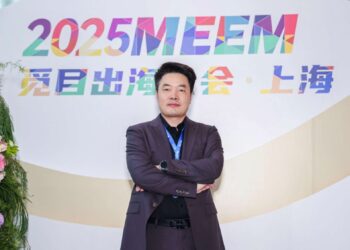

At the Shanghai Hongqiao Airport Shangri-La Hotel, the takeoffs and landings every three minutes outside the window symbolize the pulse of global trade, while indoors, the highly anticipated ” 2025 MEEM Go Global Conference” is underway. In this pivotal year of 2026 for global supply chain restructuring, Chinese companies’ ventures overseas are no longer merely about achieving a “trade surplus”; they represent a contest of “cognitive disparity” and “service capability.”
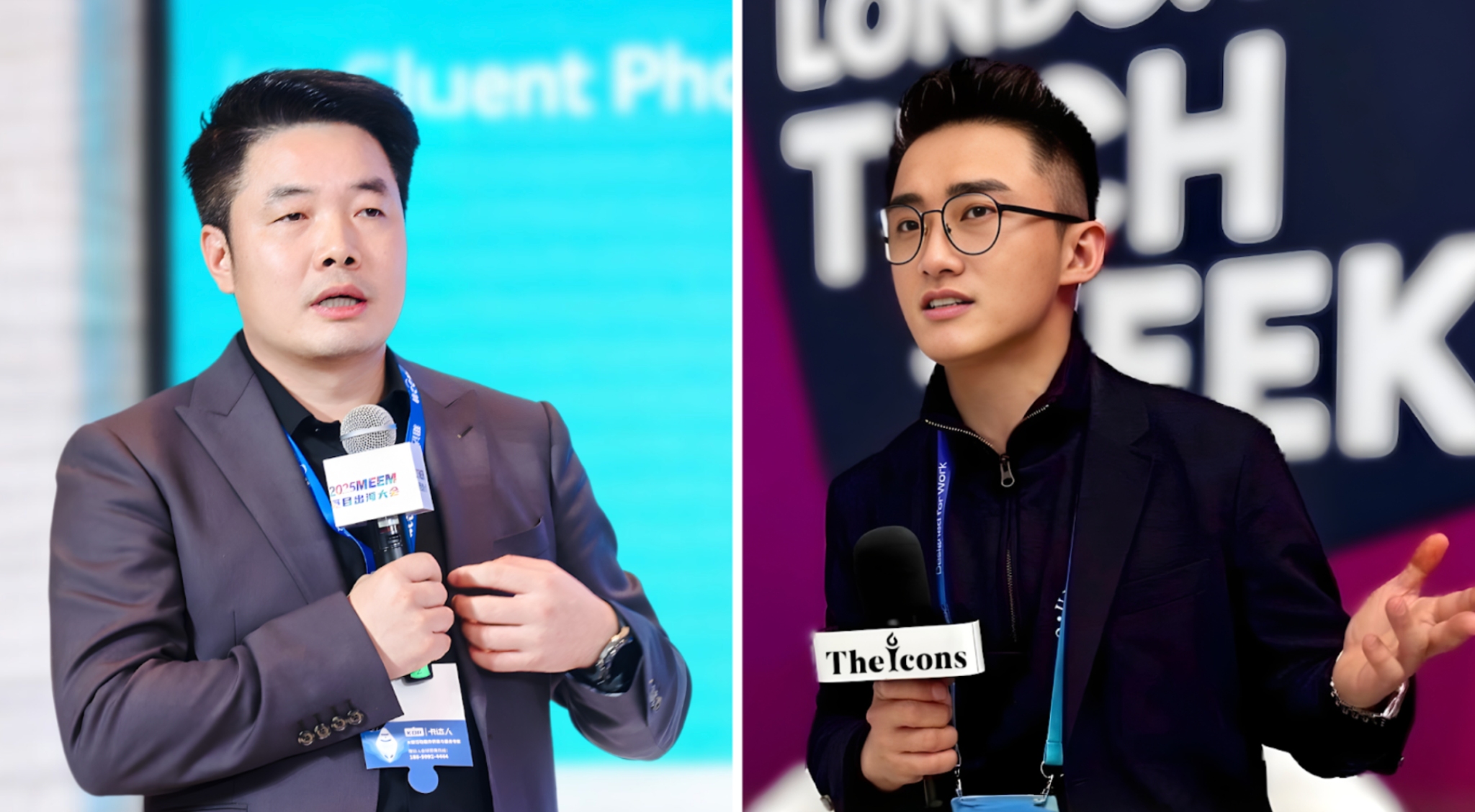
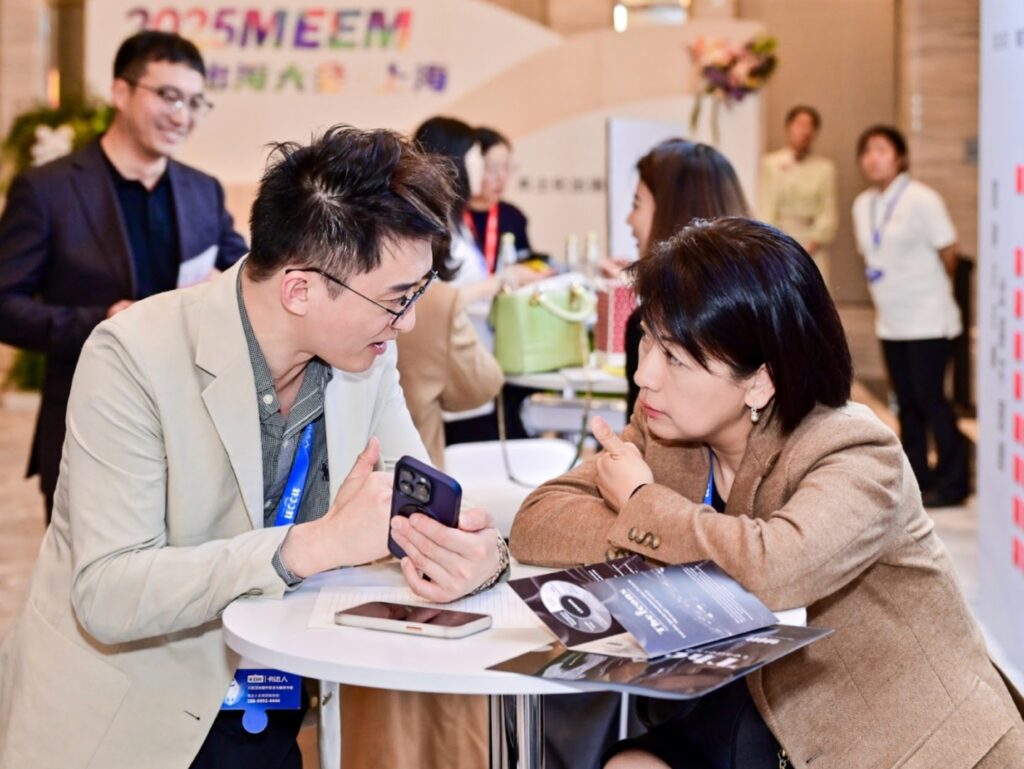
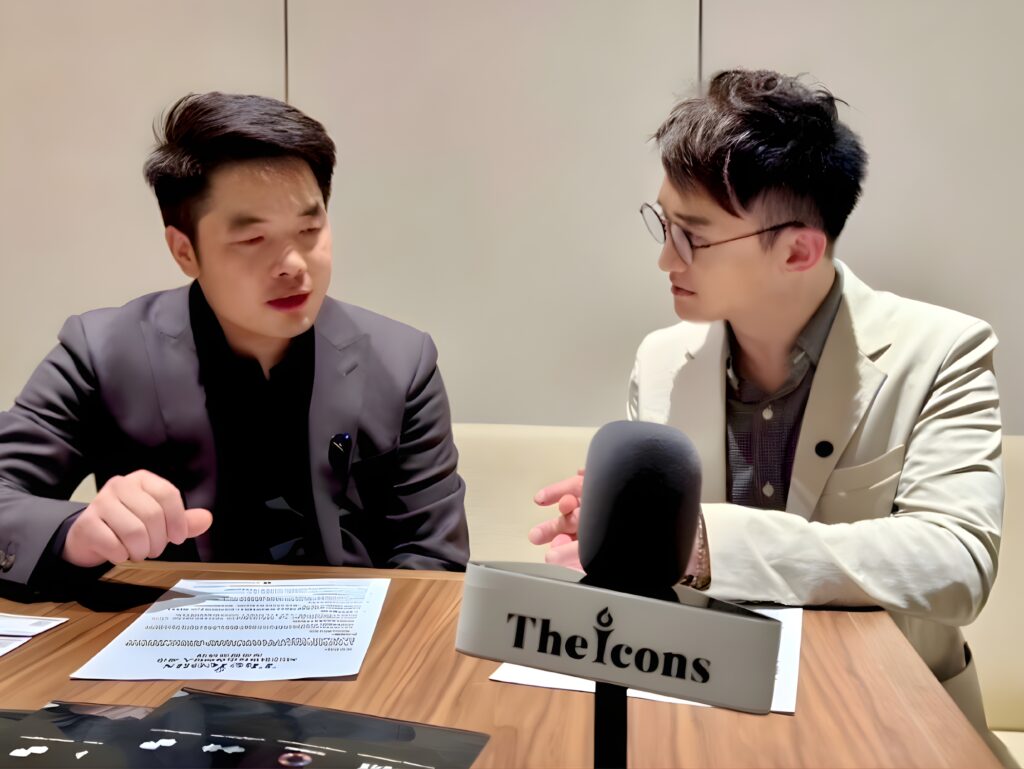
As a pioneer with nearly two decades of experience in digital management and global marketing, Toby, founder and chairman of both Coolgua and MEEM, engaged in a strategically profound dialogue with Harry Hsu, Founder of the UK-based global leadership media The Icons, on December 1, 2025.
Their discussion moved beyond how products can “go global” to focus on how leaders, with the determination to treat foreign markets as a “second home,” can establish indispensable localized value worldwide.

From Data Points to Value Awakening: The “MEEM” Structure
“When we founded Bitter Gourd Technology in 2006, we addressed the digital survival of exhibitions; but now, we aim to solve the ‘structural disconnect’ companies face during global implementation,” Toby reflected. He reviewed the three developmental stages of the group: starting with data management, moving to global digital marketing in 2011, and recently establishing “MEEM” in response to surging demand from the Middle East, Southeast Asia, and Russia. Past connection efforts often remained superficial—limited to “creating chat groups” or “making introductions”—lacking systematic depth.
Harry Hsu analyzed that Toby’s journey represents an evolution from a “digital tool provider” to an “integrator of commercial order.” He pointed out that the core of Leadership IP lies not in accumulating personal prestige, but in how a leader transforms their deep industry understanding into a replicable, actionable “value system.” The ‘MEEM’ structure proposed by Toby—Media, Event, Expo, Meeting—precisely converts scattered overseas resources into a tangible form of ‘leadership trust.’
Toby also noted, “Many clients used to ask why they should invest in overseas advertising or attend exhibitions. The response is that these touchpoints are often not just for traffic, but to establish a complete sense of ‘presence.’ If a leader focuses only on surface-level data without valuing the depth of connections, their overseas expansion will remain perpetually adrift. What we aim to provide now is a stable landing platform.”
He further emphasized that this structured service stems from the real pain points clients experience when expanding abroad. He observed that many companies fail in the initial stages because they lack a systematic “landing framework.” This is precisely why “MEEM” is shifting from single-point marketing to comprehensive platform-based integration, offering businesses a structurally supported “landing pod” as they enter unfamiliar cultural markets.
Toby’s Glocal Strategy: The Cognitive Revolution of Treating Overseas Markets as a “Second Home”
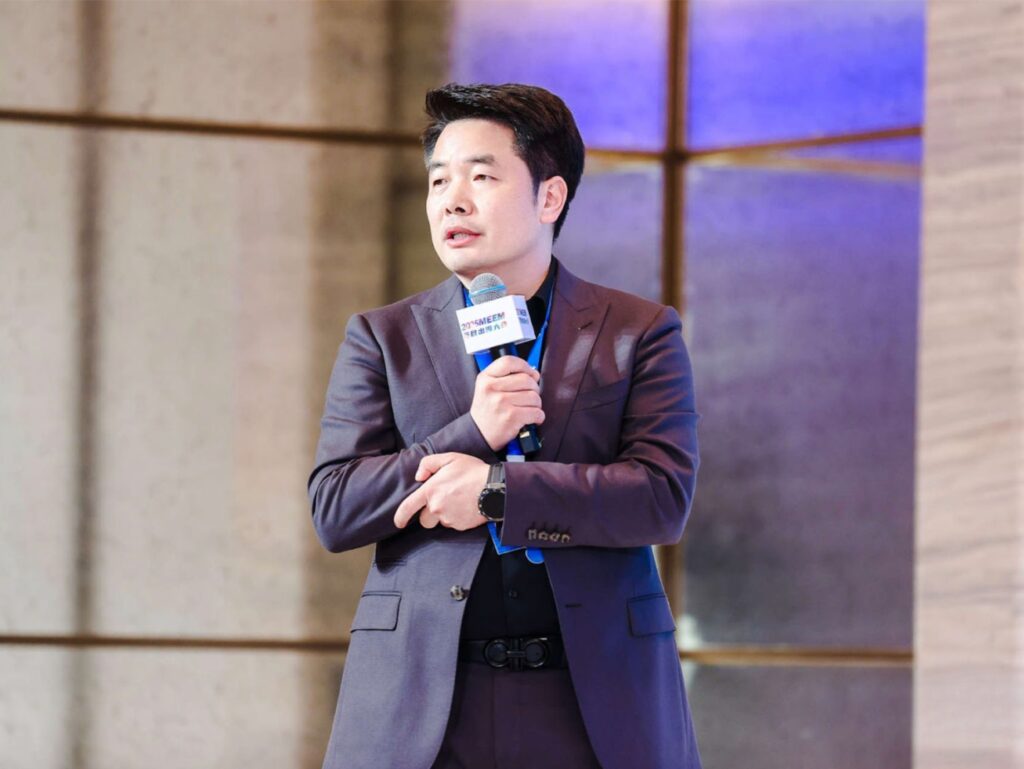
Discussing current market trends, Toby demonstrated precise judgment regarding regional strategy. He noted that consultation demand is currently strongest from Russia, Central Asia, the Middle East, and Latin America, yet most companies remain trapped in the misconception of applying a “domestic model.” Toby introduced a compelling concept: Glocal—the ultimate fusion of Global and Local. He believes true success comes from deeply cultivating overseas markets as a “second home,” rather than treating them as destinations for temporary business trips.
“90% of companies fail in their initial overseas ventures because they cannot locate the local decision-making core. You cannot simply find a local agent and consider the job done. You must establish experience centers and build brand presence locally, investing as you would in the Chinese market. This requires leaders to possess a ‘rooting’ determination, not a ‘merchandise-selling’投机 mentality.”
In response, Harry Hsu proposed the “Two Wings of Leadership” theory. He believes what propels a company to venture abroad is “confidence,” but what determines how far it can go is “reverence” for local norms. The vanguard role of “new media” is crucial in this step. Companies testing content and validating markets on LinkedIn, TikTok, and Facebook are essentially conducting a low-cost, high-efficiency ‘psychological rehearsal,’ done with respect for local market feedback.
Toby added that this is why he emphasizes “preparing the provisions before the troops march.” In the new media era, leaders’ mindsets must evolve: using media for market research to identify local pain points and decision-making cores. Harry Hsu considered this approach a reflection of the “flexibility” inherent in Leadership IP, seeking the most suitable communication frequency across different cultures. Both reached a consensus: future global competition will be about who can most rapidly establish “localized brand power.”
The “USB Drive” Model for Vertical Industries and the Empowering Role of AI Technology
Looking ahead, Toby proposed an innovative development path: transitioning from “general services” to “industry-specific vertical conferences.” He plans to encapsulate the logistics, marketing, legal, and other general capabilities accumulated by “MEEM” into individual “USB drives,” precisely inserting them into vertical industries like new energy, construction, and healthcare. He believes only by deeply cultivating vertical fields can the supply-demand mismatches within industrial chains be truly resolved.
“In the future, we won’t discuss vague business opportunities; we will discuss specific industrial ecosystems. For instance, for ‘MEEM New Energy’ or ‘MEEM Healthcare’ conferences, our goal is to empower professional fields with our generalized capabilities. Simultaneously, AI will significantly lower the barriers to cross-border communication, allowing technology and specialized knowledge to bridge language gaps seamlessly.”
Harry Hsu resonated deeply with this, defining it as the “seamless integration of influence and resource capability.” He pointed out that the new generation of business successors does not lack technology or vision; what they lack is recognized “proof of results” within traditional systems. Toby suggested these young leaders could utilize such “vertical field” micro-projects to develop profitable models within a year. This serves not only as proof of performance but also as a process for Leadership IP to build “trust assets.”
Toby further explored AI’s impact on the future landscape of global expansion. He views AI not merely as a tool but as a decision-making aid. In highly specialized fields like healthcare or construction, AI can shorten the trust-building cycle. Harry Hsu cautioned that despite technological advances, final decisions ultimately rest on leaders’ value judgments. AI can optimize processes but cannot replace a leader’s power to interpret global value.
Harry Hsu: Starting from Home, Writing a New Chapter in Business by Building Global Leadership IP
As the dialogue neared its end, their conversation extended from business logic to the spiritual dimension. Harry Hsu believes the essence of future global competition lies in the competition among “leaders.” A company lacking a leader with soul cannot gain respect in the international community, even with the best technology. He noted that what Toby has built is essentially a “translator” enabling China’s innovative forces to engage in dialogue with the world.
Harry Hsu stated that true global expansion begins with leaders crossing inner boundaries first: “When you are willing to understand the world and be understood by it, your enterprise will exhibit an unprecedented vitality. What we are engaged in is not merely business; we are constructing a new rhythm for global dialogue.”
He also emphasized the importance of “strategic agility within operational stability,” believing that in a volatile global landscape, entrepreneurs should flexibly adjust strategies across regions while maintaining a stable core service architecture to ensure long-term success.
“To assist more corporate leaders in securing a place in the global market, The Icons, as a global leadership influence media, is dedicated to tailoring absolute discursive power and influence for entrepreneurs. While helping business leaders connect with global resources, we also rapidly translate their personal attributes into globally comprehensible ‘trust codes,’ enabling brands to gain the qualification to dialogue with local power centers when entering any country or economy.”
Toby concluded the dialogue with a summary aphorism, emphasizing that while products can be copied, a leader’s determination for localization cannot: “Only through deep cultivation can one truly arrive.”
Recommend for you:
MEEM Founder Toby: Only by Treating Overseas Markets as a “Second Home” Can Enterprises Go Far