

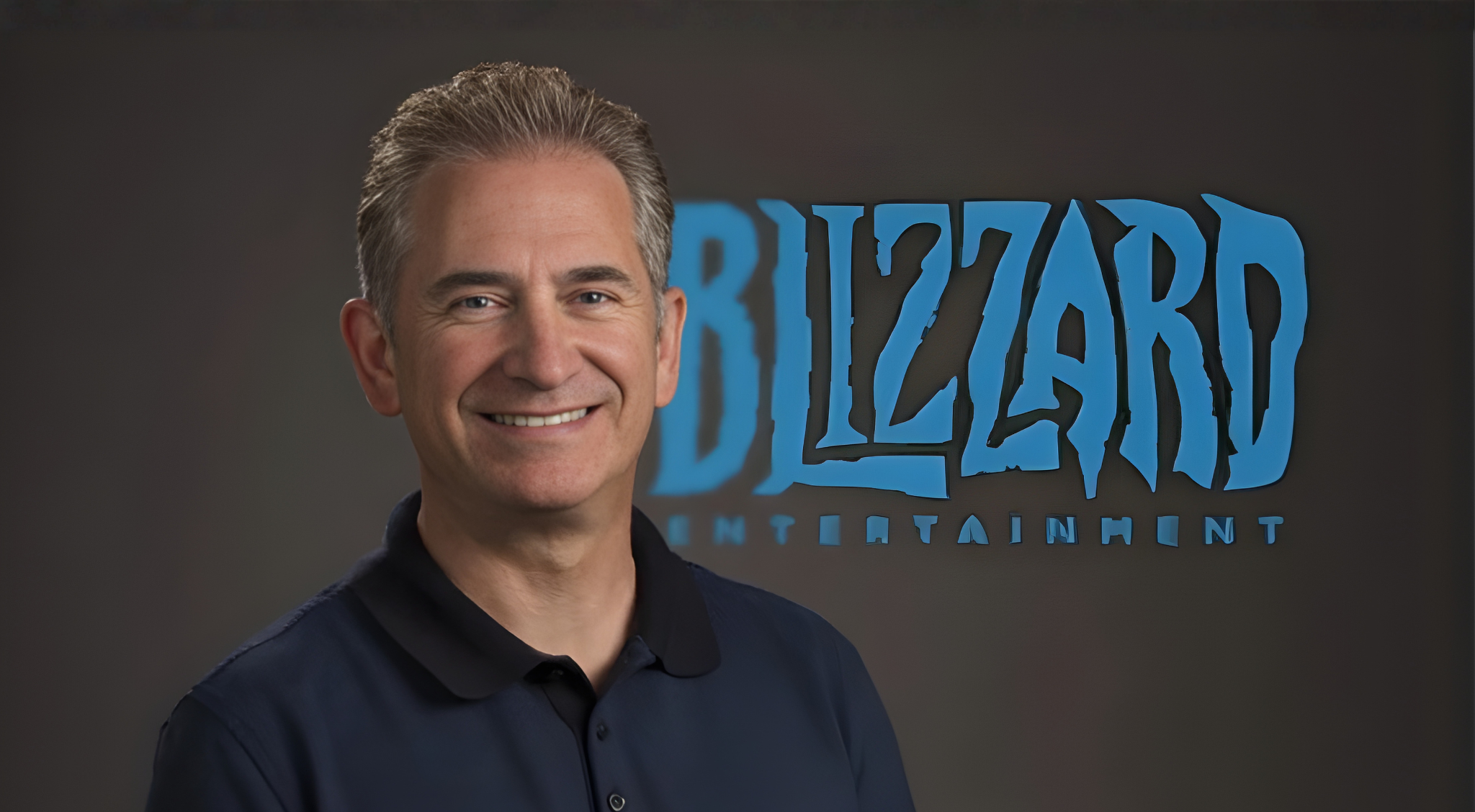
Over the past three decades, as the digital economy has expanded at an extraordinary pace, the global games industry has undergone a profound transformation. Once regarded largely as a form of youth entertainment, video games have evolved into one of the world’s largest cultural industries. With the rise of the internet and digital platforms, games have shifted from standalone products to continuously evolving virtual worlds. Within these environments, players form communities, exchange value, and create culture, positioning games as a central pillar of contemporary digital life.
In such a fiercely competitive industry, few entrepreneurs have managed to shape its direction over the long term. Michael Morhaime, co-founder and former Chief Executive of Blizzard Entertainment, stands as one of the most influential figures in that transformation. From the rise of PC gaming in the 1990s to the emergence of massively multiplayer online worlds, and now to a renewed focus on creative culture, his career has closely mirrored the evolution of the modern games industry.
Morhaime has repeatedly pointed to the design philosophy that defined Blizzard and left a lasting impression on the industry: “Gameplay always comes first.” Originating from Blizzard’s long-standing internal principle, Gameplay first, this idea captures his core belief about game development: before any market strategy or technological innovation, the player experience must remain at the centre of everything.
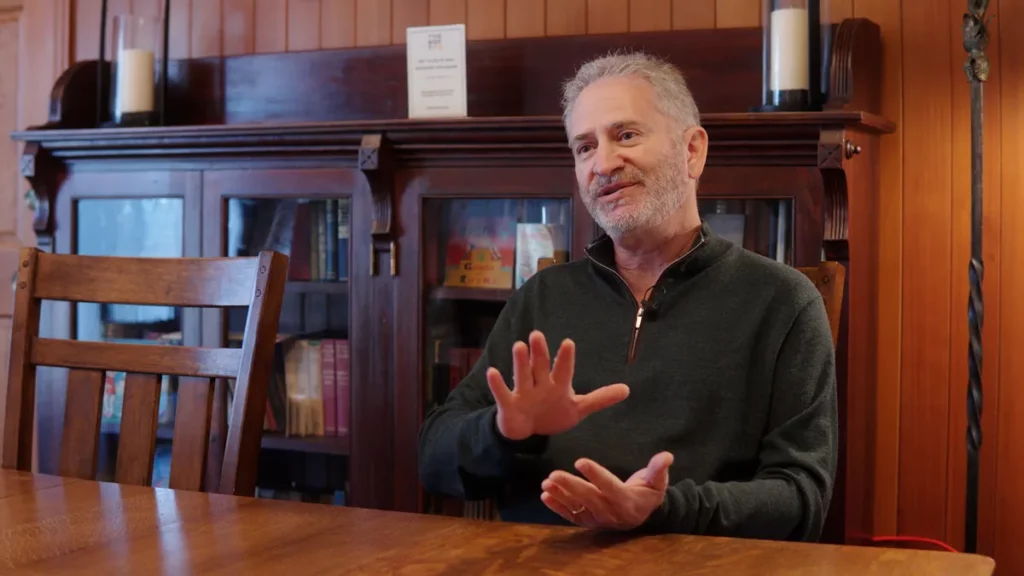
A Generation of PC Gaming Shaped Not by Markets, but by Engineers with a Vision
In 1991, Michael Morhaime, together with his UCLA classmates Allen Adham and Frank Pearce, founded a small game development company in California named Silicon & Synapse. The company would later become known as Blizzard Entertainment. In its earliest days, the team was modest in size, primarily undertaking porting work and outsourced development. Yet during this period, the founders began to define a clear ambition: to build worlds of their own.
The release of Warcraft: Orcs & Humans in 1994 marked the company’s first breakthrough, while Warcraft II in 1995 significantly expanded Blizzard’s presence in the emerging PC gaming market. At the time, the industry itself was still in a phase of rapid evolution, but Blizzard’s titles quickly gained traction among players. Reflecting on the company’s design philosophy, Morhaime once remarked, “We want to make the best games possible.”
This commitment to quality allowed Blizzard to cultivate an unusually loyal player base throughout the 1990s. With the success of StarCraft (1998) and the Diablo series, the company’s global influence grew rapidly. In particular, the popularity of StarCraft in South Korea helped lay the foundations for modern esports, marking a moment when gaming began to establish itself as a global cultural force.
When Games Became Worlds, Companies Began to Run Entire Economies
The release of World of Warcraft in 2004 would prove to be one of Blizzard’s most consequential contributions to the industry. As a massively multiplayer online role-playing game (MMORPG), it introduced a fundamentally different model: the persistent, continuously evolving virtual world.
At its peak, World of Warcraft attracted more than ten million subscribers worldwide. Unlike traditional single-player titles, the value of an MMO lies not in one-off sales, but in sustained engagement. Players inhabit the same world, interacting, collaborating and competing over extended periods, turning the game into a living, evolving social platform.
Discussing the success of MMO design, Morhaime has emphasised a principle that became central to Blizzard’s approach: “The most important thing is to listen to the players.” In a live service environment, player feedback directly shapes the direction of development. This ongoing dialogue between developers and community helped Blizzard establish enduring relationships with its audience.
Blizzard’s annual BlizzCon convention stands as a reflection of this culture. Since its inception in 2005, it has grown into one of the world’s most prominent gatherings of gaming communities. In his opening addresses, Morhaime would often remind attendees, “You are the heart of Blizzard,” underscoring the central role of players in shaping the company’s worlds.
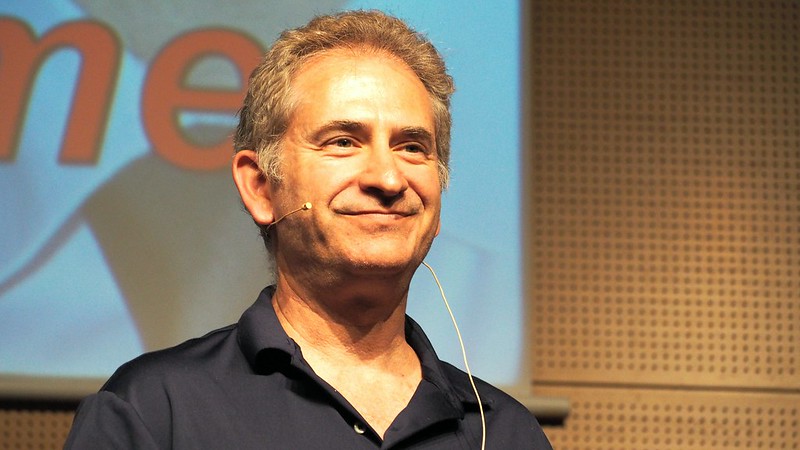
As Gaming Entered the Capital Markets, Creative Culture Came Under New Strain
As Blizzard’s influence continued to expand, the company was gradually drawn into a broader corporate structure. In 2008, Activision merged with Vivendi Games to form Activision Blizzard, marking a defining moment for the industry’s integration into global capital markets. It was a transition that not only reflected the sector’s growing economic significance, but also introduced a new level of complexity in corporate governance and competitive pressure.
For a creative industry, such structural shifts inevitably bring tension. Game development requires time, iteration and a tolerance for uncertainty, while capital markets tend to favour speed, predictability and returns. The resulting friction between creative culture and financial discipline has since become a defining theme in discussions around the modern games industry.
In 2018, Michael Morhaime announced that he would step down as Chief Executive of Blizzard, bringing to a close a 27-year tenure. For many within the industry and its global community of players, his departure marked not simply a leadership change, but the end of a formative era in Blizzard’s history.
Beyond Blizzard, Morhaime Set Out to Build Not Just a Company, but a Creative Environment
In 2020, Morhaime, alongside several former Blizzard colleagues, founded a new company: Dreamhaven. Headquartered in Irvine, California, the company operates two internal studios, Moonshot Games and Secret Door.
Dreamhaven represents a deliberate departure from the conventional structure of large-scale game publishers. Rather than prioritising rapid output or market cycles, it seeks to cultivate an environment in which developers can sustain creative work over the long term. As Morhaime has put it, “We want to create an environment where developers can do their best work.”
At its core, this philosophy reflects a belief that game development is fundamentally collaborative, and that organisational culture plays a more decisive role than technology alone. In many respects, Dreamhaven can be seen as an extension of Blizzard’s early ethos, one in which creative work is not subordinate to commercial pressure, but placed at the centre of the enterprise.
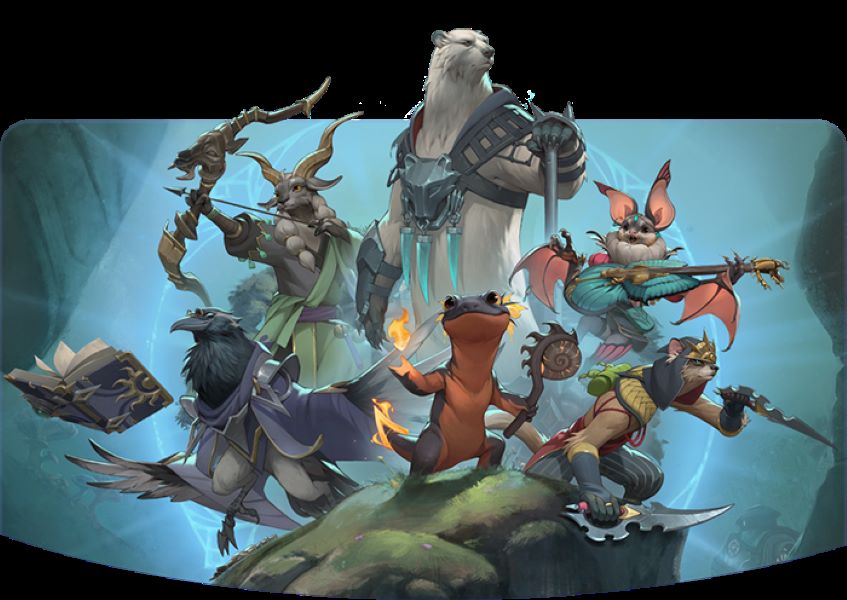
The Next Phase of Competition Will Be Defined by Who Can Truly Build Worlds for Players
Today, the games industry stands at another inflection point. Advances in cloud computing, artificial intelligence and real-time social platforms are reshaping how players engage with digital worlds. Games are increasingly evolving from discrete entertainment products into persistent environments, while players themselves are no longer merely consumers, but active participants within living communities.
Viewed in this context, Michael Morhaime’s career traces a clear arc across the industry’s evolution from the rise of PC gaming, to the emergence of massively multiplayer worlds, and now towards a renewed emphasis on creative ecosystems. Across these phases, his central question has remained consistent: how to build structures in which creativity can endure over time.
In an industry often driven by short-term cycles and rapid technological shifts, Morhaime’s approach has remained distinctly long-term. As he has often reminded players at BlizzCon, “You are the heart of Blizzard.” It is a statement that captures his broader philosophy: that the true foundation of any game world lies not in technology or capital, but in the enduring relationship between creators and the communities they serve.
Recommend for you:
COP30 Leaders|COP30 CEO Ana Toni: If You Are Not Part of the Solution, You Are Part of the Problem!