
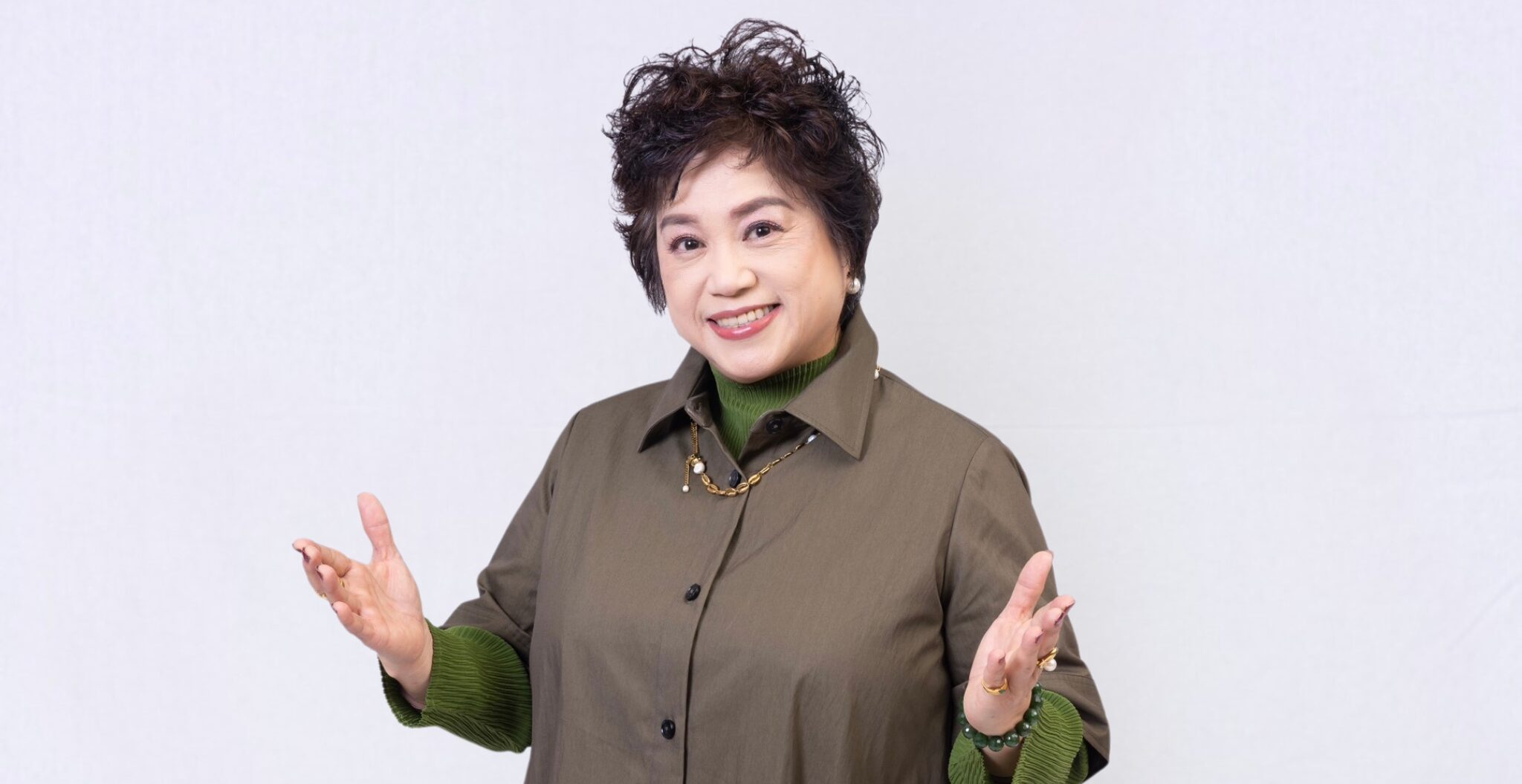
In the landscape of Taiwan’s life ritual services, one name is called the “Godmother of Life” by many peers and families: Teng Shu-Lan. She moved from the beauty industry, which made people look better, into the topic of death that most people shy away from. Leading the BAIYI, LUNG YEN Authorized Distributor through industrial transformation, technological waves, and generational changes, she has turned this work into a “civilizational awakening” in a market on the verge of reaching a hundred-billion scale.
“This is an industry full of market size and various potentials. Many of the new generation have found opportunities here,” said one of TENG SHU-LAN’s supervisors. “Shu-Lan is truly special. She leads the team in building a business and changing people’s lives. But can you imagine? In her vocabulary, the word ‘performance’ rarely appears. Instead, you hear more of ‘dignity,’ ‘practice,’ and ‘mission.'”
Restarting Life: From the Hardest Path to the Deepest Love
TENG SHU-LAN chose the path of the funeral industry, a category that many in Asia try to avoid at all costs. But what she saw back then was not a niche, unpopular business, but an essential service on the verge of becoming a trend: “Demand drives sales. This is a ‘product’ that everyone must face once in their lifetime, you can’t buy the wrong one, you can’t return it. The key is having someone to help oversee it, whether it’s the brand, the product, or the service, so that the family can feel at ease.”
Along the way, TENG SHU-LAN realized that the real hurdle to entering this profession is not death itself, but the judgmental eyes of others. Her previous job was in the beauty industry, helping people look beautiful. But her new path involved facing the deceased, hospital rooms, and funeral parlors. After switching careers, she lost seven kilograms in just ten days. She laughs and says that period felt like “life restructuring me all over again.” Yet, it was during this sharp turn that she confirmed she no longer needed to be swayed by others’ opinions.
“Every choice you make in life determines your destiny. A new decision opens up a new path. I thought it through clearly back then: if it allows my parents to live better, I don’t need to worry about whether this path ‘sounds good or not.'”
TENG SHU-LAN knows well that death is just an unspoken inevitability: “Death is a necessary process; there’s really no need to resist it. When you are at your most flustered, having a professional team by your side, ensuring you won’t be cheated or lose your composure, don’t you think that itself is a great comfort?”
She recalls her first sale: a man who ran an eyewear store. Not only did she sell him the product, but she also invited him to join the life industry. “At that moment, I felt my whole life force blossom, my spirit was full. I realized that the more you fear something, the more you need to walk toward it, and the fear will disappear.”
This Is Not a Business; It Is a Life Project About Dignity
“I don’t sell death; I sell the final dignity of a life.” This sentence could almost be TENG SHU-LAN’s career motto. For her, “dignity” is not a fancy word but something that materializes in every detail of the farewell scene.
For the deceased, dignity means that their final journey still retains a name, an identity, and the right to be properly bid farewell, “not hastily disposed of, not packed up at the lowest price, but sent off with the height of a life lived, with the family’s love.” For the family, dignity is the practice of completeness and love, the peace of mind that comes from “I did my best,” not the regret of “I was too late.” At the family level, dignity is a kind of grace that lets future generations know that “ours is a family with culture, responsibility, and preparation.”
TENG SHU-LAN especially emphasizes that dignity is also the sense of mission shared by a group of life workers: “Death is not the end; a farewell without dignity is where regret begins. Dignity is not about saving face for the deceased; it’s about peace of mind for the living.” Over her years of service, she has met a Taiwanese businesswoman in Vietnam, a sister who placed all her hopes on her younger brother, and has personally handled the body of someone who died unexpectedly and was found at home after already decomposing. Those seemingly cold scenes are each a turning point in a family’s fate. If handled carelessly, the regret will stay in the heart for a lifetime.
Therefore, she sees a “pre-need funeral contract” as a project of love, not just a contract. She says a pre-need contract is a kind of happy arrangement, a thoughtfulness toward family, and a compassion toward oneself. It keeps the family from panicking, from being emotionally blackmailed, and from having to face money and choices at the moment of greatest pain.
“It’s not about spending money on rituals; it’s about using an attitude of love to arrange the final journey in advance. A truly prepared life is what completeness looks like. A farewell made with respect is what happiness looks like.”
TENG SHU-LAN: Our Office, Defining the Path, Establishing the Heart, Practicing Together
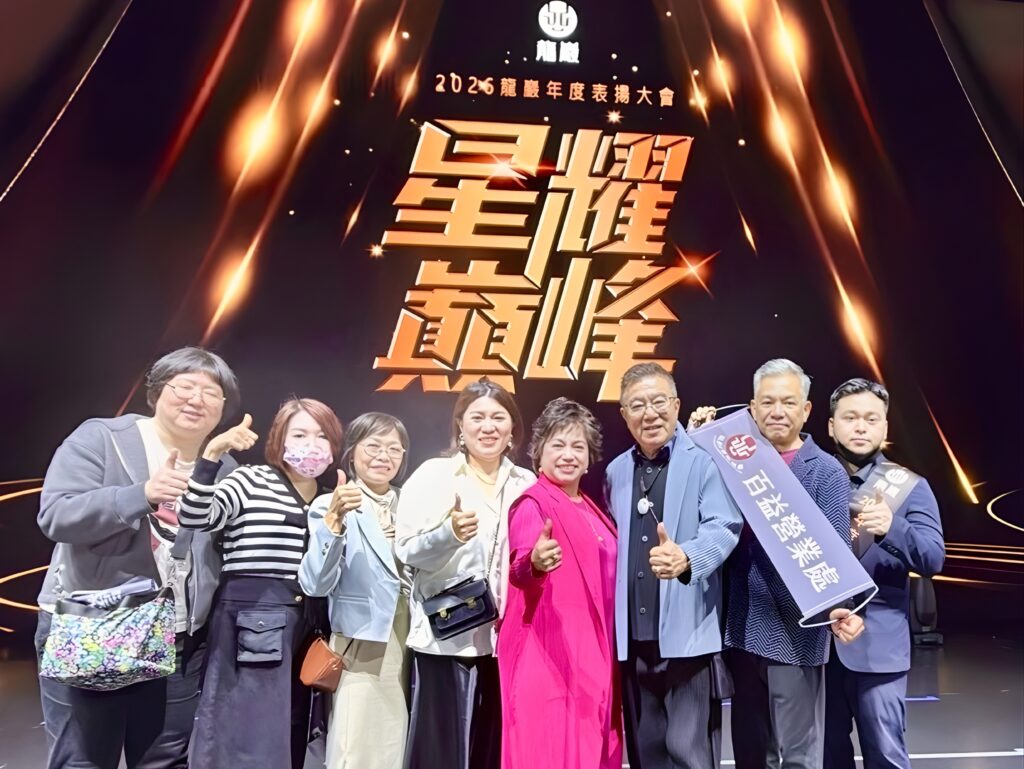
If a pre-need contract is a civilizational project, then the BAIYI, LUNG YEN Authorized Distributor is the frontline architect of that project. TENG SHU-LAN has given her team a very clear definition: “We want to build a noble team in the life industry, not just making money, but also cultivating a path where wealth and spiritual practice go hand in hand.”
At the core of her team culture statement is: “There is ethics between superiors and subordinates, and righteousness among colleagues.” She rejects the old culture where supervisors are treated as bosses and juniors as tools, emphasizing that hierarchy is a role, not arrogance; ethics is respect, not oppression. She leads her team in pursuing wealth, but adheres to long-termism, no one-time deals, but a lifetime of karmic business.
“Every word we say must be worthy of the client’s soul and family.” She allows mistakes, because “we learn from mistakes and awaken through learning.” True professionalism is not about being perfect, but about being willing to become a better version of oneself.
On this foundation, she has designed a complete set of “Seven Forces of Legacy” for the team: the power of questioning, the power of empathy, the power of guidance, the power of integrity, the power of compassion, the power of initial intention, and the power of mission. Each force corresponds not to a sales technique, but to the ability, when facing a person, to ask questions that reach the heart, to hear the unspoken emotions, and to guide the family to move forward willingly, rather than being forced into a decision: “Closing a deal is not the end; companionship is the beginning. I often remind everyone that we are doing karmic work for millions of souls.”
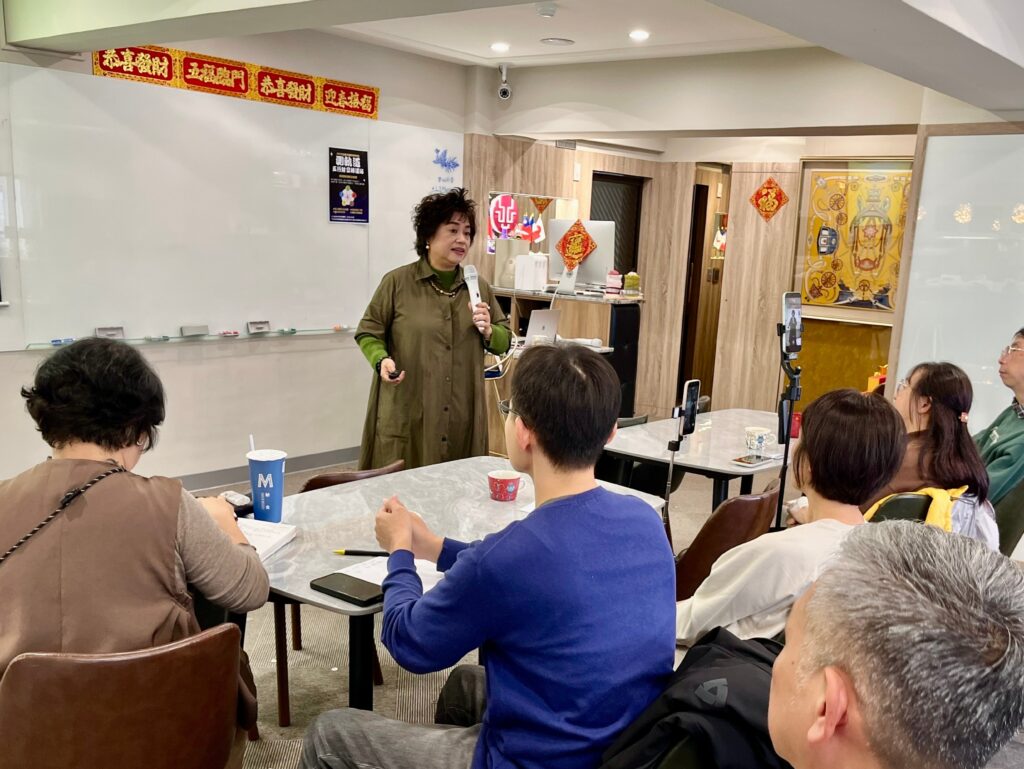
What makes TENG SHU-LAN’s office most unique is also the phrase: “We are constantly changing.” She leads her partners out of valleys and out of the country, to different countries, to learn from world-class teachers, so that the material and spiritual wheels turn together.
“To retain young people, the first step is of course to let them make money, that’s reality. But to keep them willing to stay for ten or twenty years, they must find a path of self-growth in this work.” In her eyes, as long as someone is willing to be grateful, not stubborn, open-minded, willing to listen and follow, and willing to change, they can become her true companion on the road.

Between Technology and Change, Guarding the Final Journey That Must Be Completed “By Humans”
Looking ahead to the next decade, Taiwan’s funeral industry is moving toward a hundred-billion scale, with technology and industrial transformation already in progress. Online memorials, AI wills, digital processes, and cloud farewells are rapidly changing how people face death. But in TENG SHU-LAN’s eyes, no matter how much technology advances, it can only be a tool; it cannot replace “people” themselves.
She sees three clear changes. First, farewells are moving from rigid traditional ceremonies to personalized, artistic life theater, each farewell should echo the life story of the deceased. Second, the shift from “families forced to handle things at the time of death” to “pre-planning while alive”, the pre-need contract has become a symbol of a new civilization. Third, moving from complete reliance on physical contact to digital and AI-assisted spaces, making information more transparent and processes clearer.
Yet she always reminds her team: “Technology can be faster, but it cannot be warmer. Forms can be simplified, but farewells cannot be simplified.” In her observation, every farewell is not a process, but the conclusion of a relationship: a mother’s tears as she sends off her child, a son’s determination to fulfill his father’s last wish, an elderly couple’s smiling goodbye after a mutual promise. “So, I don’t sell products; I sell the gentle strength along that final stretch of road.”
Through years of dialogue and cooperation with her husband, TENG SHU-LAN continues to think about how to completely clear away outdated marketing methods and bad habits in this time of change, leaving behind a new standard where material and spirit go hand in hand. She believes that when the team solidly walks this path with heart, “those nearby are happy, and those far away come”, like-minded people will naturally be drawn, making the industry not just bigger, but more substantial and more humane.
An Invitation: To Those Ready to Walk This Path
Speaking of the future, she uses an old saying but gives it a new meaning: “Where there’s a will, there’s a way.” In her eyes, “having a will” is not just about success, but about achieving a certain state of life. She has led more and more young people into this industry, even guiding children who had been abandoned by their families to grow into excellent life guides in the field. And her expectation for them is actually very simple: “Find the track where you can give, and then meet a better version of yourself through your mission.”
Joining Baiyi is not just a job; it is a calling to practice value and legacy. She would say: here, you are rooted in altruism, stand firm through professionalism, help others make wise arrangements at critical moments in their lives, and achieve your own growth and breadth through companionship. First benefit others, then benefit financially. When you truly benefit more people, your own life will also benefit. And Baiyi is looking for people willing to stand for value and walk for legacy.
She believes that what she truly wants to build is not a collection of individual contracts, but a “dignified family culture.” To make society willing to set aside the taboo on death and bravely talk about life and death; to help more people understand that pre-planning is not bad luck, but the most responsible form of respect for life: “What I do is not a business of life and death, but a cultural revolution of dignity. What I sell is not farewell, but a love that leaves no regrets for the family.”
And now, with technology advancing rapidly, at the crest of industrial transformation, she defines her role with a gentle but firm declaration.
“The final farewell of a life should be completed by humans and guided by love. Amid all the changes, I remain a guardian of people.”
Recommend for you: