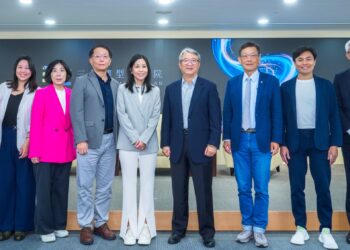


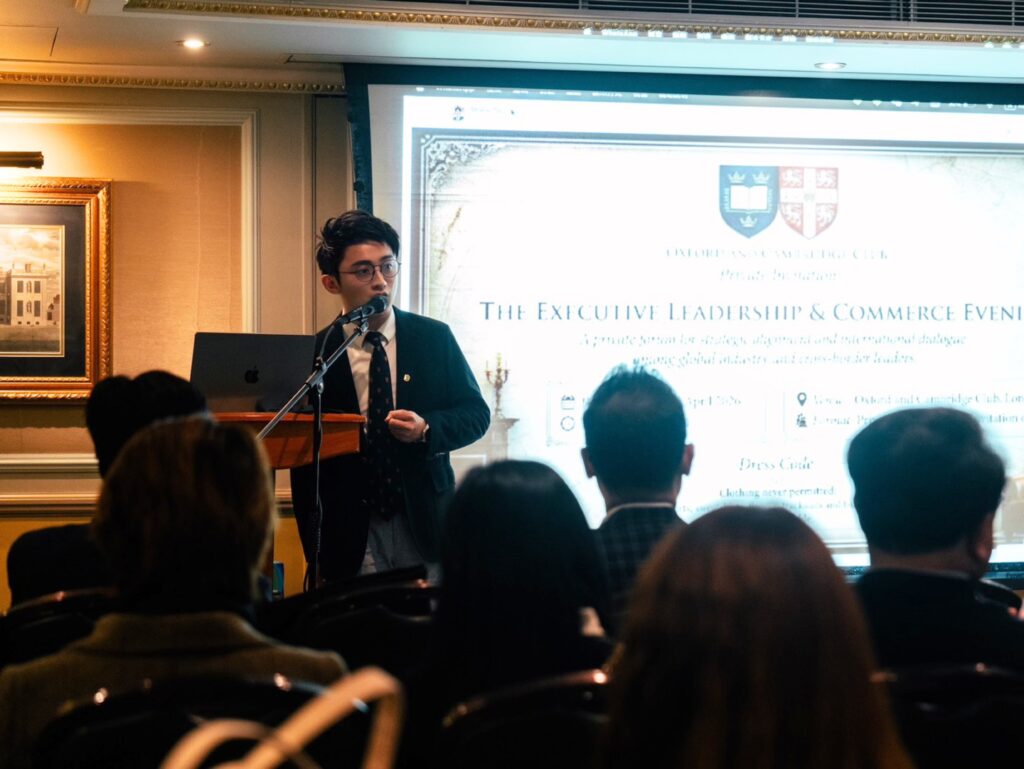
As the global order moves from a single centre to a multipolar structure, the key factor influencing capital flows and opportunity distribution has shifted from “resource control” to “narrative position.” The “2026 Oxford and Cambridge Club The Icons Chinese Business Forum,” hosted by the UK-based global leadership influence media The Icons, concluded successfully on 2 April in London, UK. The forum focused on the structural changes brought about by AI, examining how Chinese business leaders can be understood, included in decision-making, and further participate in world-class dialogue and collaboration in the new global context.
The forum was deliberately held at the Oxford and Cambridge Club, a venue symbolising the spirit and institutional heritage of Oxford and Cambridge alumni. This choice was not merely about a landmark but a response to long-term values. As the world enters an era of multipolarity and uncertainty, Chinese communities are no longer just participants in the global economy but are gradually becoming a significant force shaping industrial structures and capital flows.

“The real key to this discussion is not whether Chinese communities are going global, but whether this group can be understood, trusted, and continue to exert influence in the international context.” Harry Hsu, CEO of The Icons, speaking on behalf of the organiser, said in his opening address:
“The defining line of influence in the next decade will not be about who is stronger, but about who can be accurately understood by the world.”
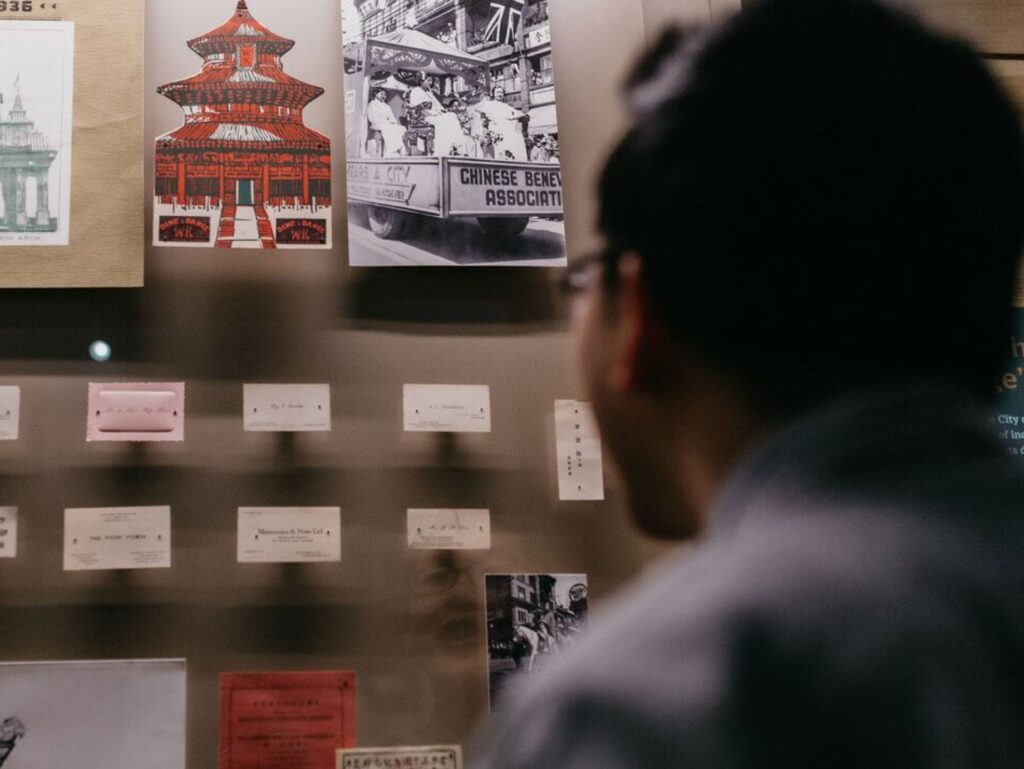
Venue as Power: Oxford and Cambridge Club Becomes the Context-Switcher for Chinese Dialogue
Harry Hsu is currently also Vice Chairman of the UK Taiwanese Chamber of Commerce and Secretary General of the Cambridge University Taiwan Alumni Association. In an interview after the event, he pointed out that this forum was not a typical networking event but a deliberately designed dialogue space. The Icons’ original intention in organising the forum was simple: to bring Chinese business leaders from different cultural backgrounds into the same context so they could align their ways of thinking, rather than interpreting the world through their own separate logics.
Choosing the Oxford and Cambridge Club was part of this design. It has long been a meeting point for the UK’s core decision-making circles and elite networks, where many relationships and judgements are established and confirmed.
The participants at this forum ranged from industrial successors from Taiwan, financial market participants from Hong Kong and Singapore, AI entrepreneurs from mainland China, and investment and trade decision-makers active in North America and Europe. These Chinese leaders, originally scattered across different cultural systems, were brought together into a single venue. Combined with the practical perspectives of UK-based businesses and banks, as well as academic and startup leaders from Oxford and Cambridge, the dialogue moved beyond simple information exchange. It gradually extended to how they understand risk, make judgements, and build a consensus foundation that can be aligned across different systems and market logics.
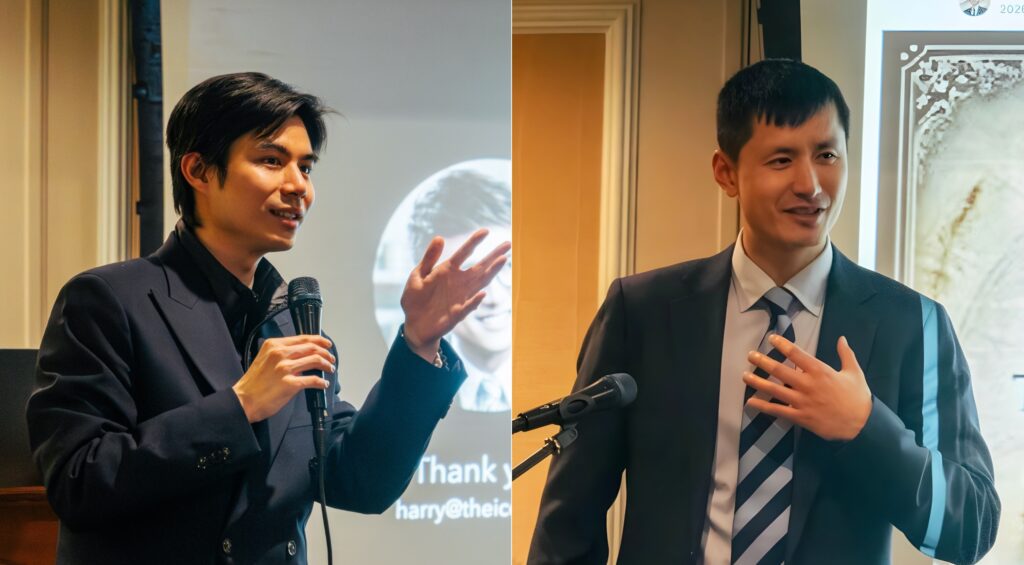
Above AI Lies Cognitive Competition: When Technology Accelerates, Misunderstanding Itself Generates Costs
In his keynote speech, Harry Hsu did not focus solely on the technological evolution of AI. Instead, he offered a more realistic and pressing judgement: as the world accelerates, what truly differentiates market positions is not who possesses technology, but who can be “correctly understood.”
“AI is making the world faster, but it is also amplifying misunderstandings between us.” When the efficiency of information transmission far exceeds the speed of building mutual understanding, the risk faced by companies is no longer just competition, it is being misread, misjudged, or even directly excluded from key decision-making circles. This risk is not explicit, but it accumulates and amplifies continuously in capital allocation, cross-border cooperation, and brand trust.
McKinsey Global Institute noted in 2023 that generative AI could create approximately $2.6 to $4.4 trillion in annual global economic value, but its benefits will be highly concentrated among the few companies that can embed the technology into organisational decision-making and market narratives. Meanwhile, the World Economic Forum’s Future of Jobs Report 2023 explicitly lists systemic thinking and cross-cultural understanding as key future skills. These findings show that in a highly connected world, “the ability to be understood” is gradually becoming a prerequisite for decision-making power and opportunity distribution.
Hsu said that under these conditions, AI no longer constitutes a competitive advantage but merely the minimum threshold to enter the competition. The real dividing line emerges at another more critical level: who can be accurately seen, consistently referenced, and establish a trustworthy narrative position across different global contexts.
“If your voice is not placed in the right context, the market won’t reject you, it just won’t see you.” Hsu pointed out that when technology speeds everything up, the determinant of long-term position is no longer capability or advantage alone, but whether these capabilities and advantages are understood by the world. This makes influence and visibility no longer added value, but basic conditions for entering global competition.
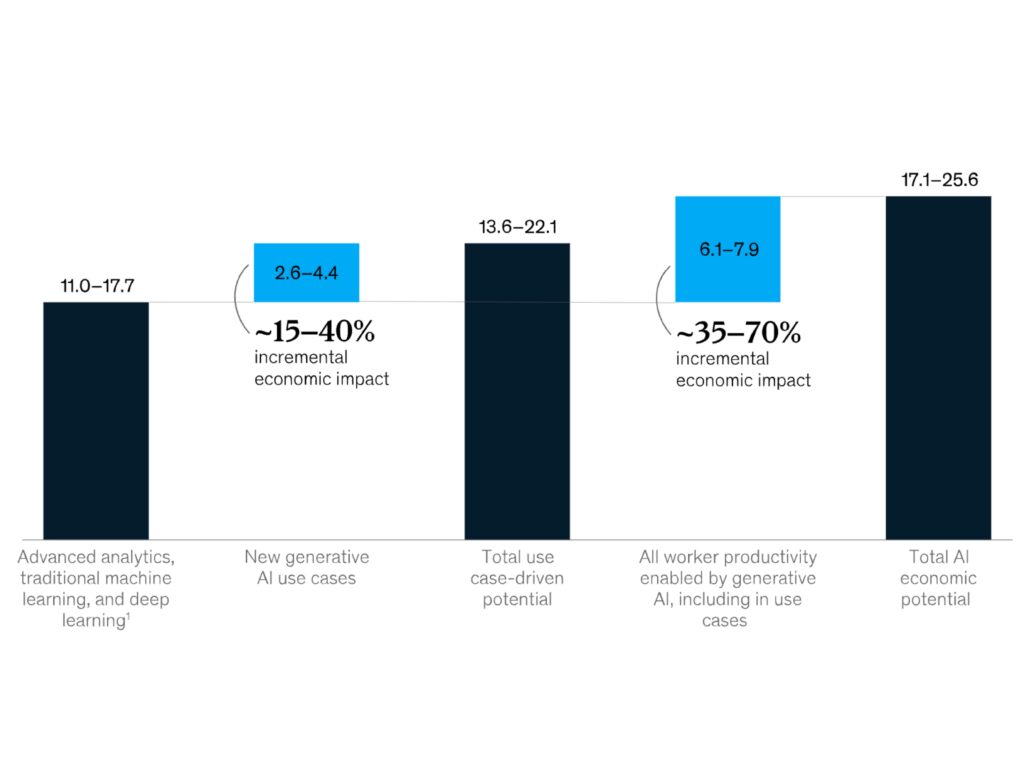
From Capability to Acceptance: The Market Never Chooses the Strongest, but the Understood
As technological barriers continue to fall, a more realistic question emerges: why do capable companies still fail to enter key markets and decision-making systems? Harry Hsu put it bluntly: most companies think they are competing in the market, but in reality they are competing to be included in the other party’s framework of understanding.
“In global capital and decision-making networks, opportunities are not distributed equally but flow along existing cognitive pathways. Those who are understood, trusted, and repeatedly mentioned naturally appear at the decision-making table. Those who are unheard of, even if capable, will not be discussed, let alone chosen.”
Hsu also noted that although International Monetary Fund World Economic Outlook data shows the Asia-Pacific region already accounts for more than one-third of global economic output and has been a major source of global growth over the past decade, in practice, cross-border investment and strategic decisions do not automatically translate resources and capabilities into opportunities. The key remains how these capabilities are understood and whether they are incorporated into existing judgement frameworks.
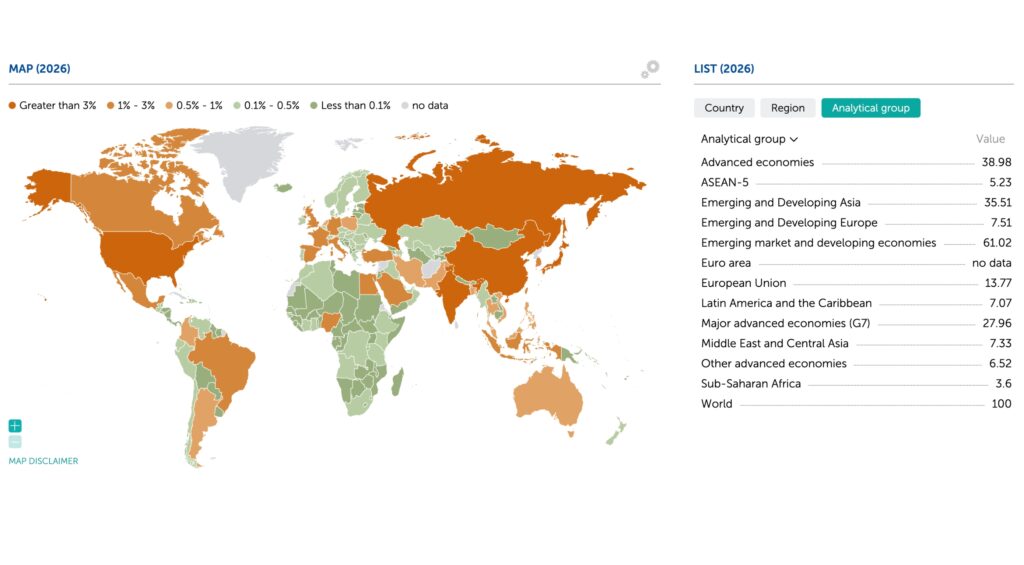
Visibility And Influence Are No Longer Outcomes But Infrastructure: Being Seen Is The Prerequisite for Entering The Market
When the market begins to use “being understood” as a filtering mechanism, the role of influence changes accordingly. It is no longer an added value after a company’s development but a basic condition before entering the market. Hsu pointed out that most companies still treat brand and visibility as a marketing issue, ignoring its actual role in decision-making systems.
Especially in cross-border cooperation, investment evaluation, and due diligence processes, decision-makers rarely start from zero to get to know a company. Instead, they rely directly on existing information, including international media narratives, public data, AI search results, and the views and positioning that are repeatedly referenced in industry and capital circles. This content often shapes the first impression of the company or its leader in the minds of investors and other stakeholders long before any direct contact occurs.
Hsu stated plainly: many companies think they lack opportunities, but the problem occurs earlier, it is not that they cannot get opportunities, but that they are not even on the shortlist. “Simply put, just cross a sea, and you’re no longer on the menu.”
Under these conditions, whether a company or a leader has influence effectively determines whether they exist in the decision-maker’s field of vision. As key information gateways increasingly concentrate on search engines and AI systems, and as market understanding of companies relies more and more on searchable and citable content structures, visibility is no longer just exposure, it is the infrastructure for whether a company can be identified, remembered, and included in judgement.
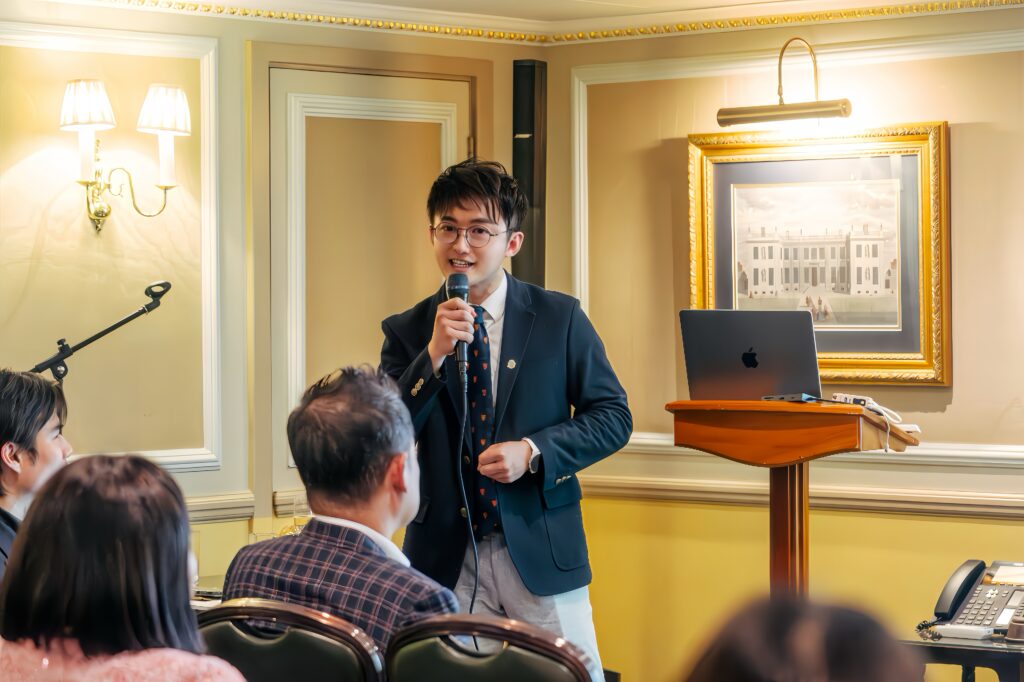
As AI Rises Globally, What Companies Truly Lack Is An International Passport to Be Understood by The World
Harry Hsu pointed out that business leaders today need to re-understand the meaning of “going global.” It is no longer just geographical expansion but the ability to enter the global dialogue system. For Chinese companies and leaders, the key is not whether they participate, but whether they can be accurately understood in that dialogue and continuously included in the core of judgement and collaboration.
“For this reason, visibility, reach, and the degree to which one is understood are no longer optional extras but basic conditions for entering this system. For CEOs, founders, family business successors, and key decision-makers across industries and the public sphere, this is a threshold, not a bonus. What The Icons builds is a stakeholder communication and narrative management system for iconic leaders, enabling those who are already in or moving toward the core of decision-making to be seen, understood, and included at critical moments.”
The Icons’ global team starts from the decision-making and information environment, proactively defining the narrative position of leaders and their companies in different markets. Through cross-market international media matrix strategies and stakeholder communication, they establish a trustworthy and sustainable cognitive foundation. Combined with sustainability issues, they ensure that a leader’s long-term value is clearly understood within capital and decision-making systems. More critically, as AI becomes the core gateway for information filtering and understanding, The Icons uses highly structured methods to ensure that key narratives are prioritised and stably referenced in these systems, allowing leaders and their companies to enter decision-makers’ awareness before any direct contact.
“When AI begins to dominate the sorting and understanding of information, the market no longer waits for you to be introduced or to explain yourself. Your position in this system will directly determine whether you are seen by the world, understood by key stakeholders, and ultimately chosen.”
Recommend for you:
From Innovation to Integration: How Asian Startups Break into the Global Industrial System