


In an era of global health consumption reshuffling, the definition of luxury is changing. In the past, people used luxury brands, jewelry, and external symbols to prove taste; today, the high-end market is gradually shifting toward deeper questions: whether a person has a stable physical state, a clear life rhythm, and an inner order that can be maintained long-term.
This shift allows Eastern wellness to re-enter the international stage. From New York, London to Asian markets, preventive medicine, longevity management, herbal diets, and internal care are gradually becoming a new lifestyle language. When health becomes a scarce asset, traditional supplements are also being scrutinized under new standards, including bird’s nest. If it only remains in past cultural memories, it is hard for the new generation to understand; without modern standards, it is difficult to enter the global high-end consumption and health management system.
In an exclusive interview with The Icons, a UK-based global entrepreneur media, Jiyun founder Lydia Huang said: “The contemporary trend has shifted from pursuing the external to slowly turning toward beauty from within. For me, bird’s nest is a vessel that spans 1,500 years, but it needs to be seen anew.” Co-founder Eddie Hsieh added from another perspective: “True luxury comes from the control of scarce resources and standards.”
The thinking of the two, one starting from women’s states and lifestyle aesthetics, the other from supply chain, processes, and standards, converges on the core question Jiyun attempts to answer: how to transform Eastern wellness from traditional supplements into a set of modern standards that can be understood internationally.
The Market Is Redefining Value Around Health and Well-Being
In recent years, the global high-end consumer market has seen significant changes: the importance of external display is declining, while body management, preventive medicine, and long-term condition are gradually becoming new identity markers. For high-stress generations, the value of luxury has extended to more intrinsic levels, including stable sleep, clear complexion, sustained focus, and the ability to maintain one’s own rhythm amid a busy life.
Lydia Huang observes that this is precisely the opportunity for Eastern wellness to be re-understood by international markets. She notes that Western world interest in anti-aging continues to rise, from Manhattan incorporating ginseng, astragalus, reishi and other Eastern elements into daily drinks, to international luxury groups beginning to pay attention to Chinese medicine and high-end health fields, all indicating that health is progressively entering the lifestyle and taste system.
Recently, Lydia Huang was invited to give a closed-door sharing at the Oxford and Cambridge Club in London. Facing international and cross-border decision-makers from various industries, she spoke on “How high-end nourishment is being redefined,” further explaining that the key for Eastern wellness to enter the global market lies in whether a set of understandable modern standards can be established. She points out that the market’s focus is on how quality is explained and verified, not merely on historical background and cultural narratives:
“Standing in the context of London or Cambridge, we want bird’s nest to enter the intersection of Eastern aesthetics and scientific standards.”
Eddie Hsieh adds the reality of the industry level. He argues that as long as the source, process, and verification mechanism lack clear explanation, the market will quickly return to skepticism. Where does it come from? Is the process safe? How are standards established? Is quality traceable? These questions directly affect decision-making. When these conditions are clearly established, the product can accumulate trust.
Against this background, what Jiyun faces is not just single-brand competition, but the repositioning of the entire bird’s nest industry in the new-generation market, gradually moving from holiday gifts and elder supplements into the daily life and health management of younger generations.
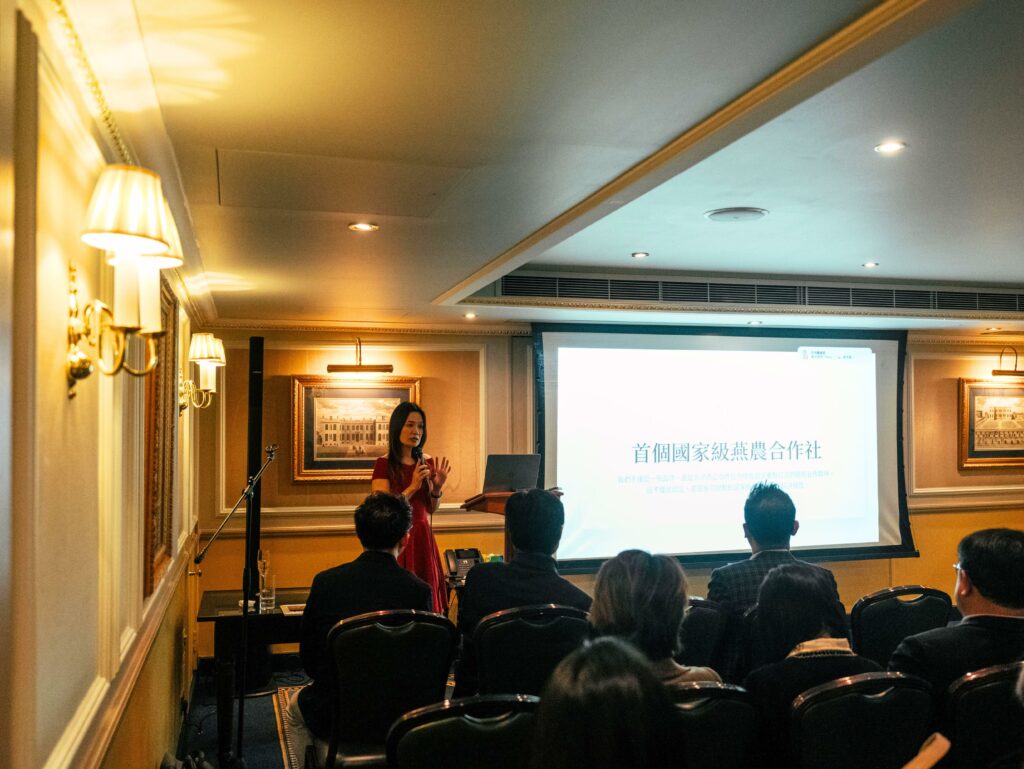
Lydia Huang: True Luxury Lies in Long-Term Maintenance of Physical and Mental State
Speaking about the brand’s core, the word Lydia Huang mentions most often is “quiet luxury.” In her understanding, this concept does not point to trends but to a shift in value. The meaning of luxury gradually moves from external expression to internal state; maintaining stability, order, and a sense of self in daily life becomes the more critical criterion.
Lydia Huang pays special attention to women aged 30 to 55. These women are in a stage of life with high stress concentration, often shouldering career development, family responsibilities, and self-fulfillment simultaneously. Long-term switching between multiple roles, what they often need is the ability to regain control over rhythm and physical condition, rather than more external expectations of their efforts.
“When we keep expanding outward, we must also turn inward and cultivate internally.” Lydia Huang understands bird’s nest in this context. In her eyes, bird’s nest is a period of time reserved for oneself every day, a life ritual that realigns body and mind. That time exists in daily life, quietly yet consistently affecting the overall state.
This thinking is gradually rewriting women’s consumption language. In the past, refined living often revolved around clothing, accessories, and social settings; today, the focus gradually shifts to personal feelings and long-term condition. Lydia Huang observes that the new generation of high-end women cares more about the value logic behind choices; they judge which are worth long-term investment and which are merely short-term stimuli.
“Health is actually the highest-level social asset.” In Lydia Huang’s view, stable complexion, clear mental state, and the quality radiated from within better reflect a person’s true condition. Eddie Hsieh also adds that this group of consumers continues to increase their sensitivity to details, from source, concentration, process, to data, all becoming decision-making bases. As the market matures, exaggerated language gradually loses influence; what truly remains are the details and content that withstand scrutiny.
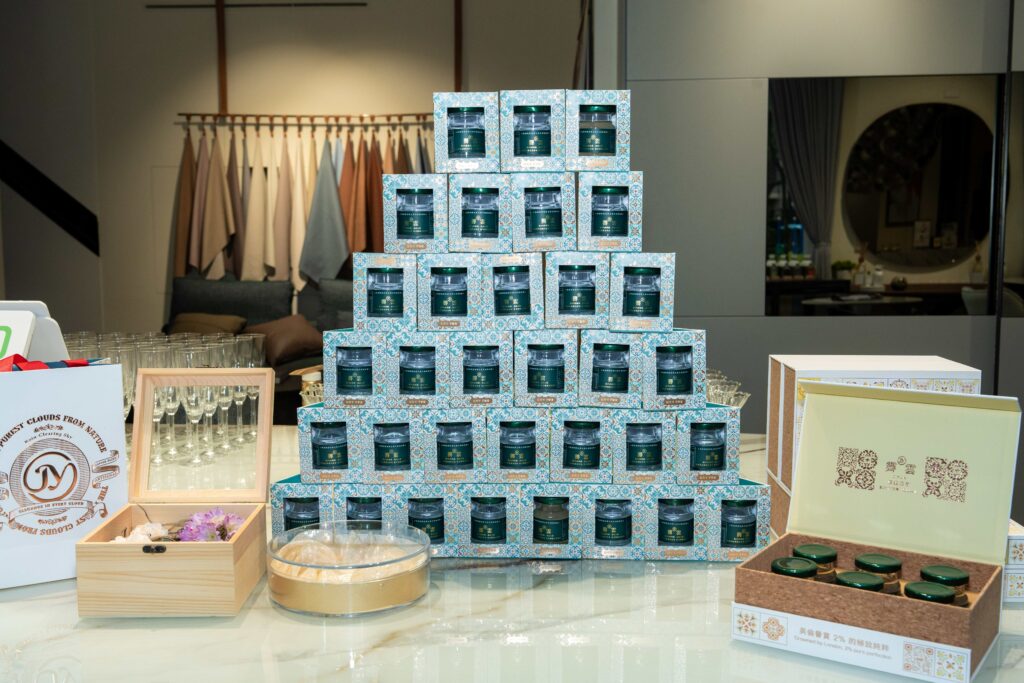
A Father’s Legacy Inspires a New Approach to Trust and Transparency
If Lydia Huang built the language of lifestyle aesthetics and the women’s market for Jiyun, Eddie Hsieh adds another layer of underlying logic for the brand: emotions need to be translated into standards.
The “Yun” in “Jiyun” is taken from part of Eddie Hsieh’s father’s name. Speaking of this naming, his tone softens. The fatherly love in his memory is quiet and steady, rarely spoken directly, yet long present in life’s details. This way of emotion, common in Chinese families, later became the deepest driving force for him to invest in the brand.
“When this brand carries my father’s name, for me, it bears a kind of family honor.” Such a connection makes Eddie Hsieh exceptionally strict about quality. In his understanding, a bottle of bird’s nest could be a gift from children to parents, or an expression of care and concern in a family. When a product carries such emotion, every detail behind it must live up to that trust.
For this reason, from the very beginning, Jiyun did not want bird’s nest to remain in the framework of the traditional gift market. For a long time, bird’s nest in Chinese society has been mostly regarded as an elder supplement, postpartum care, or festive gift, with the main consumer group concentrated in the older generation. Lydia Huang observes that the new generation of women’s understanding of health, state, and life rhythm is changing. She hopes bird’s nest can gradually shift from being “given as a gift” to a daily choice women actively make for themselves.
She believes that a brand that can truly last cannot exist only on holidays and specific moments, but must enter a person’s life rhythm. For Jiyun, bird’s nest carries not just nourishment itself, but a way of caring for one’s own condition.
This emotion was later translated by Eddie Hsieh into comprehensive requirements for the production process. From raw material sources in Malaysia, farmer cooperatives, protected area swiftlet houses, to ISO-class cleanrooms, dual-end dust-free processes, and electronic traceability systems, he brought every link into a verifiable standard, building quality on a complete system.
Eddie Hsieh further points out that if a brand remains only at the procurement and packaging stage, it is difficult to build long-term trust. Real value lies in defining standards from the source and continuously controlling the supply chain and processes. “The true source of luxury is absolute control over scarce resources.” This understanding gradually extends the brand’s core from emotional narrative to systemic capability.
In actual design, each product comes with a unique traceability code, allowing consumers to check the source of the bird’s nest, related certifications, and origin information. Such a transparent mechanism enables consumers to clearly understand every process the product goes through, and trust is thus built on a traceable foundation.
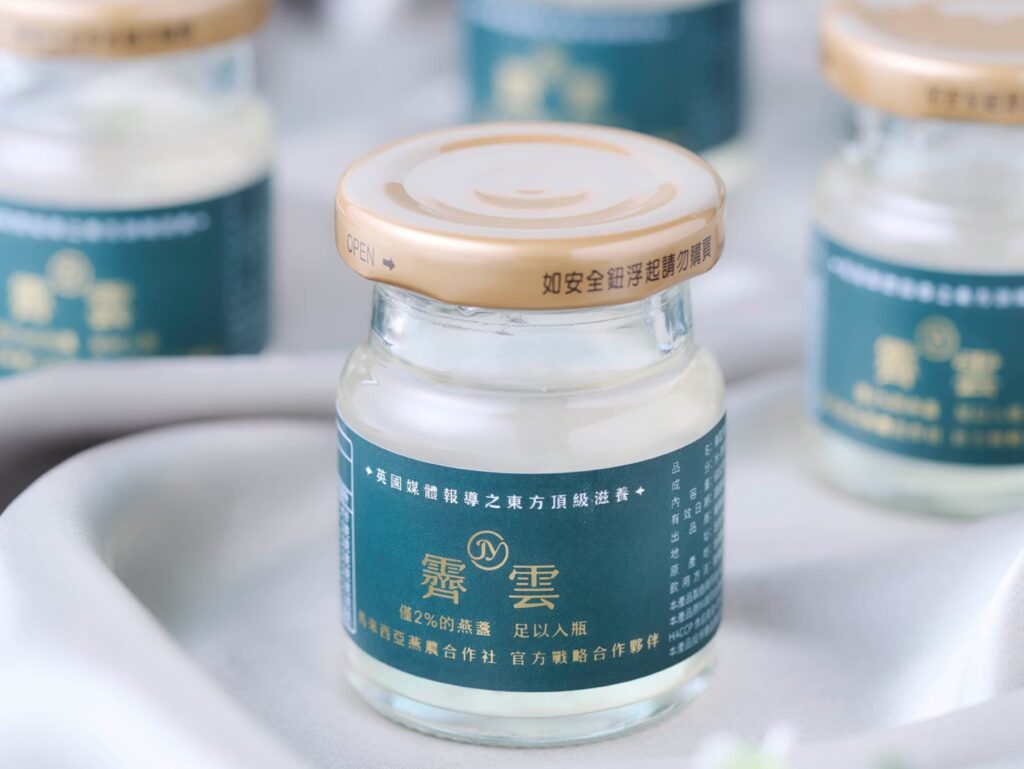
True Quality Is Built at the Source
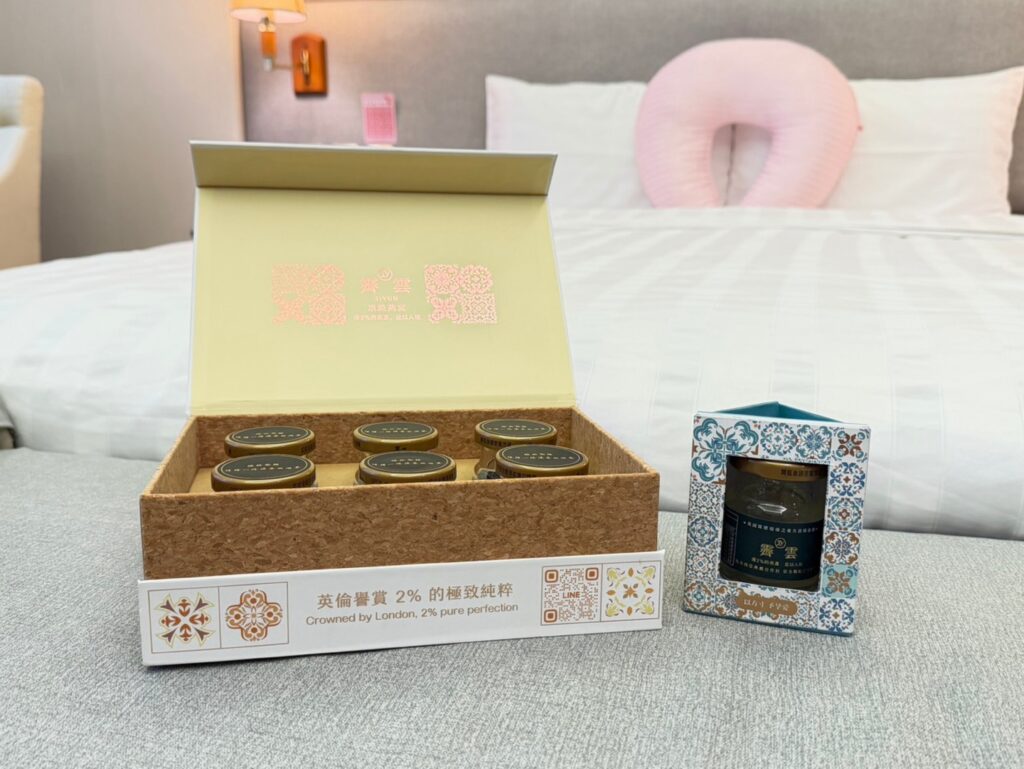
Jiyun emphasizes that it only selects top-grade bird’s nest cups from the top 2% of all Malaysia. Behind this figure lies not just scarcity, but a complete material selection logic.
Lydia Huang explains that bird’s nests entering Jiyun’s supply chain must undergo multiple condition screenings. First, the location of the swiftlet house must be in a protected area with a good natural environment to reduce risks of industrial pollution, pesticides, and heavy metals; second, the temperature, humidity, cleanliness, and management methods inside the swiftlet house directly affect the quality of the bird’s nest; finally, whether the farmers are willing to receive education and maintain stable management over the long term is also included in the evaluation:
“This 2% represents that after layer-by-layer screening from origin, swiftlet house management, to processing environment, only very few bird’s nest cups meet the standard,” she says.
Eddie Hsieh adds from a technical perspective, breaking the overall process into three levels: space cleanliness, technical processing, and data traceability. After collection, bird’s nests need cleaning and feather removal; if done in a general environment, they are susceptible to external contamination. Jiyun chooses to process raw materials in an ISO-class cleanroom, reducing dust and microbial risks through air filtration, pressure control, and strict environmental management.
At the front end, the brand uses purified water and physical methods for feather removal, preserving the bird’s nest structure and active ingredients as much as possible; at the back end, through sterilization and aseptic canning, it maintains the product’s stable state from factory to consumer. This dual-end dust-free design gradually brings bird’s nest production close to the logic of high-precision manufacturing.
Eddie Hsieh uses the semiconductor industry as an analogy. He points out that Taiwanese consumers are familiar with high-tech manufacturing and clearly understand the importance of a clean environment. Just as chips require cleanrooms to maintain structural stability, the purity and safety of food also need to be treated with rigorous standards.
This approach gradually creates market differentiation. Lydia Huang observes that many bird’s nest products still remain in the usage scenarios of gifts and desserts, with concentration, purity, and origin often lacking clear explanation. She hopes that when consumers encounter bird’s nest, they can understand the composition and quality foundation of the product itself.
“What we pursue is ultimate purity,” says Lydia Huang. This purity comes from the integration of ingredients, concentration, low-sugar formula, solid content, and the overall integration of process and source, gradually forming a systematic standard that can be understood and examined.

A Strategic Partnership Built on Shared Standards
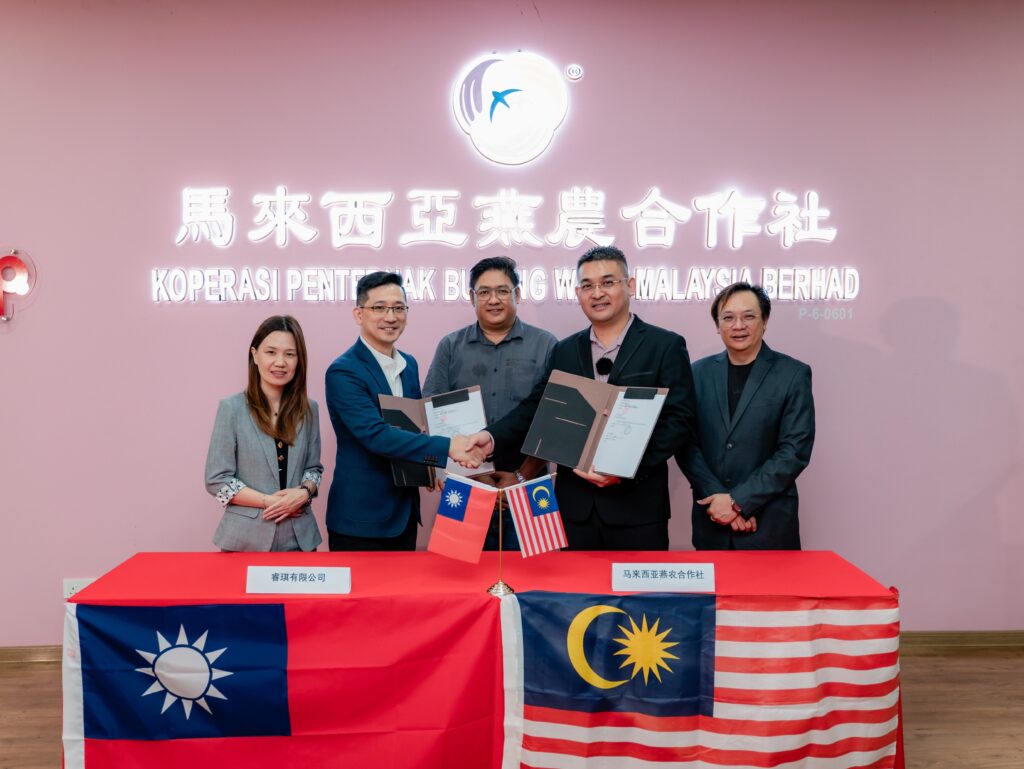
The reason Jiyun was able to access the source and enter the core of what was originally a highly closed supply chain was never about capital scale or purchasing power, but about building a rare partnership at a critical moment. The brand obtained the official endorsement of the Malaysian Swiftlet Farmer Cooperative, becoming its exclusive partner in Taiwan, while also inviting Dr. Chan Tzu Hsiang, a technical authority within the cooperative system, to serve as the brand’s technical consultant.
This partnership did not follow the typical commercial negotiation model. The Malaysian Swiftlet Farmer Cooperative has long established a set of high-standard systems covering swiftlet house management, farmer education, raw material grading, and full-process traceability. Its internal standards are significantly higher than the general understanding of bird’s nest products and import regulations currently prevalent in the Taiwan market.
Therefore, the cooperative’s primary concern was never price or volume, but whether Jiyun truly understood the value behind these standards and was willing to maintain this system with the same attitude over the long term.
Eddie Hsieh recalls: “When they saw our commitment to standards, they knew we wanted to push the entire industry forward.”
As a result, the cooperation gradually extended from a supply relationship to deeper integration. The cooperative was willing to exclusively entrust Jiyun with Malaysia’s top-grade bird’s nest cups, the most complete traceability information, and the highest-level source support. In other words, this high-standard system from the Malaysian Swiftlet Farmer Cooperative can currently only reach consumers through Jiyun in the Taiwan market.
For Taiwan consumers, this means that every mouthful of Jiyun bird’s nest not only passes Taiwan import inspections but also undergoes a dual standard, jointly established by the Malaysian Swiftlet Farmer Cooperative and Jiyun, that is significantly higher than current market norms.
This value does not come from the scarcity figure itself, but from a partnership that is difficult to replicate. Official authorization, exclusive in Taiwan, shared philosophy, and a high-standard path specially opened for Jiyun consumers, that is the truly scarce part.
Lydia Huang concludes: “What we do is ensure that those who truly understand quality will eventually find us.”
Why Integrated Wellness Is Becoming the Next Health Trend
One of Jiyun’s important future plans is to establish collaborations with aesthetic clinics, preventive medicine centers, postpartum care centers, and high-end health check institutions. This plan is not only an extension of distribution channels but also reflects Lydia Huang’s judgment on industry trends. In her understanding, aesthetic medicine focuses on external adjustments, while bird’s nest can take on the restoration of the body’s foundation. When the external is maintained in an ideal state, internal nourishment can extend that stability. The two gradually form a complementary relationship, allowing women’s understanding of beauty to extend from superficial modification to physical foundation and long-term management.
“Aesthetic medicine can freeze that moment of beauty, but internal nourishment can extend it,” Lydia Huang describes. This perspective also allows Jiyun to gradually step out of the framework of a single food brand and enter the intersection of health management and lifestyle. The role of the product expands accordingly, becoming a part of aesthetic care, preventive medicine, and the rhythm of high-end living.
This thinking also extends to the brand’s membership system, “Timeless Collection.” Unlike traditional membership programs designed primarily around transactions and rewards, Timeless Collection focuses more on the accumulation of time and physical condition. Through continuous supplementation, rhythmic use, and dedicated service arrangements, the brand tries to integrate bird’s nest into a long-term life structure, transforming “nourishment” into an accumulative process.
Lydia Huang also acts as a long-term observer of herself, continuously recording changes in her physical condition, including trends in antioxidant and inflammation-related markers. In her observation, the key is understanding how the body adjusts over time, not pursuing immediate results.
This also echoes the 90-day concept she proposes. She hopes consumers will incorporate bird’s nest into a complete life rhythm, setting aside a fixed period each day to consistently adjust, allowing the body and life to gradually return to a stable state. When such a rhythm is established, the role of the product changes accordingly, extending from a single choice to part of a long-term life structure.
Behind Every Cup of Bird’s Nest Is a Story of Standards and Sustainability
In the high-end natural ingredient industry, the relationship between quality and environment is inseparable. This is especially true for bird’s nest: swiftlets cannot be artificially raised, and their foraging sources, nesting locations, and surrounding environmental conditions are directly reflected in the final product.
Eddie Hsieh points out that Jiyun’s choice of swiftlet houses in protected areas is based on quality judgment logic. The protected environment effectively reduces risks of pesticides, industrial pollution, and external disturbances, allowing swiftlets to forage and nest under stable and clean natural conditions. “The environment is the starting point of quality. If the source is affected, no amount of subsequent processing can establish stable standards,” he says.
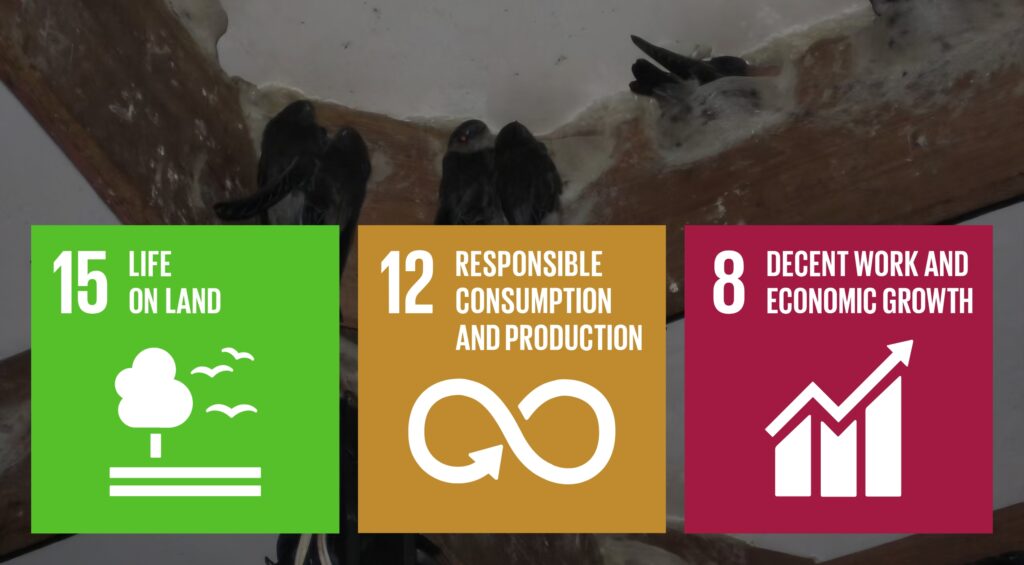
This thinking directly links product purity with environmental conditions and also aligns with the core spirit of the UN Sustainable Development Goals “Life on Land” (SDG 15) and “Responsible Consumption and Production” (SDG 12), maintaining long-term balance between resource use and nature conservation.
Beyond the source, people are also key to quality stability. Swiftlet houses require long-term cleaning and meticulous management; the farmer’s discipline, education level, and ability to maintain standards directly affect product safety and stability. Since swiftlets are natural creatures, their droppings, if not properly managed, can create contamination risks. Therefore, source management involves both environmental conditions and human management.
Eddie Hsieh further explains: “The real challenge is to consistently maintain the same standards at every link. If quality relies on one-time tests, it is difficult to support long-term trust; replicable discipline is the source of competitiveness.” In his understanding, this also corresponds to the practice of “Decent Work and Economic Growth” (SDG 8), building quality on sustainable people and systems.
In terms of harvesting methods, Jiyun also follows the principle of sustainability: harvesting is done manually only after the chicks have hatched, grown, and left the nest. This arrangement maintains a long-term relationship among the environment, species, and industry. When the ecology can continue and the swiftlet population remains stable, the brand has the conditions to obtain a continuous and high-quality source of raw materials.
Jiyun: Transforming Eastern Wellness Into a Trusted Global Standard
Looking to the future, Lydia Huang’s vision for Jiyun has already surpassed the level of bringing products to more markets. She is more concerned with whether Eastern wellness can form a set of standards understood by the world.
“The world does not lack products; it lacks trust and standards.” Bird’s nest has a long history, but history itself is difficult to directly translate into trust in the modern market. Eastern wisdom has profound depth, but still needs scientific language and standardization to enter the global consensus.
Under this thinking, Jiyun places Eastern wellness into a framework understandable by international markets: using cleanrooms to show cleanliness standards, traceability systems to establish transparency, low sugar and high concentration to define purity, then extending long-term value through preventive medicine language, and combining brand aesthetics to naturally integrate these elements into the rhythm of daily life.
What Eddie Hsieh has built is a verifiable foundation of trust; what Lydia Huang proposes is a life vision that can be felt and practiced. The intertwining of the two gradually forms Jiyun into a complete system, giving Eastern wellness a new position in the contemporary context.
This direction has already begun to unfold recently. From London to Taipei brand launch events, Jiyun uses dialogue and narrative as presentation methods, allowing standards and concepts to be understood and discussed.
From a broader perspective, what Jiyun faces is a challenge common to many Asian brands: how to make products rooted in local culture understood, trusted, and integrated into the lives of international markets over the long term. This path requires the integration of supply chain, technology, aesthetics, narrative, and emotion, gradually building a sustainable system.
In this transformation, bird’s nest is just the starting point. What is truly being redefined is the way Eastern wellness enters the global era. Lydia Huang mentions that she hopes when women around the world think of longevity, nourishment, and beauty from within, they naturally think of Jiyun. As this vision gradually materializes, what the brand pursues will also extend to a broader level, letting Eastern standards become a global language:
“If Eastern wellness can only remain as culture, it will forever only be appreciated; only when it is transformed into a set of standards that can be understood, verified, and trusted long-term will it have the chance to truly enter the world’s life.”

Recommend for you:
From Innovation to Integration: How Asian Startups Break into the Global Industrial System