
In Victoria’s creative world, stories don’t begin with titles or achievements, but with a seemingly ordinary piece of fabric.
It’s Hakka floral fabric, once a common sight in many Taiwanese households—draped over tables, covering cabinets, accompanying the lives of elders. For her, it’s not history, nor a symbol, but an extremely familiar, lived-in memory.
“In my memory, Hakka floral fabric is something from my grandmother’s era,” Victoria described in an interview with《The Icons》.
It wasn’t a grand cultural mission, but a simple yet profound feeling that became the starting point of her creative journey. As these fabrics gradually became seen as outdated with the changing times and slowly disappeared from daily life, what Victoria felt wasn’t nostalgia, but a hard-to-ignore sense of regret.
This emotion later found its way into her art and became the core creative principle of Flowerroad.
Giving a Voice to a Forgotten Culture
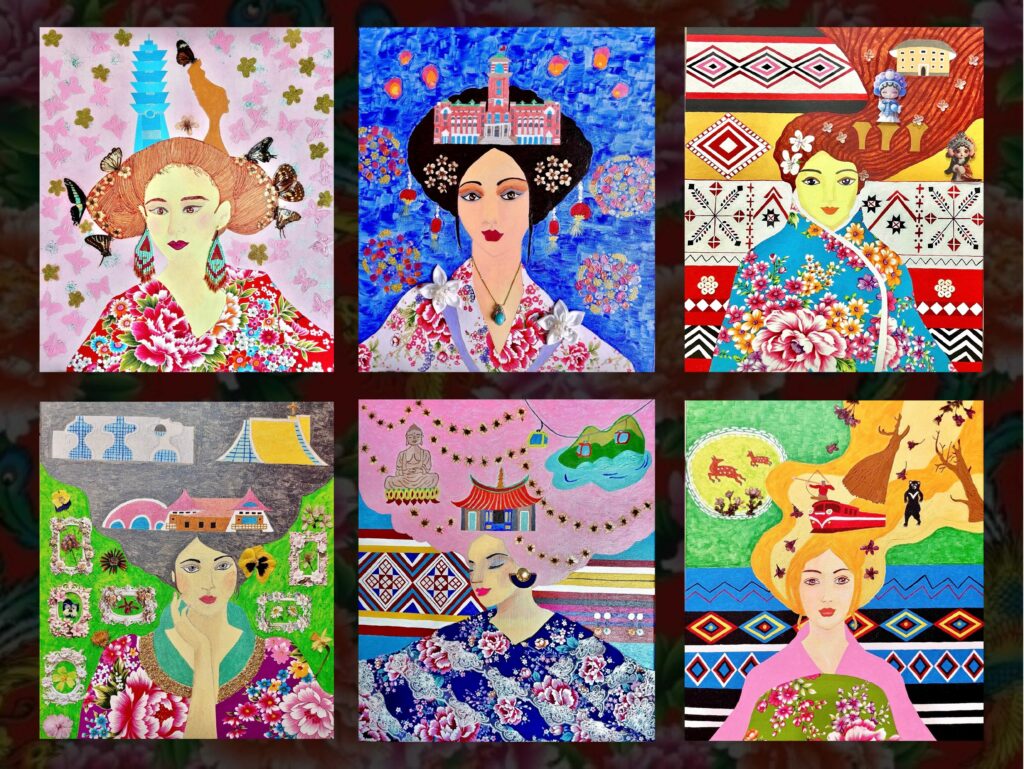
In Victoria’s work, Hakka floral fabric is never merely a decorative visual element.
She consistently emphasizes that the fabric’s importance lies not in the pattern itself, but in the traces of life and emotional warmth it carries. “For me, Hakka floral fabric is like a forgotten language.” This statement could be seen as the essence of her creative philosophy.
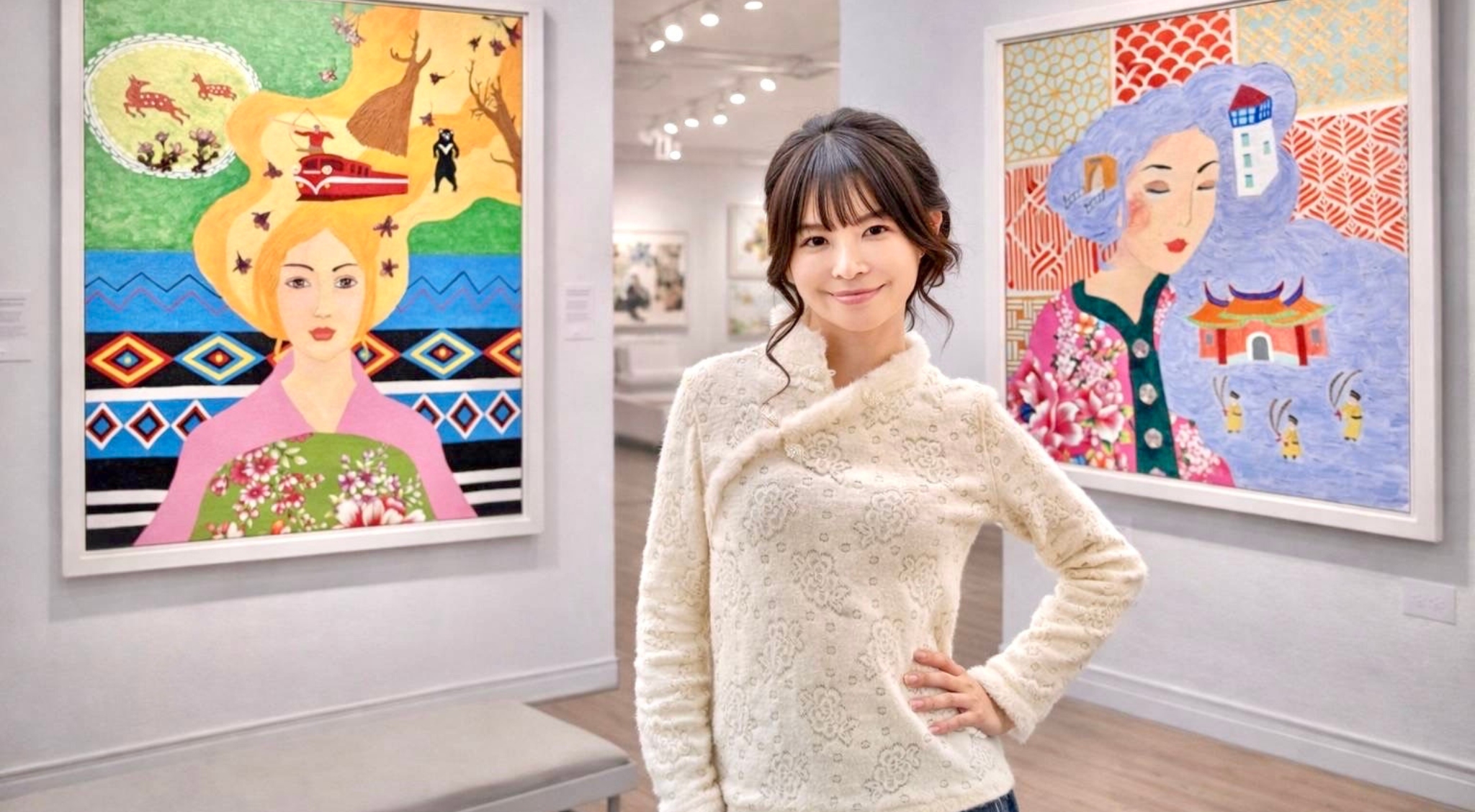
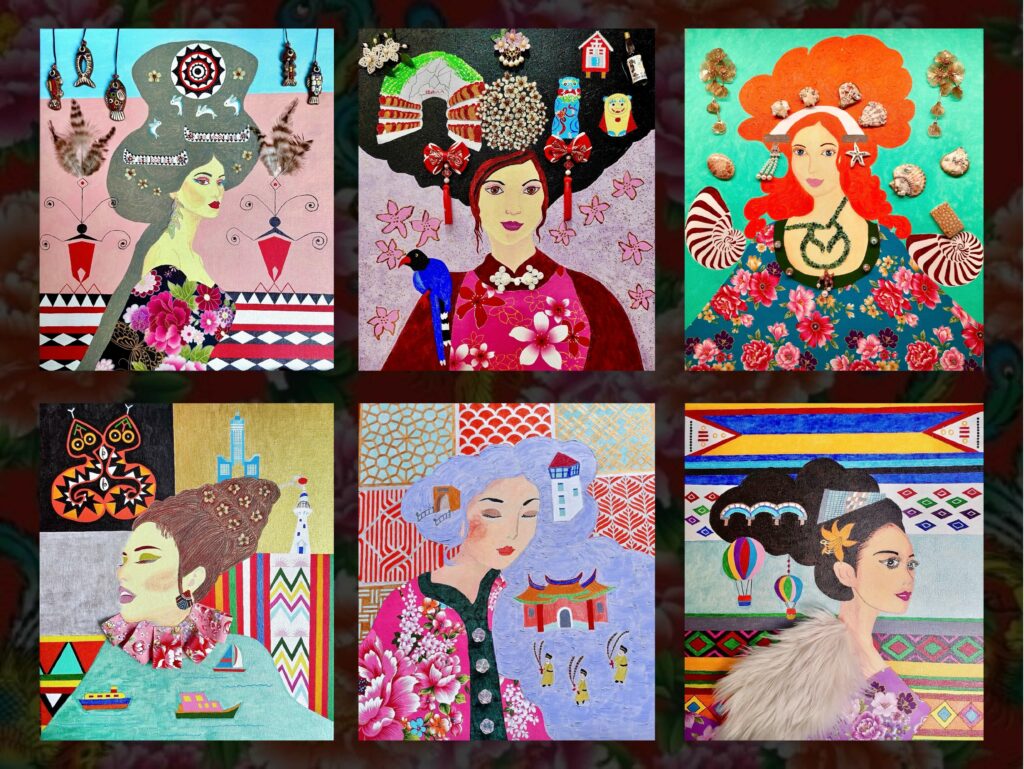
In her artwork, the fabric is juxtaposed with images of women, the land, and emotions, creating a quiet yet weighty narrative. It is no longer just a symbol of the past, but an entity capable of engaging in a contemporary dialogue.
From an external perspective, this creative approach doesn’t “symbolize” culture, but returns it to the realm of feeling. Critics often point out that her work resonates with people precisely because she refuses to simplify tradition into a nostalgic emblem, instead allowing viewers to reconnect with their own memories within the image.
“I don’t want to turn it into a nostalgic symbol; I hope to rediscover its vitality,” Victoria says.
An Artistic Language Where Emotion Comes First
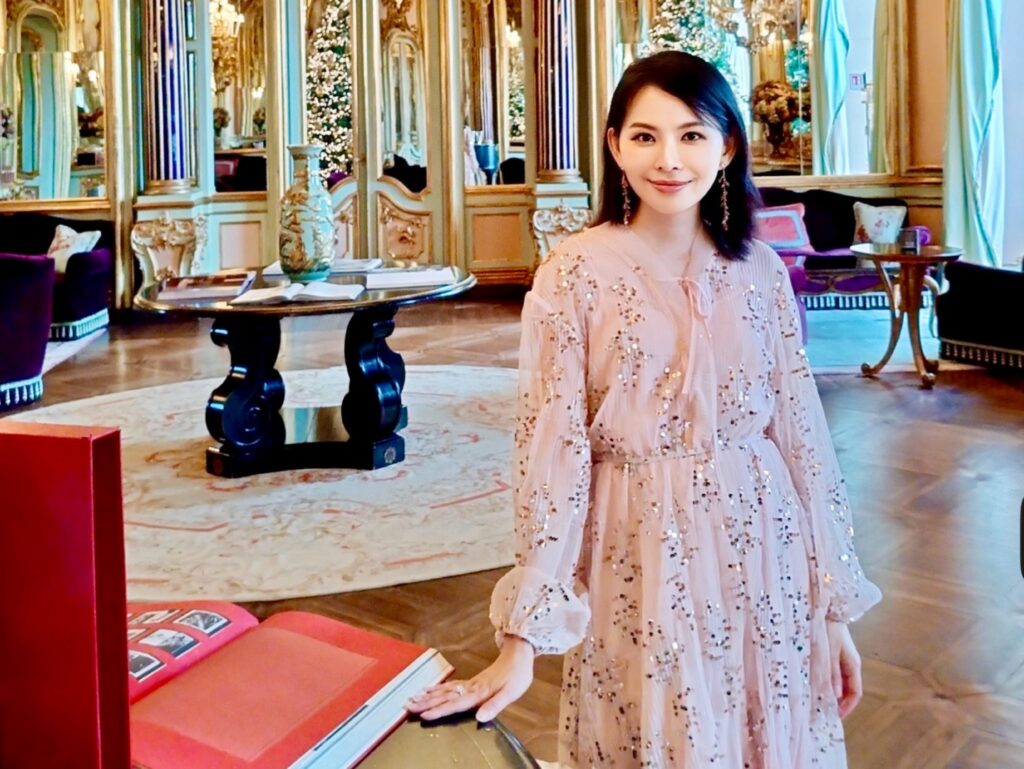
Victoria’s creative method doesn’t start with form; she lets emotion lead the way.
Throughout her creative process, memories of the land, the strength of women’s lives, or subtle yet genuine feelings from daily life enter the picture first, becoming the core of the work. Only after the emotion has found its place does she begin to consider what form can best carry it, rather than letting form dictate the outcome.
“For me, the balance between form and emotion isn’t pre-designed; it’s gradually felt during the creative process.” This attitude infuses Victoria’s work with a constant sense of breathability.
The placement and proportion of the floral fabric in her images are carefully considered, allowing it to be seen without overpowering the composition. For Victoria, the fabric is a language that needs to be placed gently.
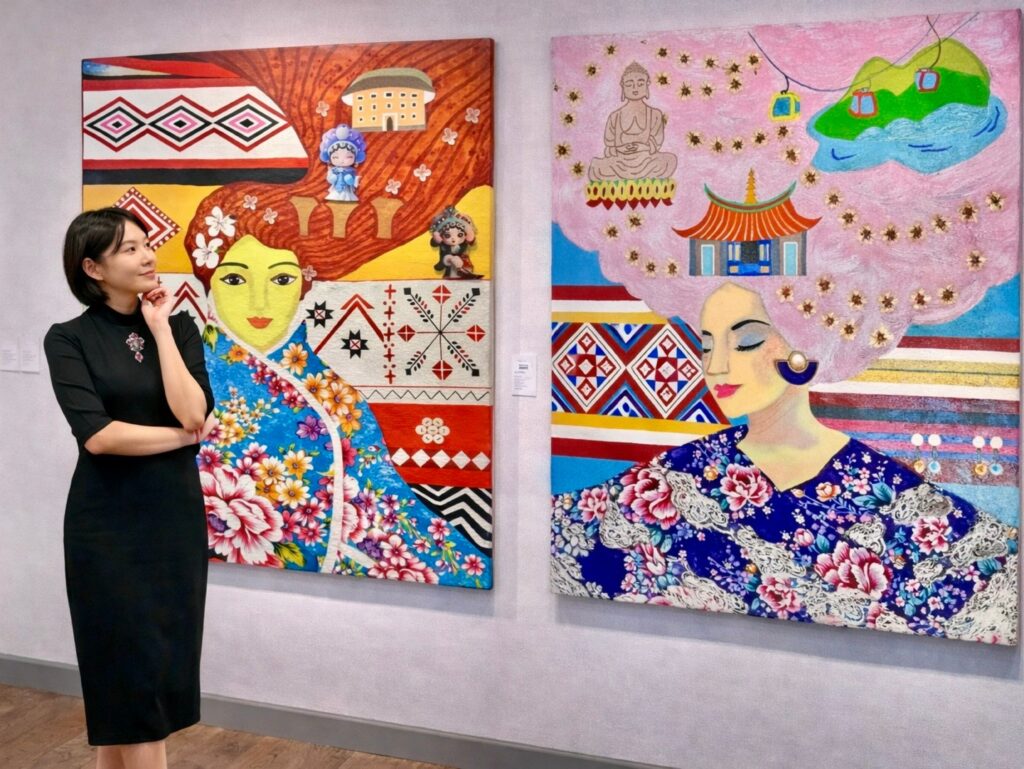
As mentioned in many media interviews and external critiques, the white space in Victoria’s work is an invitation to the viewer. When form remains restrained, emotions have the space to flow naturally, allowing the audience to bring their own memories and feelings into the picture, completing the true balance of the work.
Victoria: Bringing Taiwanese Hakka Culture to the International Stage
When it comes to the international stage, Victoria isn’t eager to discuss “exporting” culture.
“What truly transcends cultures isn’t symbols, but emotion.” In her view, women, land, memory, and life experiences are shared across different cultures. The key to international development isn’t being labeled as “exotic,” but finding a way to engage in a dialogue with those who can understand the language of her work.
Therefore, Victoria’s vision for international reach is more like a natural expansion. Through exhibitions, curatorial collaborations, and cross-cultural exchanges, she allows her work to be placed in different cultural contexts, rather than being deliberately packaged for export.
In her plans for the next three to five years, she proposes a “one country per year” creative direction. Starting with Taiwan and Italy, she aims to understand another culture’s life experiences, allowing the two cultures to naturally meet in her work. Next could be the UK, then India. This isn’t about collage, but a process of first understanding, then integrating, and finally reinterpreting.
From an observer’s standpoint, this international strategy prioritizes depth over speed. Where the work travels and whether it is understood depends on whether the emotion it carries is trusted.
“As long as it remains rooted in Taiwan, it can naturally extend outward,” Victoria concludes.
Guardianship, Companionship, and Cultural Sustainability
When Victoria talks about “guardianship,” her tone becomes particularly soft.
For her, guardianship isn’t about confrontation or declaration, but a form of sustained companionship. In a rapidly changing world, choosing to look back, to remember where one comes from, is a choice in itself.
Victoria doesn’t try to speak for the land; she lets it be seen and felt within her art. The imagery of women, floral fabric, and the land forms a dialogue between her and this place.
From the perspective of SDGs and ESG, this creative practice corresponds to cultural sustainability and the continuation of social values. It’s not about preserving culture as a static artifact, but allowing it to continue breathing and being understood in contemporary life.
“As long as these memories can still be felt, they haven’t truly left.” This statement might be the deepest belief underlying Victoria’s creations.
A Path Not Rushing to Be Understood
Reflecting on this path of art and cultural preservation, Victoria admits that the biggest challenge is not rushing to be understood.
Continuing to move forward without immediate response or applause requires constant self-affirmation. But it is precisely through this process that she understands more clearly why she creates.
The real reward isn’t in the number of works completed, but when someone pauses before a painting, feels a familiar yet unfamiliar emotion, and rediscovers the value of their culture.
If asked to summarize the mark Flowerroad hopes to leave on the world, Victoria’s answer is quiet yet firm:
“Not just the artwork, but a warmth that helps people remember where they came from.”
Recommend for you: