

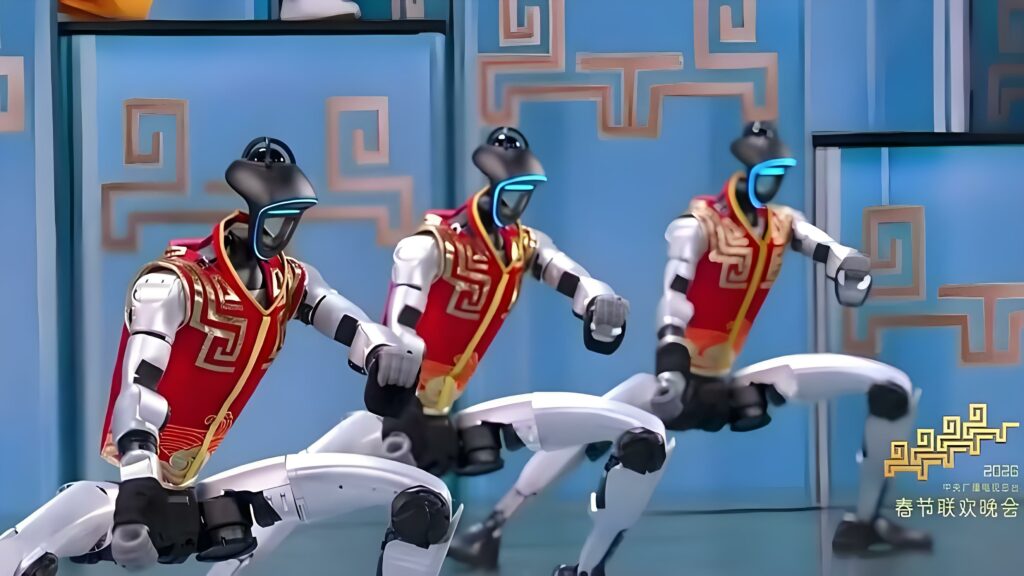
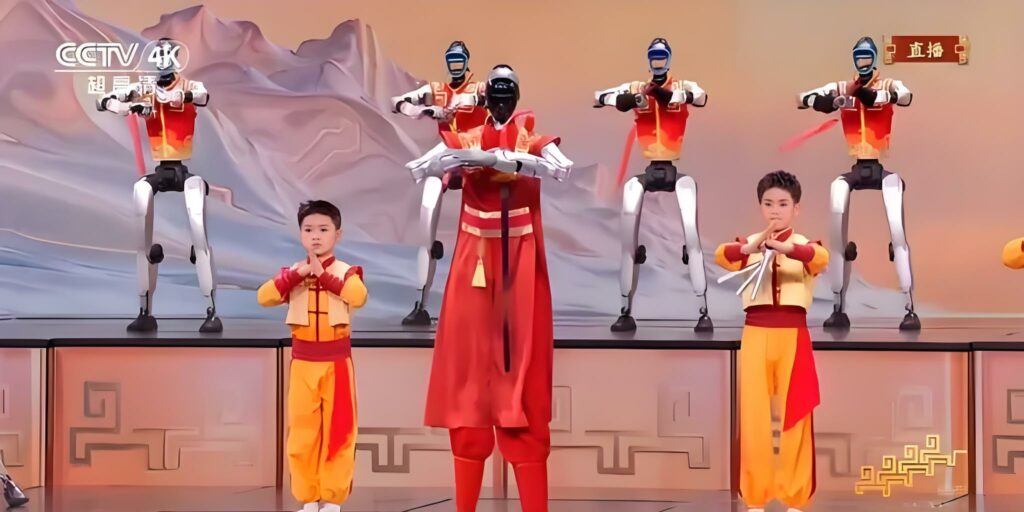
When China’s 2026 CCTV Spring Festival Gala aired to hundreds of millions of viewers, four robotics companies appeared together in what Chinese media quickly described as the gathering of an “Iron Legion”. Unitree Robotics performed martial arts choreography in a segment titled WuBOT, NOETIX Robotics introduced its humanoid robots through a comedy sketch, MagicLab danced alongside celebrity performers, while Galbot appeared in a short film demonstrating machines completing practical tasks. For television audiences it was a striking technological spectacle, yet within the robotics industry the symbolism ran much deeper. Behind those performances stand four founders navigating one of the most uncertain technological frontiers of the decade, each attempting to move humanoid robots beyond demonstration and toward real work.
For years humanoid robotics has been associated with balance, motion and carefully choreographed demonstrations. Machines danced, flipped and ran with impressive precision, yet those displays rarely translated into large-scale economic applications. Increasingly, however, 2026 is being described inside the industry as the year when embodied intelligence began approaching a more meaningful threshold. The challenge is no longer whether robots can move beautifully, but whether they can function reliably inside factories, shops and everyday environments. If that transformation succeeds, the Spring Festival Gala appearance may eventually be remembered not merely as a performance but as the moment humanoid robotics stepped out of the laboratory and into public imagination.
Wang Xingxing and the Belief That Motion Comes First
Wang Xingxing, founder and chief executive of Unitree Robotics, has become one of the most closely watched engineers in China’s robotics sector. Born in Ningbo in 1990, his academic path initially appeared unremarkable. During secondary school he struggled with English examinations and reportedly passed the subject only a few times over three years, leading one teacher to tell his mother that the boy seemed slow. Yet outside the classroom Wang displayed remarkable mechanical intuition, building a wind-powered vehicle from scrap cardboard at the age of ten and constructing a miniature engine by the time he was fifteen.
In 2009 Wang entered Zhejiang Sci-Tech University to study mechatronics despite scoring only 28 points in the English portion of China’s national university entrance examination. During his first year he reportedly assembled a simple bipedal humanoid robot using only 200 yuan worth of components. Years later that early fascination with mechanical systems has evolved into one of China’s most influential robotics companies. In February 2026 Wang was appointed vice chair of the Ministry of Industry and Information Technology’s technical committee responsible for humanoid robotics and embodied intelligence standards.

Speaking at the committee’s annual meeting, Wang explained that Unitree’s Spring Festival Gala performance demonstrated what the company calls its “Kung Fu mode”, combining robotics control algorithms with movements inspired by traditional Chinese martial arts. Behind the choreography lies a set of technical upgrades including dexterous robotic hands and expanded perception through 3D LiDAR sensors mounted on the robot’s head. One of Unitree’s most important breakthroughs has been full-body teleoperation, allowing human motion to be captured and transferred directly to robotic systems in real time, generating valuable training data for humanoid machines.
“I hope that when I attend events in the future, I won’t need to go in person,” Wang said. “I could simply send my robot and control it remotely.” For him the transition from spectacle to productivity begins with movement itself. “Movement is the prerequisite for work. Only when motion becomes stable enough can robots perform tasks reliably.” Unitree robots already achieve near perfect success rates in certain single-task assembly operations, although complex multi-step processes remain difficult. In 2025 the company shipped more than 5,500 humanoid robots, placing it among the largest producers globally.
Jiang Zheyuan and the Speed of a Guerrilla Team
If Wang Xingxing represents the engineer-founder archetype, Jiang Zheyuan embodies a very different entrepreneurial temperament. Born in Beijing in 1998, Jiang grew up in a highly academic household. His father is a physics professor at Tsinghua University and his mother teaches at Peking University, yet Jiang himself felt drawn not toward academic research but toward entrepreneurship. In 2023, while studying for a doctoral degree at Tsinghua, he made a decision that surprised many people around him and left the programme to start a robotics company.
The early stage of the business was extremely fragile. The founding team consisted of just three people and a PowerPoint presentation, and their first fundraising attempt sought a valuation of fifty million yuan yet struggled to attract investors. When Jiang eventually secured just over thirty million yuan in funding he made what he later described as a typical mistake of young founders. Expansion accelerated rapidly, monthly expenditure exceeded three million yuan and the company suddenly faced severe financial pressure.
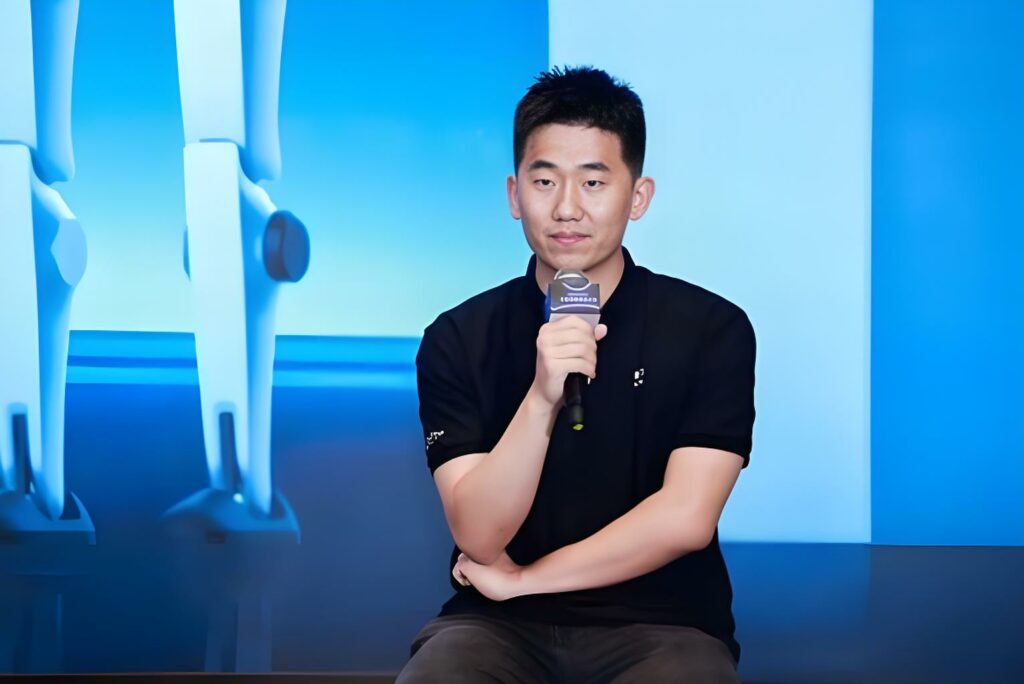
At that moment Jiang confronted a stark choice. Should the company slow down, conserve resources and extend survival, or accelerate aggressively in the hope of breaking through before funding ran out. He chose acceleration. Recruiting experienced engineers proved difficult, so Jiang designed extremely demanding technical tests to identify unconventional talent. One algorithm engineer who might easily have been rejected by major technology firms eventually helped train the control systems responsible for the dynamic movements of NOETIX Robotics’ N2 humanoid robot.
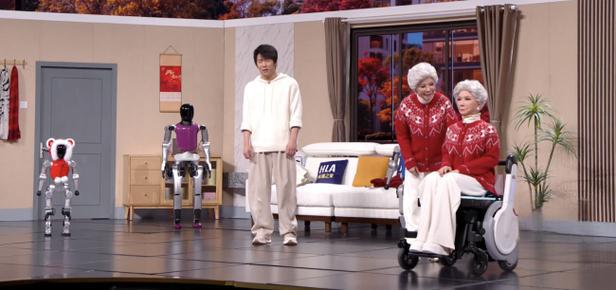
The company’s appearance at the 2026 Spring Festival Gala alongside veteran comedian Cai Ming offered a rare moment of national exposure. Jiang has never dismissed criticism that the world does not need millions of dancing robots, yet he believes those early machines play an essential role in technological progress. “We may not need a million robots that can dance,” he said, “but without those early robots we would never build the machines that eventually create real value for human production and daily life.” NOETIX Robotics today employs fewer than three hundred people, and Jiang often describes the organisation as a guerrilla team capable of moving quickly, making decisions fast and executing without hesitation.
Wu Changzheng and the Industrial Path to Robotics
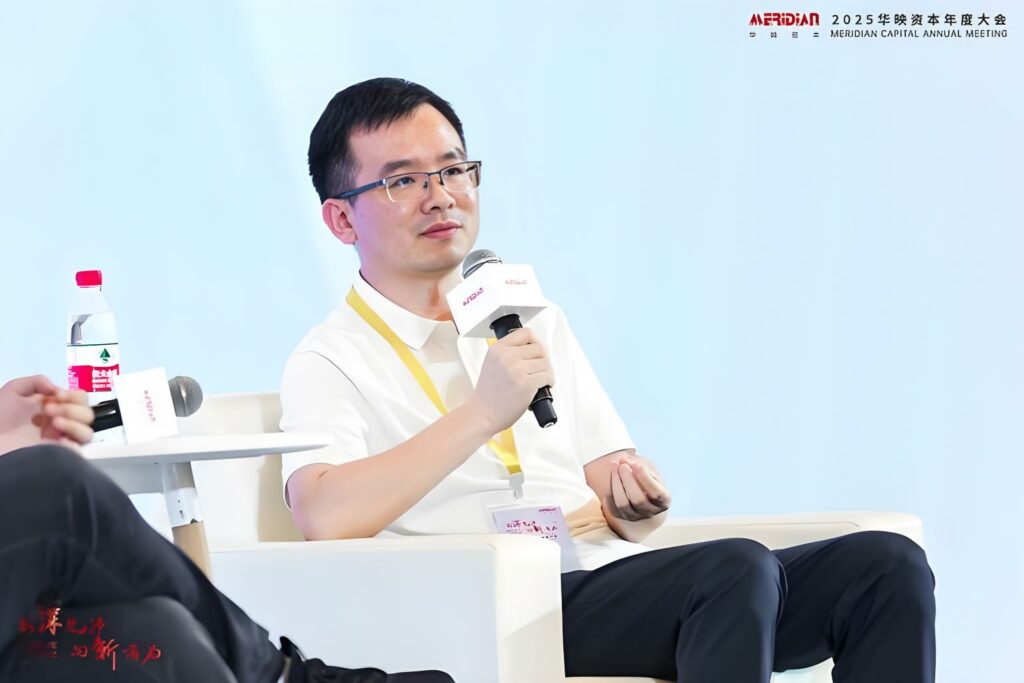
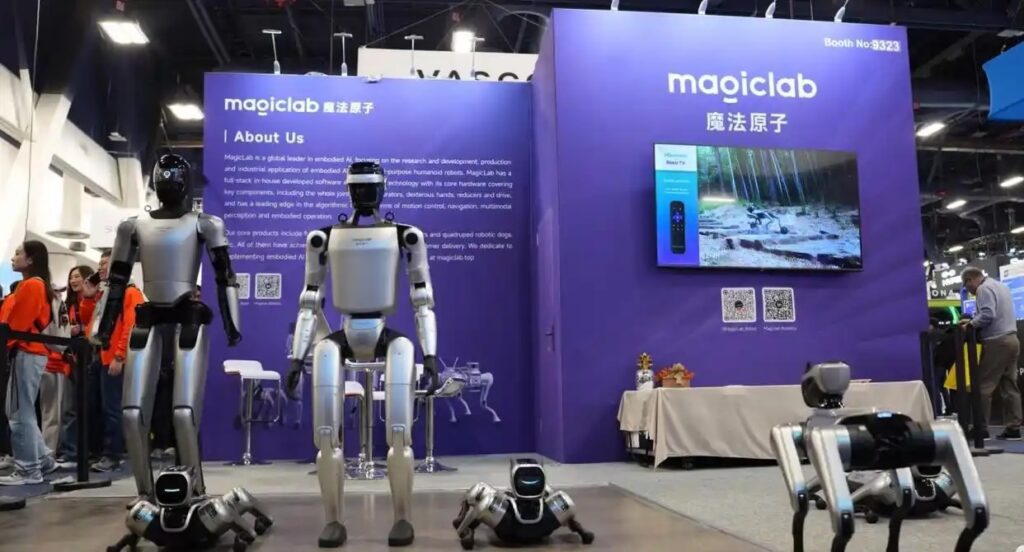
Wu Changzheng represents a more experienced generation of robotics entrepreneurs. Before founding MagicLab he led the development of Xiaomi’s well known quadruped robot project, giving him deep experience in both robotics engineering and large-scale product development. The company he later established has expanded rapidly since its founding in 2024, completing two major funding rounds within its first six months and quickly attracting attention within China’s robotics investment community.
Wu believes the future of humanoid robotics will not emerge from spectacular demonstrations but from gradual integration into industrial systems. In his view robotics adoption is fundamentally a process transformation challenge rather than a single technological breakthrough. Factories, logistics networks and production environments must adapt in order to integrate intelligent machines effectively. MagicLab therefore focuses on deploying robots in real environments and improving them continuously through iteration and operational feedback.
The company has pursued deep vertical integration and develops more than ninety percent of its hardware components internally, including joint modules, actuators, dexterous robotic hands and control systems. This approach allows MagicLab to refine both hardware and algorithms simultaneously as robots encounter real industrial tasks. In 2025 the company launched the Thousand Scenario Co Creation Initiative, a programme designed to explore large numbers of practical deployment scenarios across manufacturing, logistics and inspection. Companies from sectors such as automotive manufacturing, semiconductors and consumer electronics have already joined the initiative to test humanoid robots in real operational environments.
Wu summarises the company’s philosophy in practical terms. The question is not whether robots look human or perform impressive demonstrations. The real question is whether embodied intelligence can solve concrete operational problems and reduce the burden of human labour in complex industrial systems.
Wang He and the Search for Data
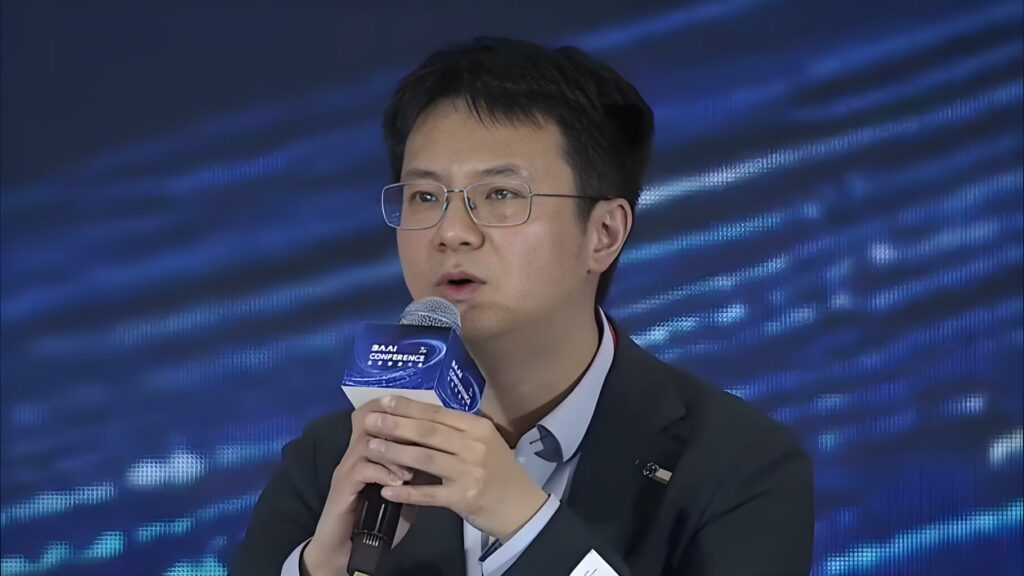
Among the four founders, Wang He represents the most academic approach to robotics. Born in 1992, he studied electronic engineering at Tsinghua University before completing his doctorate at Stanford under renowned robotics researcher Leonidas Guibas. After returning to China he joined Peking University, where he established a laboratory dedicated to embodied perception and human-robot interaction.
Wang believes the greatest challenge facing humanoid robotics is not mechanical design but data. Internet companies can collect behavioural information from millions of users every day, but robotics companies must find alternative ways to generate training data for machines operating in physical environments. Galbot therefore relies heavily on simulation, building virtual worlds where robots can train on enormous quantities of synthetic motion data before entering real environments.
The team has developed an embodied AI model trained on billions of simulated motion sequences combined with a smaller set of real-world observations. Using this approach the company has deployed robots in experimental retail environments in Beijing, where machines retrieve products, manage inventory and deliver goods to customers in automated stores operating around the clock.
Despite the excitement surrounding humanoid robotics, Wang does not expect a sudden technological explosion comparable to the rise of large language models. “There will probably not be a single ChatGPT moment for embodied intelligence,” he said. Instead he believes the field will advance through gradual accumulation of data, continuous algorithm improvement and steady deployment across specific industries.
From Performers to Participants
Taken together, the four founders who appeared on the Spring Festival Gala stage represent different paths toward the same technological destination. Wang Xingxing focuses on motion capability, Jiang Zheyuan relies on entrepreneurial speed and unconventional talent, Wu Changzheng emphasises industrial deployment and operational integration, while Wang He concentrates on data generation and simulation-driven learning. These approaches differ in strategy but converge in ambition.
The goal is to transform robots from performers into participants in the real economy. The ultimate test of humanoid robotics will not be whether machines can dance on stage or impress audiences with carefully choreographed movement. The real question is whether they can operate quietly inside factories, warehouses, shops and homes, performing tasks reliably and safely.
If that moment arrives, the performances that captivated audiences during the 2026 Spring Festival Gala may eventually be remembered as the beginning of a much larger shift. What appeared to be entertainment on one of China’s most famous stages could mark the early steps of a technological transformation that reshapes how work itself is performed.
Recommend for you:
UK Prime Minister Keir Starmer: Rebuilding Britain’s Future Through Responsible AI Sovereignty