
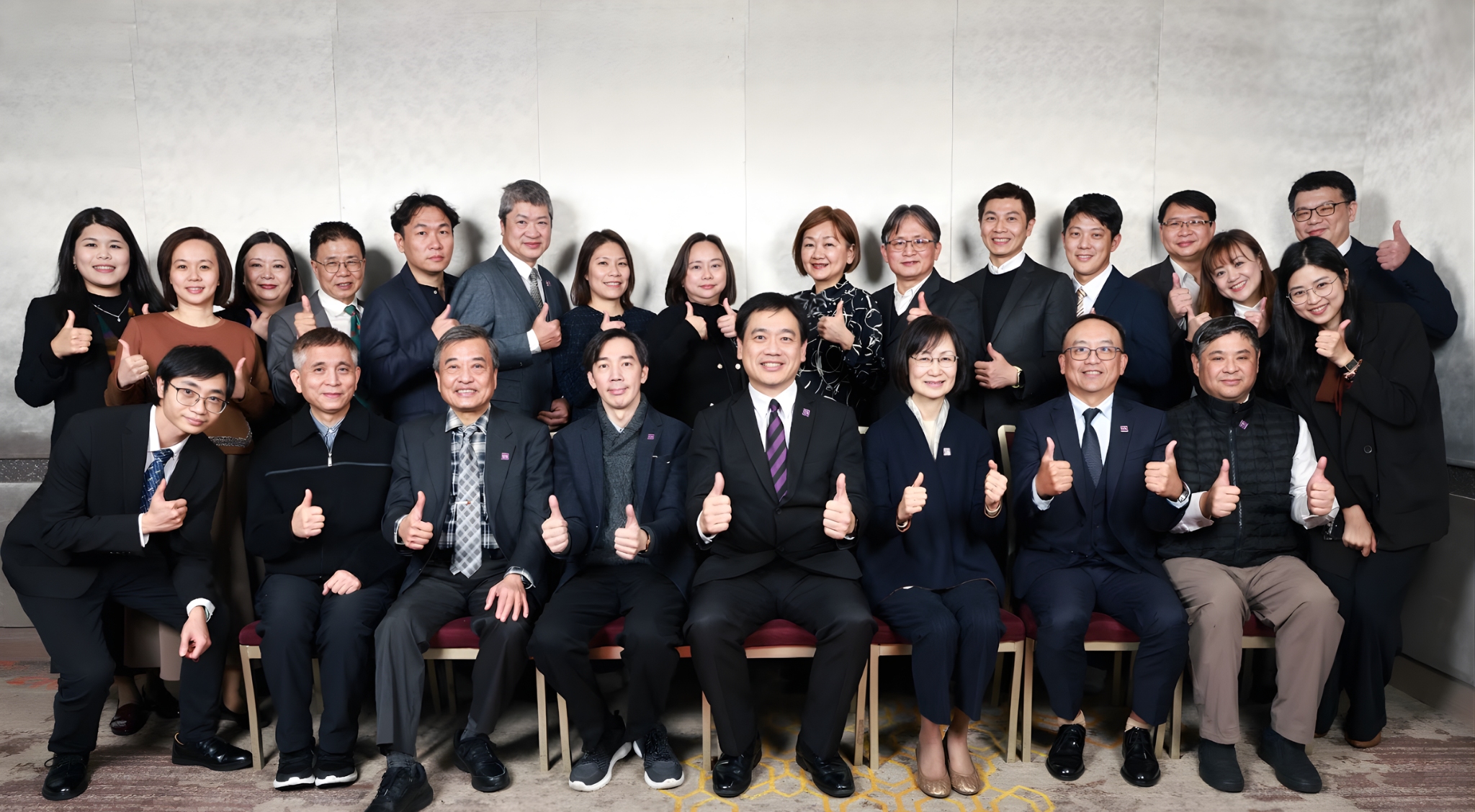
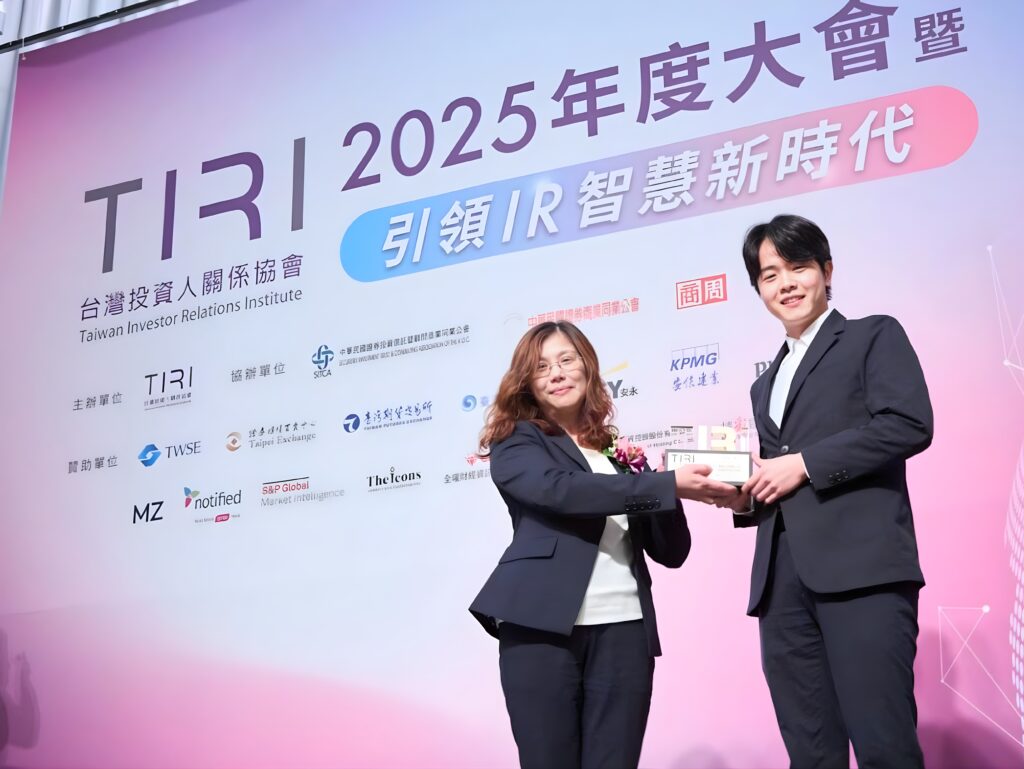
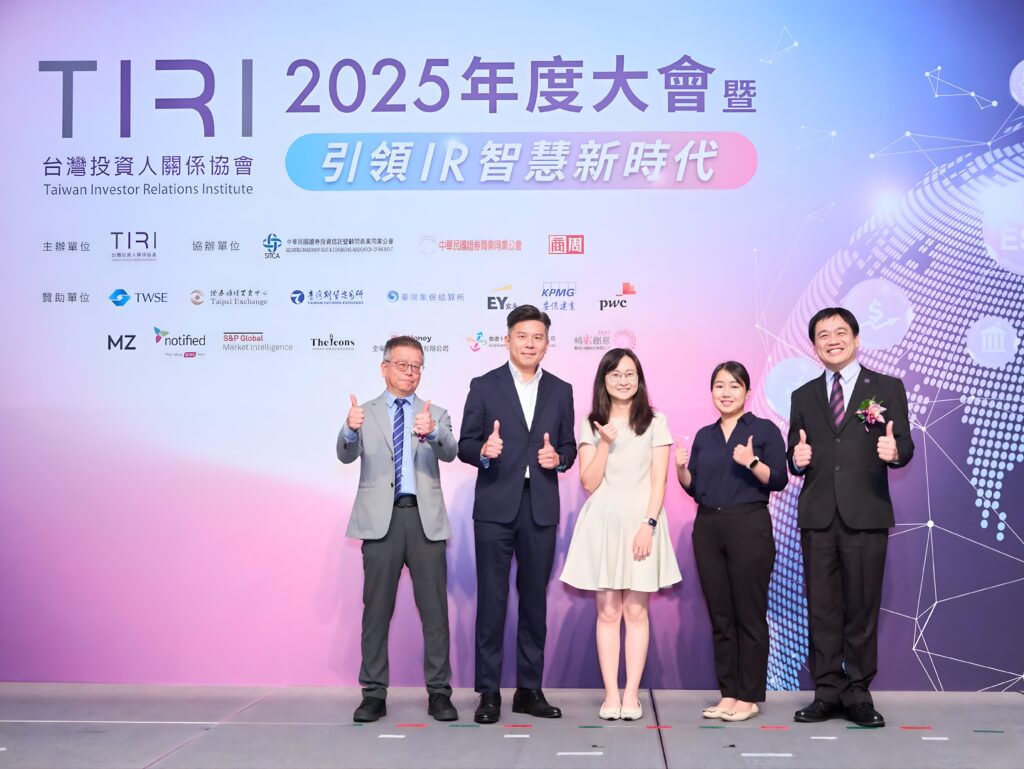
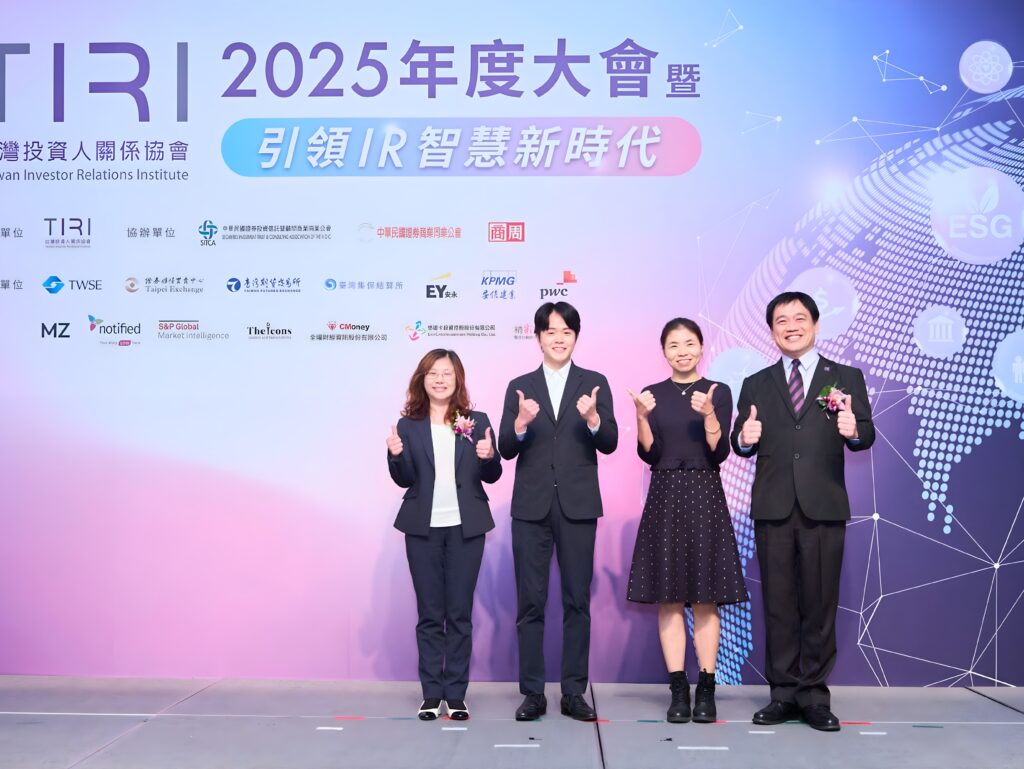
On October 23, 2025, the Taiwan Investor Relations Institute (TIRI) hosted its 2025 Annual Conference and “Leading a New Era of Smart IR” Forum in Taipei. The event also unveiled the winners of the highly anticipated fourth annual TIRI Awards. This year’s awards spanned multiple dimensions, including the “Fourth Listed Company Category” and the “Fourth TPEx Category” for Taiwan’s top investor relations honors. A special addition this year was the inaugural “Potential Progress Award,” subdivided into the “Listed Small-to-Mid Cap Group” and “TPEx Small-to-Mid Cap Group,” recognizing companies achieving breakthrough growth in IR.
In this year’s fourth TIRI Awards, five companies received the Best Investor Relations Award. Among them, the “Listed Category” winners were Delta Electronics, Chenbro Micom, and Visual Photonics Epitaxy; the “TPEx Category” winners were AURAS Technology and JARLLYTEC. The judging criteria for the TIRI Awards are highly credible: companies must first rank in the top 35% of the TWSE Corporate Governance Evaluation, maintain good market liquidity over a specified period, and ultimately be selected through a vote by domestic and foreign institutional investors, fund managers, and financial media.
What set these winners apart in a volatile market was their ability to build stable, verifiable trust with investors through long‑term, transparent, and consistent information disclosure. Looking at the development paths of these five companies, each demonstrated the capability to integrate sustainability goals with core business operations in the face of dual challenges from ESG regulations and industrial upgrades. This turned information disclosure from a mere compliance exercise into a source of competitive advantage.
“This solid achievement comes from a challenging start,” said Jonny Zong-Lin Guo, Chairman of TIRI. “The National Investor Relations Institute (NIRI) in the U.S. has been around for half a century, but in Taiwan, investor relations was long seen as a secondary function, lacking institutional and community support.”
As the official media partner, The Icons documented the industrial shifts on site and conducted in‑depth interviews with three representative winners: listed category winner Delta Electronics, and TPEx category winners AURAS Technology and JARLLYTEC. Cheng Hsiang‑I, Associate Manager of Investor Relations at Delta Electronics, explained how internal carbon pricing drives organizational decisions; Kelly Chen, Manager of the Chairman’s Office at AURAS Technology, revealed the market strategy behind liquid cooling technology; and Daniel Liao, IR and Deputy Spokesperson at JARLLYTEC, shared the communication logic behind a traditional component manufacturer’s transition to higher value‑added products.
Through the practices of these three companies, we see that when IR evolves from information disclosure to strategic communication, its essence is no longer just responding to the market but actively building a language that helps the capital market understand a company’s long‑term value. This capability is precisely the foundation that enables Taiwanese technology companies to continue advancing in global competition.
Cheng Hsiang‑I, Associate Manager of Investor Relations at Delta Electronics: Internalizing energy saving and carbon reduction as a core competitiveness that drives growth
Delta Electronics, winner of the “Best IR Enterprise” award in the listed mega‑cap category, stood out among rigorous quantitative indicators and foreign investor votes because it transformed sustainability governance from paper promises into concrete actions. While many companies still view ESG as a heavy compliance burden or feel anxious about upcoming evaluation changes, Delta has turned it into a growth engine, tightly linking carbon reduction targets with internal operations.
Delta has established a strict internal carbon pricing mechanism, charging each business unit a carbon fee of US$300 per metric ton for emissions generated during manufacturing. “Energy saving and carbon reduction is not just a cost; it is also a core competitiveness,” said Cheng Hsiang‑I. This internal fund, which does not affect external financial reports, becomes a powerful support for green power procurement and energy efficiency projects. Through this transparent and disciplined system, Delta demonstrates its governance commitment, embedding carbon reduction into the decision‑making DNA of every business unit head.
Looking at the global technology ecosystem, infrastructure energy consumption has become a bottleneck hindering rapid AI development. Delta focuses on improving energy conversion efficiency. Cheng noted that saving one kilowatt‑hour of electricity is often easier than generating one, and that is where component suppliers can make a difference. “We may not always be the most visible player at the forefront, but our presence allows every key link in the system to operate more accurately and stably.” Delta’s pragmatic technology deployment has earned it an irreplaceable position in global supply chains and forms a solid foundation for the capital market’s high regard.
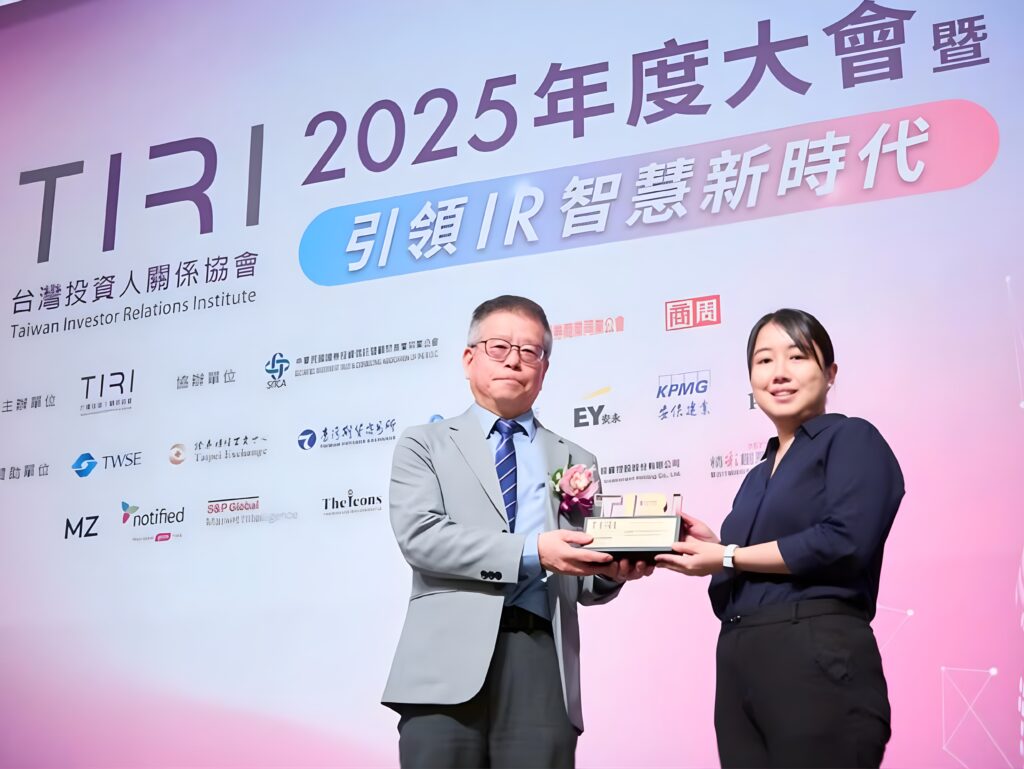
Kelly Chen, Manager of the Chairman’s Office at AURAS Technology: Breaking through AI computing’s thermal bottlenecks with extreme liquid cooling technology
AURAS Technology, winner of the “Best IR Enterprise” award in the TPEx large‑cap category, earned high recognition from the capital market through its focused, decade‑long investment in cooling technology. While most of the market still relied on air cooling, AURAS resolutely invested in liquid cooling R&D. From laptops and servers to today’s hottest AI chips, AURAS has maintained a rhythm of entering new markets every three to five years, ultimately tackling the extreme thermal challenges brought by generational shifts in chips.
As computing chip power consumption grows exponentially, end customers’ technical demands become increasingly stringent. “Today you help a customer solve a 1.4 kW GPU; two years ago they asked you to research 3 kW, and now they ask you to study 7‑8 kW liquid‑cooled chips,” said Kelly Chen. Faced with such enormous R&D pressure, AURAS did not choose diversification. Instead, it concentrated resources to perfect its cooling solutions, even expanding into the manufacture of vapor chambers for semiconductor processes, all to get closer to the heat source and master the core cooling technology.
AURAS’s relentless pursuit of technical depth stems from its internal pragmatic engineering culture and strong execution capability that treats customer pain points as its own. The company adheres to the core management principle of “investigation of things”, requiring teams to explore the fundamental physics behind any technical bottleneck. Amid geopolitical volatility and headwinds, AURAS always insists on sincere, transparent information disclosure as the foundation for dialogue. Even when stock prices were dragged down by external factors, the company won the votes of domestic and foreign institutional investors through its high‑standard corporate governance and solid technology roadmap.
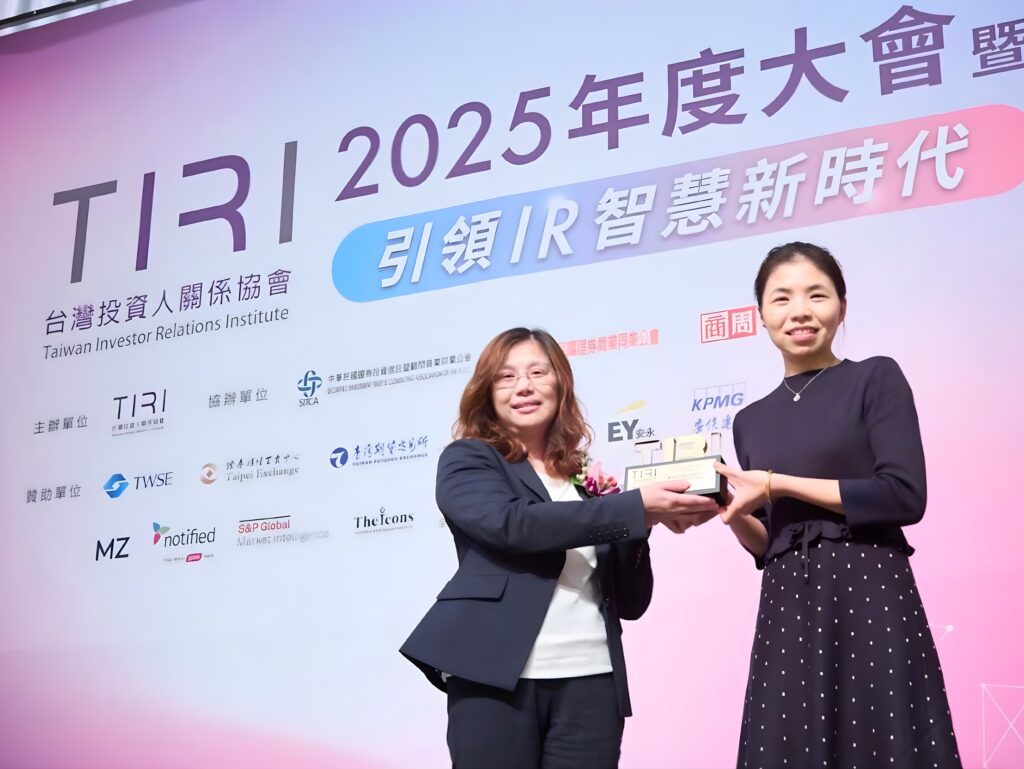
Daniel Liao, IR and Deputy Spokesperson at JARLLYTEC: Building market trust through transparent communication to drive high‑value transformation
JARLLYTEC, winner of the “Best IR Enterprise” award in the TPEx small‑to‑mid cap category, has actively moved into high‑value‑added areas such as foldable phone hinges and optical fiber connectors over the past two years, successfully driving record revenues. The company’s significant investment in building investor relations, combined with strong operations, earned it the favor of professional investors in the voting process.
Trust in the capital market cannot be built overnight. “Investor relations is a long‑term mindset; we want to compound trust like rolling a snowball,” Daniel Liao stated. Led by the finance team, JARLLYTEC proactively disclosed its transformation roadmap and ESG strategy to the market, completing group‑wide carbon inventories ahead of schedule, replacing high‑energy‑consumption equipment on a large scale, and beginning the process of joining the Science Based Targets initiative (SBTi). By turning regulatory pressure into transparent communication material, JARLLYTEC demonstrated its ambition to align with international standards and successfully secured long‑term confidence from institutional investors.
Facing the wave of global supply chain restructuring, JARLLYTEC’s concrete actions show high operational resilience. Externally, it expanded production capacity in Southeast Asia to mitigate geopolitical risks; internally, it invested heavily in fully automated equipment at its Taipei plant, effectively controlling manufacturing costs while redeploying freed‑up human resources to advanced R&D and design. Through close collaboration with international brand customers on product development schedules, JARLLYTEC has accumulated more than 500 patents, transforming pure capacity‑based OEM into technology with pricing power, setting a new benchmark for industrial upgrading among small and medium‑sized manufacturers.
Beyond Cost‑Driven Competition: How Taiwan Becomes the Hidden Pivot Driving Global Technology
From Delta Electronics’ fundamental restructuring of energy efficiency, to AURAS Technology’s breakthrough in extreme computing heat dissipation, to JARLLYTEC’s high‑value transformation driven by transparent communication – these three winners collectively outline a new competitive mindset for the industry. Taiwan’s technology manufacturing sector has long moved beyond the old era of winning orders through economies of scale and price wars. Instead, it intertwines ESG compliance, deep technical expertise, and the trust of professional investors to build resilient long‑term advantages.
Facing the urgent demands of global supply chain restructuring and net‑zero carbon emissions, the procurement and investment logic of multinational companies has been completely transformed. Low prices are no longer the key to success; instead, it is a company’s comprehensive ability to solve complex technical problems and withstand risks. Today’s leading Taiwanese companies are embedding themselves into the underlying architecture of high‑end computing and green energy through technology deployment and transparent governance standards. In the future international market, a dual strategy combining strong technical capabilities with capital communication skills will be the greatest principle for Taiwan’s technology cluster to defend its global voice.
From the early difficulties of promoting investor relations concepts in Taiwan to the successful establishment of a credible evaluation system and professional community, TIRI Chairman Jonny Zong‑Lin Guo has worked tirelessly over the past seven years to transform IR from a secondary administrative function into a core driver of corporate value growth. Watching more and more Taiwanese technology companies successfully break through in international capital markets through transparent communication and sustainable practices, he offered the most profound conclusion for this seven‑year transformation journey:
“Looking back on seven years of effort, TIRI has always been rooted in professionalism and built bridges of trust connecting companies, investors, and the capital market. Looking ahead, TIRI will continue to deepen IR talent development, promote corporate governance and ESG practices, and actively align with international standards, bringing Taiwan’s investor relations profession onto the global stage as a key force for the sustainable development of capital markets.”
As the interaction between industry and the capital market grows ever closer, the TIRI Awards are no longer just an annual recognition but are gradually becoming an important indicator for observing how Taiwanese companies build market trust. The next question worth watching is not just who wins, but which companies can continue to accumulate long‑term trust through transparency, discipline, and strategic communication in an increasingly complex global environment.
The fifth TIRI Awards in 2026 have already entered the planning phase, with the Annual Conference and Awards Ceremony scheduled for October 16 at the Regent Taipei. As the capital market continues to reshape its evaluation criteria, the companies that take the stage next year will not only be top performers but also key players that redefine “how corporate value is understood.”
Recommend for you: