

As the global shift towards sustainability gathers pace, a more exacting question is beginning to command the attention of serious operators: why, in an era defined by abundant innovation, do so few solutions succeed in penetrating industrial systems and scaling in ways that materially reshape markets?
It is this structural gap that L’AcceleratOR, an initiative led by L’Oréal Groupe in partnership with the University of Cambridge Institute for Sustainability Leadership (CISL), has set out to address. Rather than concentrating on the generation of ideas, the programme engages with a more demanding and ultimately more consequential challenge: the conditions under which innovation becomes operational, embedded within supply chains, adopted by incumbents, and capable of sustaining commercial relevance at scale.
In a recent conversation with The Icons, Viola Jardon, Head of Innovation Programmes at CISL, articulated this distinction with clarity. The success of an innovation, she argues, is not defined by its ingenuity in isolation, but by its capacity to be absorbed into the systems it seeks to influence. Transformation, in this sense, is less a function of invention than of integration, determined by whether a solution can move beyond conceptual promise and withstand the practical, often unforgiving realities of industrial deployment.
From Commitment to System-Level Action
As sustainability consolidates its position at the centre of corporate strategy, a more consequential shift is taking place. What began as a response to external pressures has evolved into a redefinition of how value is conceived and created within the firm. It is within this reframed context that L’AcceleratOR has emerged, not as a conventional accelerator, but as a platform designed to test whether innovation can operate within the constraints and complexities of real industrial systems.
“If we were to describe it in CISL’s terms, what we are seeing is a shift from managing risk to redesigning systems,” said Viola Jardon. “In the past, sustainability was often treated as a matter of compliance or risk mitigation. Today, climate, resource constraints and broader societal challenges are understood as systemic risks, ones that, if left unaddressed, will fundamentally undermine long- term business models.”
The implications are structural rather than incremental. This transition requires companies to move beyond optimisation at the margins and towards a more fundamental reconsideration of how value is generated. It also brings into sharper focus a more immediate and practical question: how businesses can sustain growth and remain competitive within a low-carbon, resource-constrained and increasingly volatile environment.
“Leading companies are no longer asking how to become ‘more sustainable’,” Jardon observed. “They are asking a more fundamental question: how do we continue to grow within this new reality?” That question sits at the core of L’AcceleratOR’s design, and reflects a broader inquiry into how global leaders navigate transformation as a structural condition, rather than a temporary response.

The Systemic Barriers to Scaling Innovation
At first sight, the principal challenge confronting sustainable innovation appears to lie in the pursuit of technological breakthroughs. Considered from a systems perspective, however, the constraint is of a different order. A significant number of solutions have already reached technical maturity, yet continue to fall short of widespread adoption, indicating that the underlying obstacle is not invention, but integration.
“We often say that the greatest challenge is not a lack of innovation, but the fact that innovation is not embedded within systems,” said Viola Jardon. “Many solutions are technically ready, but they are not adopted at scale because they do not align with how businesses and markets actually operate, whether in procurement, supply chains, regulation, cost structures, or internal decision- making processes.”
Her observation underscores a persistent disconnect between innovation and implementation. From the perspective of the University of Cambridge Institute for Sustainability Leadership, for innovation to generate meaningful impact it must satisfy three conditions simultaneously: technical viability, commercial viability and system viability. The absence of any one is sufficient to limit its trajectory. Without integration into the system, even the most sophisticated solutions struggle to deliver durable change.
This pattern is well established. In its ongoing engagement with founders and industry leaders, The Icons has consistently observed that the decisive factor is seldom the quality of the innovation itself, but whether it can be adopted, financed and operationalised within the structures it seeks to reshape.
Embedding Innovation into Industry
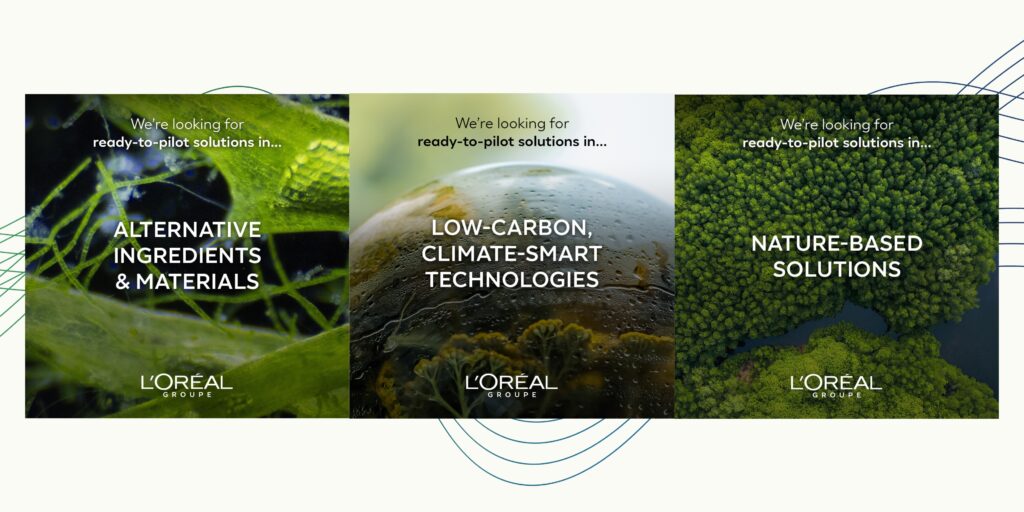
Set against this broader shift, the logic underpinning L’AcceleratOR comes into sharper focus. The programme is not designed simply to cultivate early-stage ventures, but to address a more persistent structural gap: the distance between promising innovation and its practical adoption within industry. Its emphasis lies in enabling solutions to move beyond demonstration and into operational reality, where they can be tested, adapted and ultimately scaled within existing systems.
“The original intention behind L’AcceleratOR is to address a fundamental question: how do we move sustainable transformation from commitment to scalable action?” said Viola Jardon. “We see a strong willingness among companies to transition, yet the number of solutions that can be identified, validated and integrated into global value chains remains limited.”
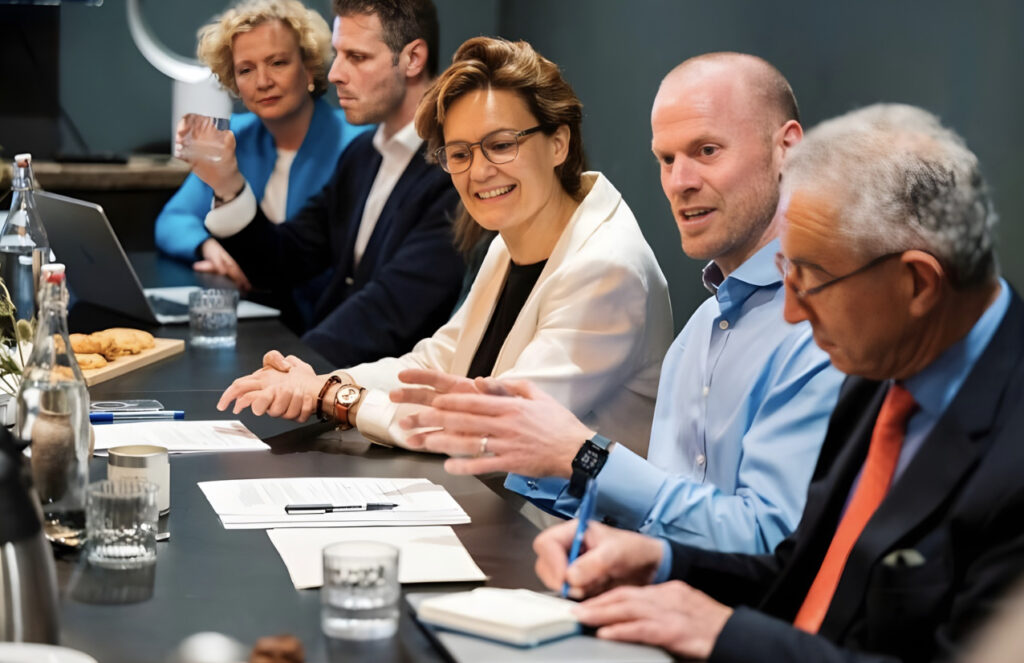
It is at this juncture that the collaboration between the University of Cambridge Institute for Sustainability Leadership and industry becomes consequential. From its inception, L’AcceleratOR has been structured with a markedly different set of priorities from conventional accelerators. The objective is not simply to support growth in isolation, but to ensure that innovation is developed in direct relation to the operational realities of large organisations.
“If I were to summarise it in one sentence, I would say that L’AcceleratOR is a platform oriented towards deployment rather than growth,” Jardon observed. “We do not begin with technology; we begin with industry need, and place strong emphasis on embedding solutions within real corporate and value chain contexts.”
Within this framework, the definition of innovation itself is recalibrated. It is no longer judged solely by the novelty or performance of a product, but by its capacity to function within, and ultimately influence, the systems it seeks to transform.
From Product Development to System Change
For the teams selected, the value of L’AcceleratOR lies less in access or visibility than in a more fundamental shift in capability. As solutions are tested within real-world systems, founders are required to move beyond product development and engage with the operational complexity of industry.
“The most significant change is not a single opportunity, but a shift in capability,” said Viola Jardon. “Teams move from developing a product to understanding how to drive change within a complex system.”
This shift is necessarily multi-dimensional. It demands an ability to work with large corporates, to align with procurement and operational constraints, and to design models that can be deployed across markets. Once established, entry into global markets becomes less a question of access and more one of readiness.
It is a decisive inflection point. In practice, the adoption of innovation at scale is rarely determined by technical merit alone, but by whether it can function within, and contribute to, the systems it is intended to reshape.

Opportunities for Chinese Innovators: Scale Advantage and Global Complexity
From a global perspective, China has established a clear competitive edge in sustainable innovation. That advantage is not defined by technology alone, but by the scale, integration and efficiency of its broader industrial system, which enables solutions to be developed, tested and deployed at pace.
“China demonstrates three distinct advantages: its ability to scale, its depth of industrial integration, and the speed of market-driven innovation,” said Viola Jardon.
In this context, China functions not only as a source of innovation, but as a critical amplifier in the global transition. Yet as Chinese teams expand beyond domestic markets, they encounter a markedly more complex environment, shaped by differences in regulation, culture, infrastructure and competitive dynamics.
“There is no universal solution that can be applied across markets,” Jardon observed. “Differences in culture, regulation, competitive landscapes and infrastructure all shape how a solution can be deployed.”
Those that succeed internationally are seldom the ones that attempt to replicate their domestic models without adjustment. More often, they are teams capable of adapting their approach, recalibrating their value proposition and operating effectively across divergent systems. It is precisely this capability that L’AcceleratOR is designed to develop.
Entering the System: Why Waiting Is No Longer an Option
As the discussion draws to a close, Viola Jardon offers a perspective that cuts through much of the hesitation surrounding innovation and scale.
“Systems do not change on their own. Change comes from those who are willing to step into them.”
She challenges a familiar instinct among founders, the tendency to wait until every variable has been resolved before acting. In the context of sustainable transformation, such completeness is neither realistic nor necessary.
“Many founders wait until they feel completely ready. But in the context of sustainable transformation, no one is ever fully ready. What matters more is whether you are willing to test your solution within a global context, to work across industries and cultures, and to continuously adapt within complex systems.”
The implication is a reframing of readiness itself. It is not a condition to be achieved in advance, but a capability developed through engagement. The more pertinent question is no longer whether a solution is fully formed, but whether it is sufficiently robust to be placed within the environments where it can be tested, refined and made consequential.

Viola Jardon currently serves as Head of Innovation Programmes at CISL, where her work centres on building cross-sector partnerships, designing accelerator frameworks and shaping innovation ecosystems. With more than two decades of international experience spanning Asia and the UK, she
has focused on bridging global innovation systems while addressing structural disparities in access to venture networks.
Her contributions to startup acceleration and sustainable innovation have been widely recognised. She is a recipient of the SME News Award 2025, was named in the edie 100 as one of the UK’s most impactful sustainability leaders in 2026, and was a finalist for the Asian Women of Achievement Awards. She is also a TEDx speaker.
Applications for the L’AcceleratOR programme are now open. Interested teams are invited to consult the official application page for further details and submission guidelines. The deadline for this round is 6 May 2026 at 15:00 Beijing time.
Recommend for you:
CAMentrepreneurs Taipei 101 ESG Forum: Governance Sets the Ceiling for Trust Capital