
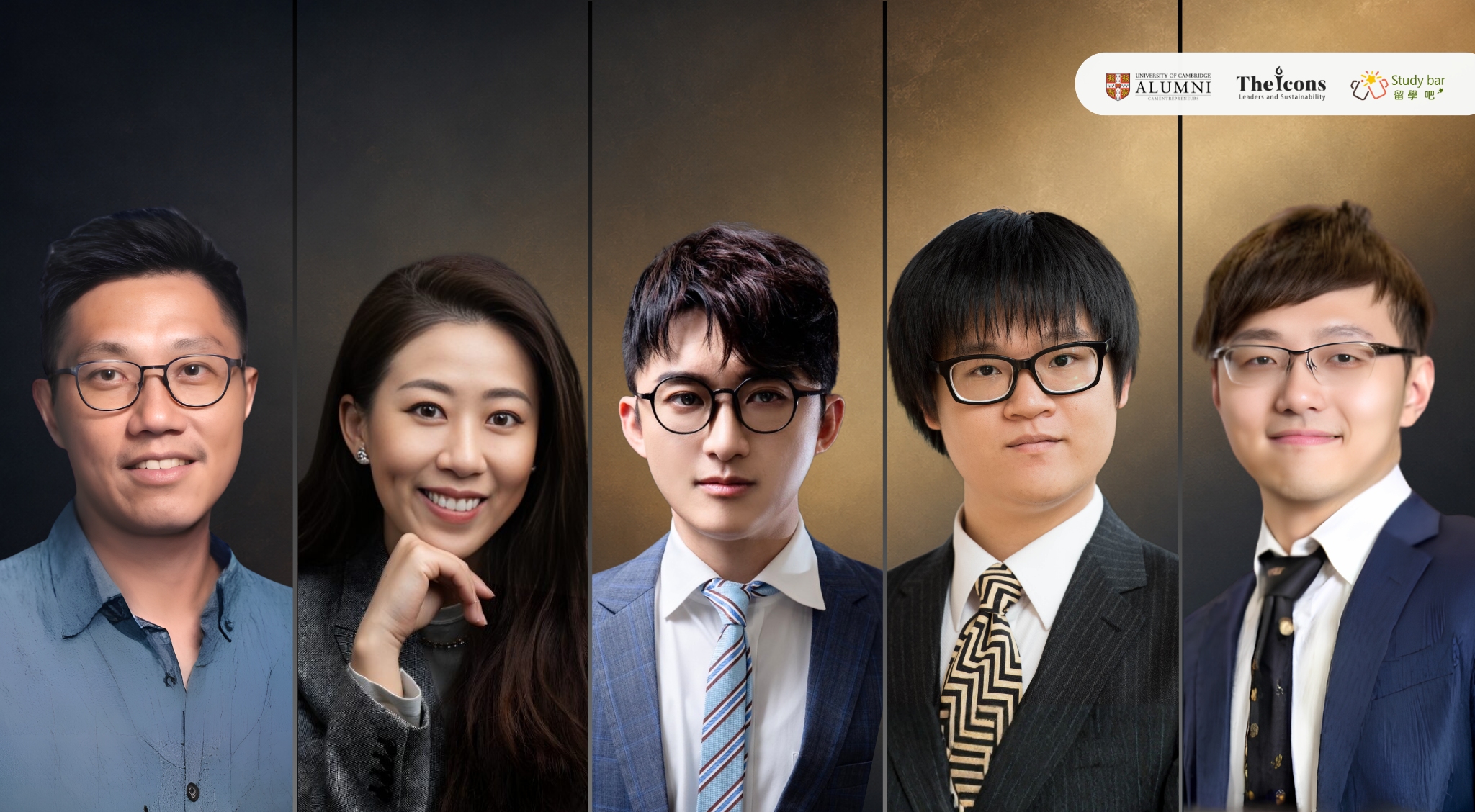
In an era where AI reshapes knowledge, media rewrites trust, and global competition redefines talent, what truly determines whether a person or an organization can be seen by the world is no longer just academic credentials, resources, or technology. It is the ability to transform one’s own cultural capital into comprehensible, trustworthy, and selectable global influence.
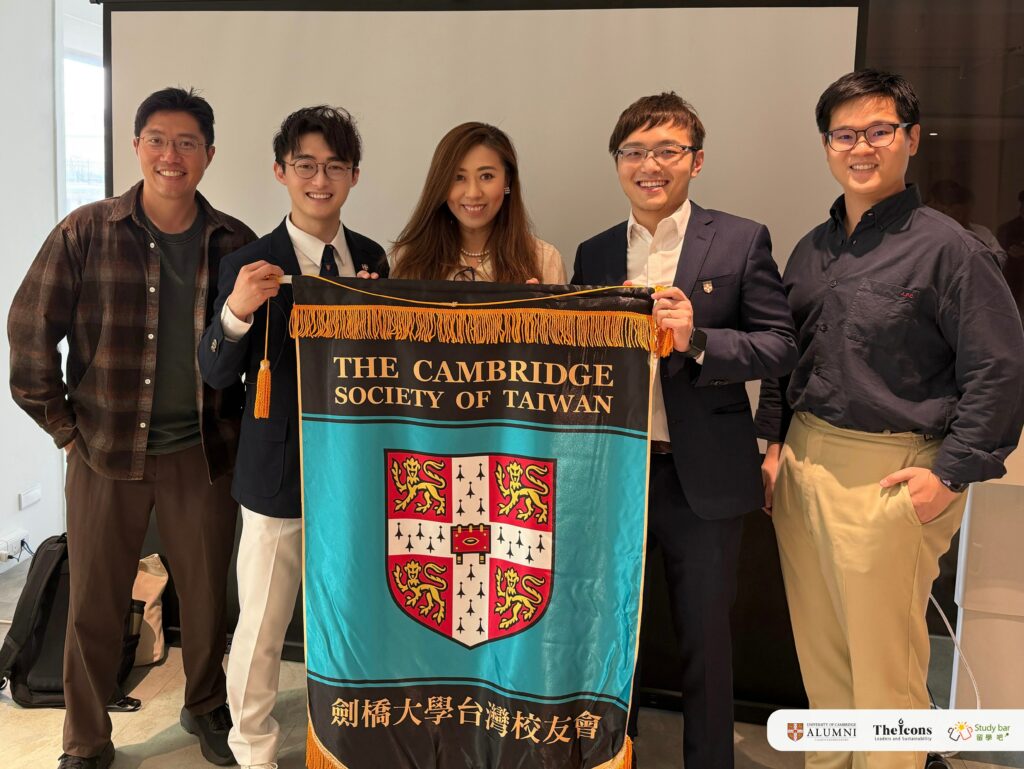
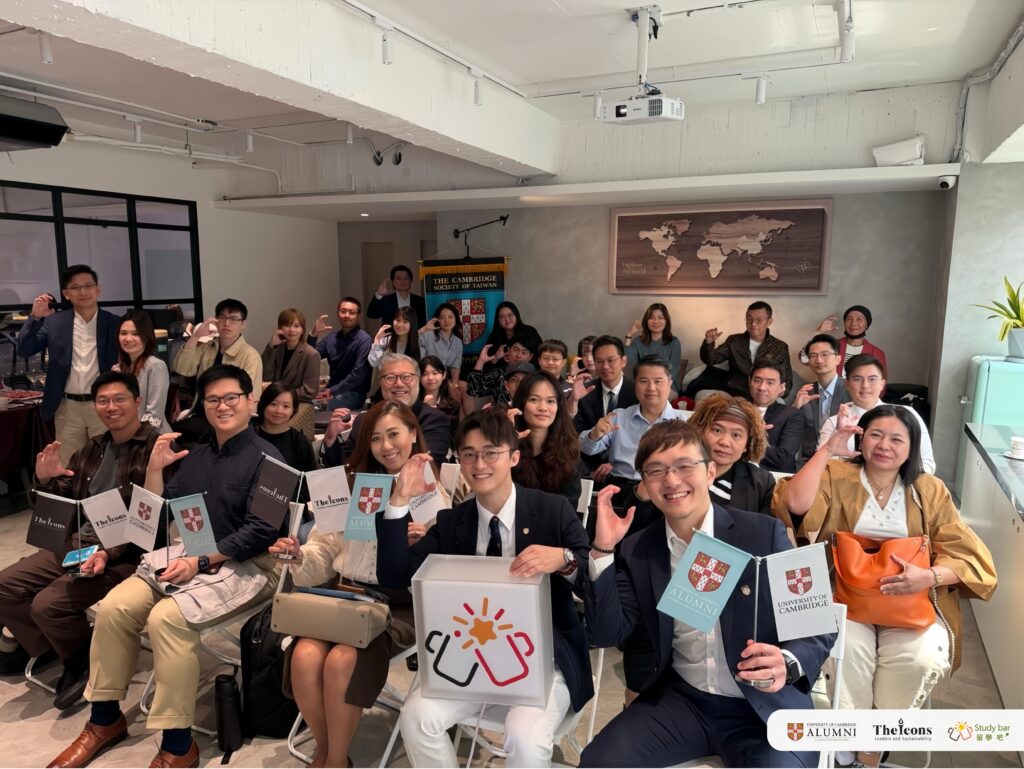
On May 6, 2026, the Taipei chapter of CAMentrepreneurs, a global entrepreneur community of University of Cambridge alumni, convened under the theme “When AI Blurs the Boundaries of Education and Media, How Cultural Capital Becomes Global Influence.” Industry leaders from academia, international chambers of commerce, media, education, and study-abroad community platforms gathered to explore the deep transformations taking place among education, media, and cultural capital. The event was held at Study Bar, a one-stop study-abroad information and exchange platform designed for international students and those planning to study abroad.
The event was hosted by CAMentrepreneurs and co-organized by the Cambridge Society Taiwan, Oxford Society Taiwan, Study Bar, the British Chamber of Commerce in Taipei, The Icons, and The Icons Talk.
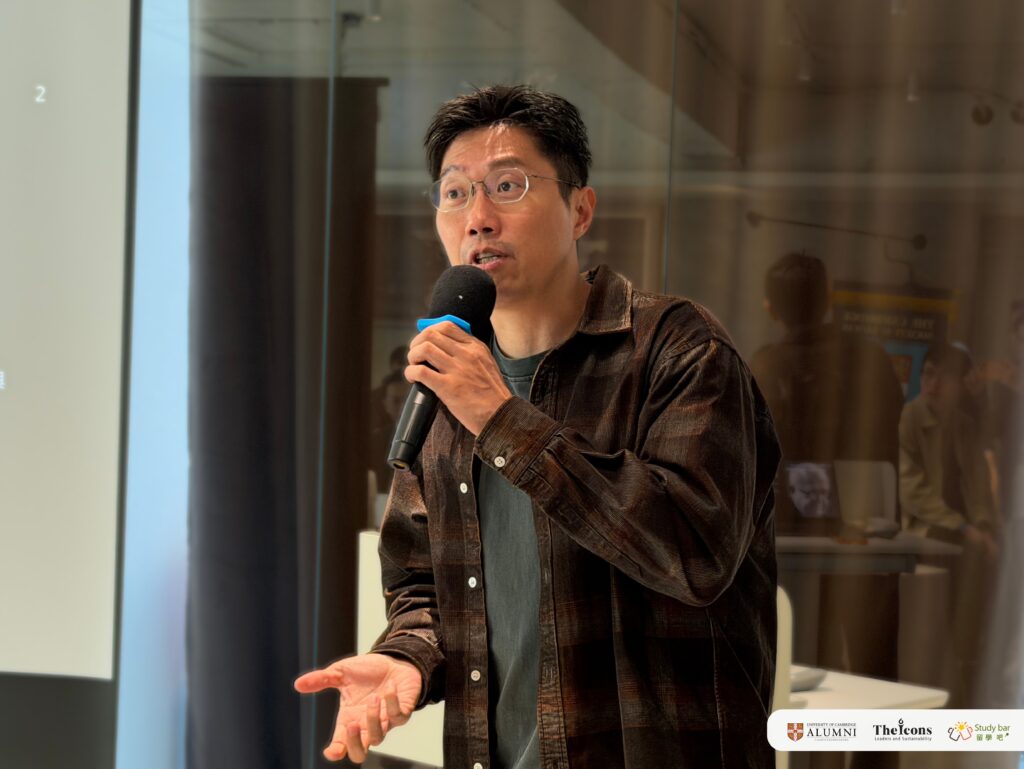
In his opening remarks, Harry Hsu, Taiwan Lead of CAMentrepreneurs and Secretary General of the Cambridge Society Taiwan, pointed out that education used to be seen as a destination – proof of diplomas, qualifications, and social mobility. But today, education is more like the starting point of an influence system. In an age of hyper-connectivity, information overload, and trust scarcity, the truly important question is no longer “What do you know?” but “How are you understood by the world?” Media, publishing, and cultural capital enterprises are playing a crucial bridging role, transforming knowledge into narratives, personal experience into public value, and enabling a leader, a company, or an institution to enter the global trust system.
“If cultural capital stays within a personal background, it’s merely a hidden advantage. Only through narrative, media, education, and cross-cultural communication does it become a public value that the world can recognize,” Hsu said. He stated that this is the core dialogue the forum hopes to initiate: as the boundaries between education and media gradually dissolve, how can individuals, enterprises, and institutions step outside traditional frameworks and transform their knowledge, experience, and cultural depth into influence that is truly seen, trusted, and chosen on the global stage?
Harry Wu: The Next Generation of Talent Will Be Defined by Adaptability
Harry Wu, an Oxford University alumnus and currently a professor at the Bachelor Degree Program of Interdisciplinary Studies at National Cheng Kung University, opened with British thinker C.P. Snow’s classic 1959 lecture at Cambridge, “The Two Cultures,” revisiting an issue that remains unresolved: when science, humanities, technology, and society grow increasingly fragmented, are humans still capable of understanding a complex world?
He noted that Snow’s critique was not just about the gap between literary intellectuals and scientists, but about the entire modern education system’s segmentation of knowledge. As disciplines became institutionalized and expertise highly specialized, society has indeed produced many people who can solve single problems, but few who can understand the logic of the world as a whole.
“The biggest problem today is not a lack of knowledge, but an inability to understand each other.”
Wu believes that the increasing demand for cross-disciplinary talent in enterprises is not only due to rapid market changes, but because the truly important issues of our time do not belong to a single discipline. Public health requires statistics, medicine, policy, and social understanding; AI governance needs engineering, ethics, law, and cultural judgment; and business innovation demands the ability to translate between different knowledge languages.
He further illustrated his point with the historical disappearance of the “polymath.” After the Industrial Revolution, the explosion of knowledge and institutional division of labor pushed Leonardo da Vinci-style generalists to the margins. However, in the AI and globalization era, the world is rediscovering the need for people who can integrate knowledge and understand multiple contexts.
In his view, true interdisciplinarity is never just piecing together several departments; it is the ability to understand, at a higher level, the values, thinking patterns, and problem‑awareness behind different fields. This ability is essentially a cross‑contextual understanding.
“The truly scarce talent of the future is not just those who can complete tasks, but those who can understand different worlds and make those worlds start talking to each other.”
Vicki Wu: Cultural Influence Is No Longer Secondary to Economic Strength
Vicki Wu, Executive Director of the British Chamber of Commerce in Taipei and a University of Manchester alumna, redefined the true meaning of “soft power” in the global business system from the frontline perspective of an international chamber of commerce.
She pointed out that many people tend to understand soft power as cultural packaging, brand image, or even an add-on external to business. But in the age of globalization, what really determines whether international cooperation can succeed is often not the system itself, but whether cultural understanding, value alignment, and trust exist.
“Soft power is the real hard impact,” Wu emphasized.
She stated that the role of the British Chamber of Commerce in Taipei has never been merely a business networking platform; it is more like an intermediary system connecting government, industry, culture, and talent. From renewable energy, finance, healthcare, and automobiles to luxury goods, whisky, and cultural events, what the Chamber deals with daily is, on the surface, business collaboration, but in fact it is the translation between different countries, different values, and different business contexts.
Using the James Bond films as an example, she illustrated how culture becomes part of an industrial value chain. Behind a single movie are not just the entertainment industries, but suits, shoes, cars, beverages, lifestyles, and brand identity. From the British image embodied by James Bond to the bespoke suit culture of Savile Row and British luxury and whisky brands, these cultural symbols ultimately translate into real consumer behavior and commercial influence.
In her view, culture has never been an ornament external to business; it is the gateway to building recognition and trust in global markets.
Consequently, the British Chamber of Commerce has long invested in education and talent development. Whether through the Chevening Scholarship, internship programs, or mentor‑mentee programs, the core is not just to provide resources but to cultivate the next generation of talent capable of truly entering international arenas, through cross‑generational, cross‑cultural, and cross‑industrial connections.
Wu noted that a truly powerful platform does not just bring people together; it builds trust between those who would never have met, and allows resources from different fields to begin flowing and recombining. This cross‑cultural connection ability is among the most important yet most underestimated capabilities in future global competition.
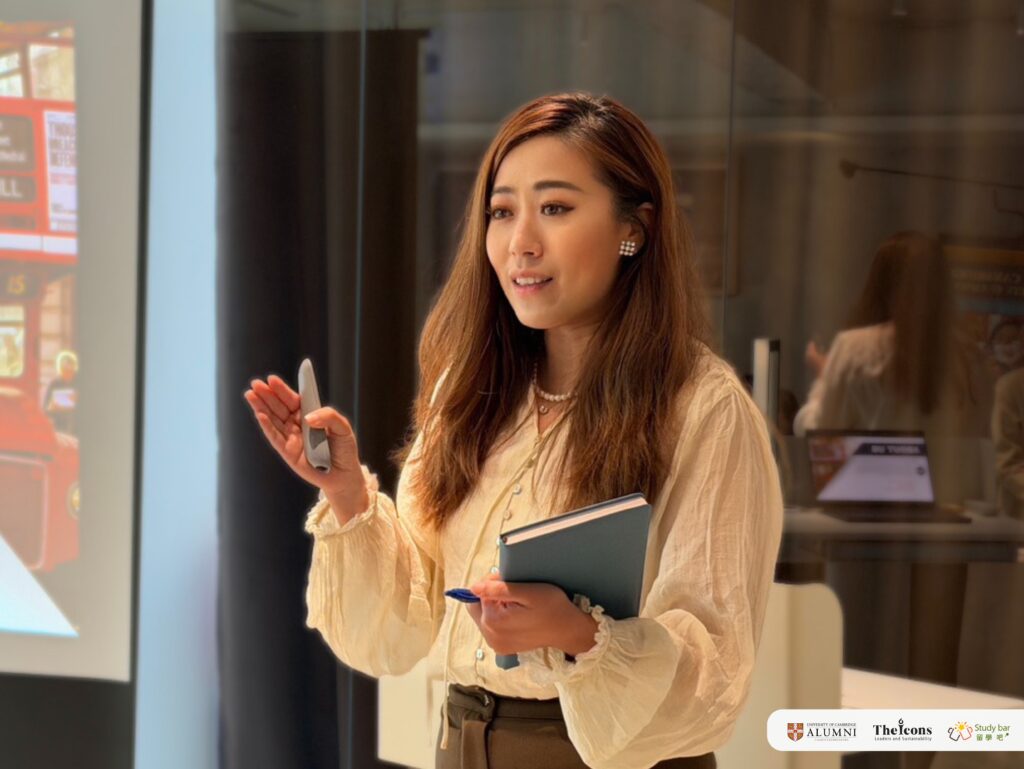
Harry Hsu: The Most Valuable Currency in the AI Era May Be Trust
Harry Hsu, CEO of The Icons Media Group and Secretary General of the Cambridge Society Taiwan, pointed out that as AI begins to intervene in how humans understand the world, “reputation” will no longer be just a part of corporate image, but will become the most important strategic asset in the globalization era.
“In the past, people Googled you; now, people are asking AI whether you are trustworthy.”
Hsu believes that humanity is entering a new “reorganization of cognitive order.” In the future, how a leader, a company, or even a country is understood will increasingly depend on how global information systems describe it. What AI reads is no longer just a single news article, but an entire long‑accumulated set of public narratives, value signals, and international contexts.
Therefore, true high‑level “leader IP” is never about traffic management, but about a public trust project. It concerns how a leader’s vision, values, and decision‑making logic are understood by the world, and whether an enterprise has cross‑cultural credibility and international narrative capability.
Hsu noted that many Asian companies possess extremely strong manufacturing, supply chain, and capital capabilities, but when they truly enter global markets, they often lack the ability to be read by the world. The problem has never been technology; it is the failure to build a narrative system that can be understood by the international community.
“What will be truly scarce in the future is not information, but trustworthy interpretive power.”
He further stated that the biggest shift in future corporate communications is that companies can no longer just manage products and brands; they must simultaneously manage the “leader’s self.” Because when a company prepares for an IPO, cross‑border expansion, overseas factory setup, family succession, or even high‑net‑worth immigration, what the market truly evaluates is often not the business model itself, but “whether this leader is worthy of long‑term trust.”
This is exactly the core focus of The Icons. As a London‑based international leader media and reputation management platform, The Icons is not just an international media outlet, but a global trust‑building system serving leaders worldwide, helping company founders, CEOs, family successors, and high‑net‑worth decision‑makers establish an international context that can be recognized by global media, capital markets, and AI systems over the long term.
“True leader influence is not about letting the world know how successful you are, but about letting the world be willing to entrust part of its future to you,” Hsu concluded.
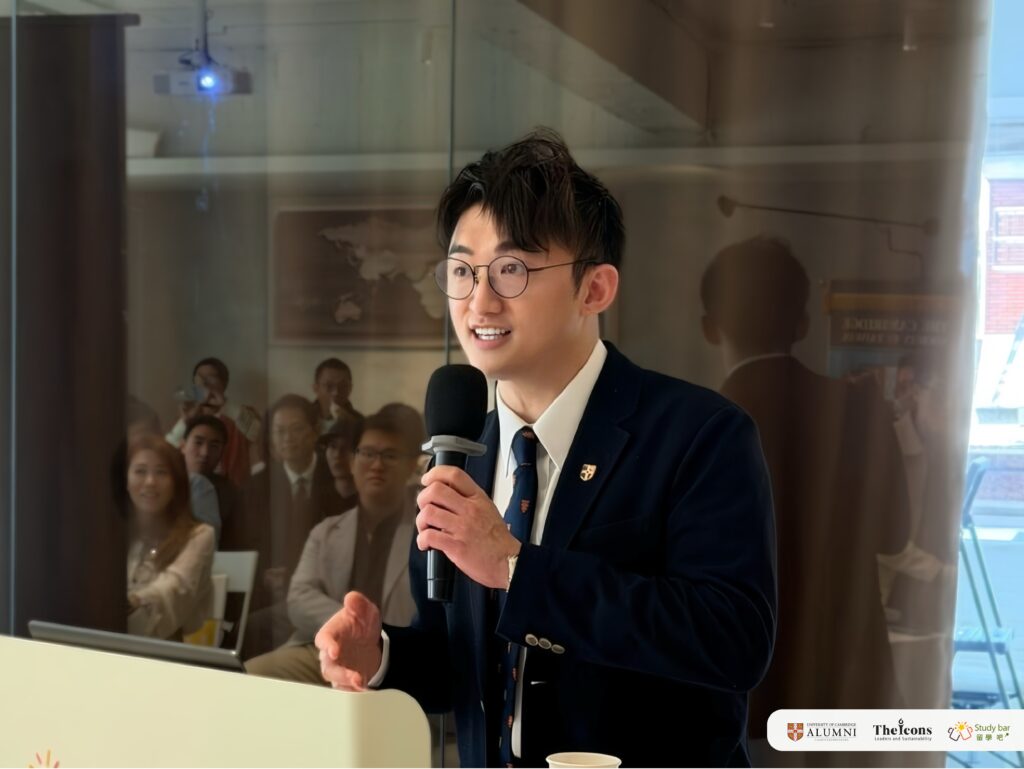
Henry Chen: Language Is Becoming a Bridge to Global Identity
Henry Chen, also a Cambridge alumnus and third‑generation successor of the CAVES EDUCATION, offered a timely perspective from language education: English should not be seen merely as a foreign language, but as an interface for understanding the world.
Citing NVIDIA CEO Jensen Huang’s repeated recent statement – English is the new programming language – Chen noted that the meaning of language ability is changing in the AI era. As AI can quickly translate, rewrite, and generate content, the core of learning English is no longer vocabulary, grammar, or test scores, but how to use language to access knowledge, culture, and the world.
Chen pointed out that AI can indeed significantly reduce the cost of adult language learning. As long as learners have clear goals, they can use AI to rewrite international media articles into materials appropriate for their level. However, children’s English education faces completely different challenges. Children lack not content, but motivation; not information, but curiosity.
Therefore, the direction Dunhuang Education Group has been promoting is to transform English from words on exam papers into a complete learning experience. Whether through social‑emotional learning, global citizenship education, drama interaction, STEAM camps, digital reading platforms, or AI speaking practice, the core is to help children understand that language is not for exams, but for expressing themselves, exploring, and participating in the world.
He proposed three keywords: Input, Interaction, Identity. High‑quality content inspires learners; interaction gives meaning to language; and identity allows children to understand who they are and how to express themselves to the world.
“Future leaders will not be those who speak English most like native speakers, but those who can understand the complexity of the world, ask good questions, and communicate with others using warm language,” Chen said.
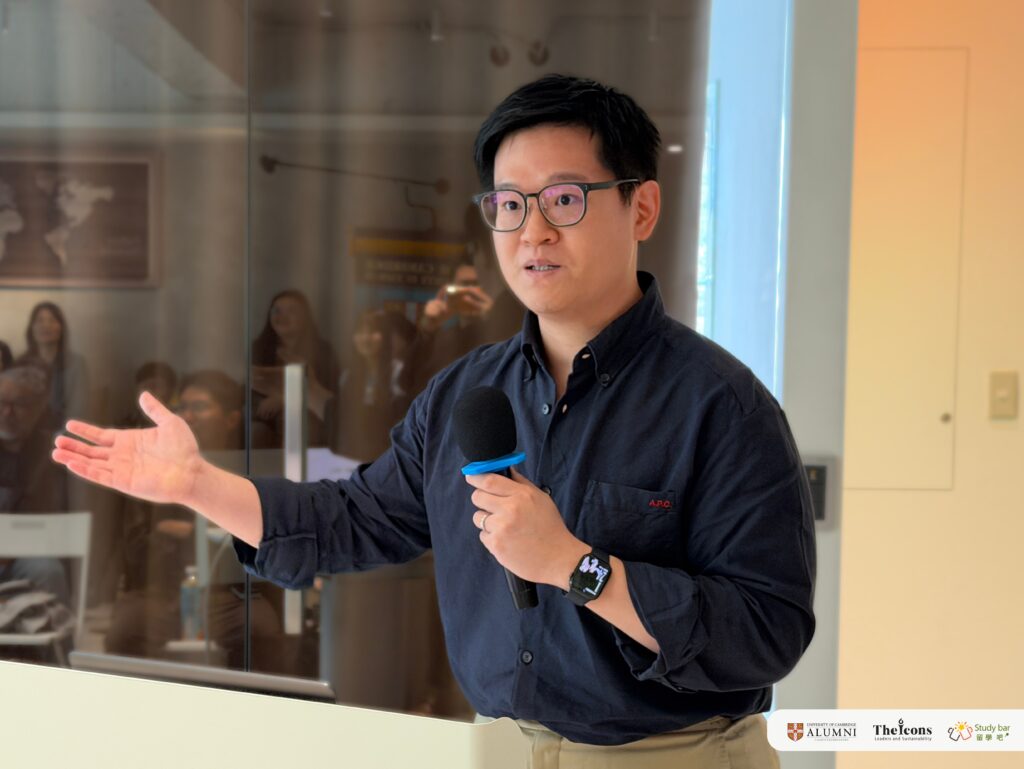
Derek Chou: International Education Shapes How People See the World
Derek Chou, co‑founder of Cambridge Education and also secretary of the Cambridge Society Taiwan, has worked in the study‑abroad industry for many years. He responded to the proposition of “how cultural capital transforms into long‑term influence” from the perspectives of education, community, and international talent mobility.
He noted that in the past, when Taiwanese society discussed studying abroad, the focus was often on university rankings, application results, and the value of diplomas. But what is truly important has never been just which university a student enters, but whether they thereby open up a new worldview, reconsider their relationship with the world, and find their place in the era of globalization.
“A degree is a ticket, but the story is what makes people remember you,” Chou said.
After returning to Taiwan in 2019, he founded Cambridge Education, engaging in study‑abroad counseling. Through his work, he gradually realized that what many young people truly lack is not just information, but a sense of direction for the future. The value of traditional study‑abroad agencies lay in solving information asymmetry. But in the age of AI and social media, information is already abundant; the real difficulty is finding one’s own coordinates in the vast flood of information.
Chou believes that the true competitive edge of the next generation is no longer grades or degrees, but “the ability to understand the world.” Those who can go far are often not the best test‑takers, but those who can understand different cultures, create cross‑disciplinary connections, and transform their own experiences into public value.
Therefore, Study Bar, founded by multiple UK and US alumni, aims to be not just a study‑abroad information platform, but an international education community for Taiwan’s younger generation. Through communities, media, podcasts, alumni stories, and cross‑school exchanges, studying abroad becomes not a one‑time application service, but a talent network that can be accumulated and passed on over the long term.
“One person’s experience is his own asset; but one generation’s experience should become a public asset accessible to the entire community.”
Hence, whether it is Cambridge Education or Study Bar, their core revolves around the same thing: how to help more young people in Taiwan establish their own international context and life direction before truly going out into the world.
In his view, the truly important thing about education is never just making someone leave their original place, but after seeing a larger world, still being willing to turn back and become a bridge for the next generation.
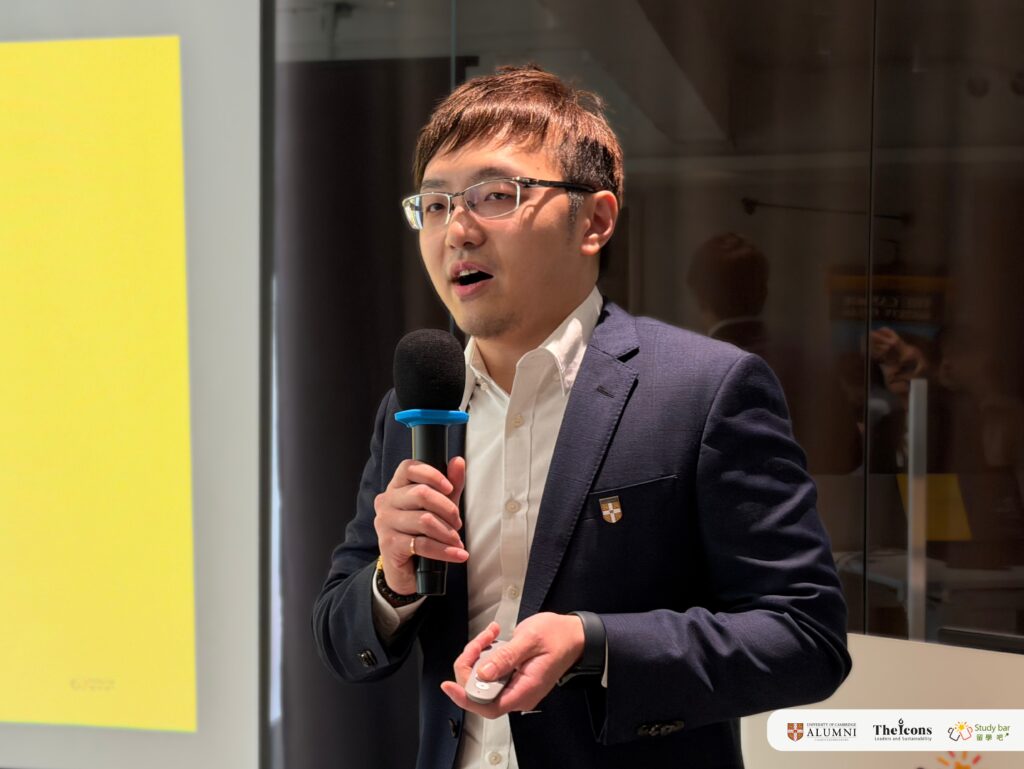
CAMentrepreneurs: Reimagining How Cultural Capital Shapes Global Influence
CAMentrepreneurs is a global entrepreneurial community for alumni, officially supported by the University of Cambridge and initiated by renowned alumnus entrepreneur Richard Lucas. It has built active networks in multiple cities across Europe, Asia, and North America, connecting founders, business leaders, and thought practitioners from technology, finance, manufacturing, sustainability, education, media, and start‑ups.
Unlike typical entrepreneurial platforms focused on resource exchange or business matchmaking, CAMentrepreneurs places greater emphasis on how knowledge is transformed into action, how culture builds trust, and how educational backgrounds, international experience, and professional networks can further become influences that drive change in the world.
This resonates precisely with the theme of this CAMentrepreneurs Taiwan Forum: “Beyond the Boundaries of Education and Media: How Cultural Capital Translates into Global Influence.” Today, education is no longer just the accumulation of diplomas, and media is no longer just a tool for exposure. What truly matters is whether an individual or an organization can convert its knowledge, story, value, and international connections into a public influence that can be understood, trusted, and chosen by the world.
Richard Lucas noted that CAMentrepreneurs has never been solely concerned with how entrepreneurs succeed, but with how people can remain honest, responsible, and trustworthy in a rapidly changing world. It seeks to create a space where leaders from different cultures, generations, and industries can engage in deep dialogue.
“In such a network, innovation is not just a race of speed and scale; it is a deliberation about value choices, cultural understanding, and long‑term impact. People do not just exchange business cards or look for opportunities; they see, in each other’s stories, experiences, and judgments, what value they themselves can leave for the world.”
In the concluding remarks of the forum, Derek Chou, founder of Cambridge Education, stated that the significance of CAMentrepreneurs lies not only in connecting Cambridge and global alumni resources, but also in ensuring that cultural capital no longer remains merely on personal CVs, but can be transformed into a truly world‑oriented influence through education, media, entrepreneurship, and cross‑cultural collaboration.
Chou pointed out that true global influence is never the victory of a single ability, but the long‑term integration of knowledge, narrative, trust, culture, and action. When a person can articulate clearly where they come from, what they believe, and where they are going, their cultural capital is no longer just past accumulation, but becomes a reason for the future world to be willing to understand them.
“CAMentrepreneurs, as a global entrepreneurial community connected by University of Cambridge alumni entrepreneurs, has long been committed to fostering exchanges between different cities, industries, and generations. In this forum, we also posed a collective question about future influence: When education is no longer just a diploma, media is no longer just exposure, and culture is no longer just a background, what kind of people and organizations will truly leave their mark on the global stage?”
Recommend for you:
CAMentrepreneurs Taipei 101 ESG Forum: Governance Sets the Ceiling for Trust Capital







-1-scaled-e1698983370831-120x86.jpg)