
Twentieth-century diplomacy was built on political capital. Around the negotiating table sat generals, diplomats, and politicians, representing sovereignty, ideology, and military power.
In the twenty-first century, however, that table has quietly begun to change. The influence of multinational corporations has steadily expanded into spaces once reserved exclusively for the language of state power. Yet for years, this shift remained informal, implicit, and largely unacknowledged at an institutional level.
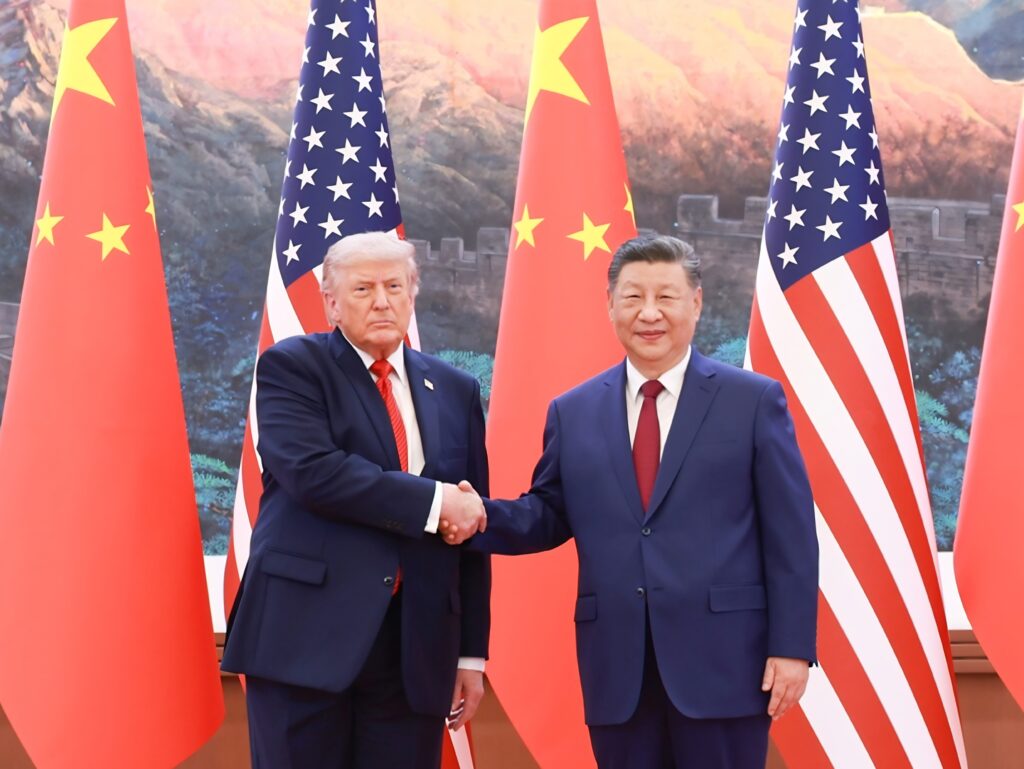
Until 14 May 2026, at Beijing’s Great Hall of the People, when the world saw that transformation with unprecedented clarity.
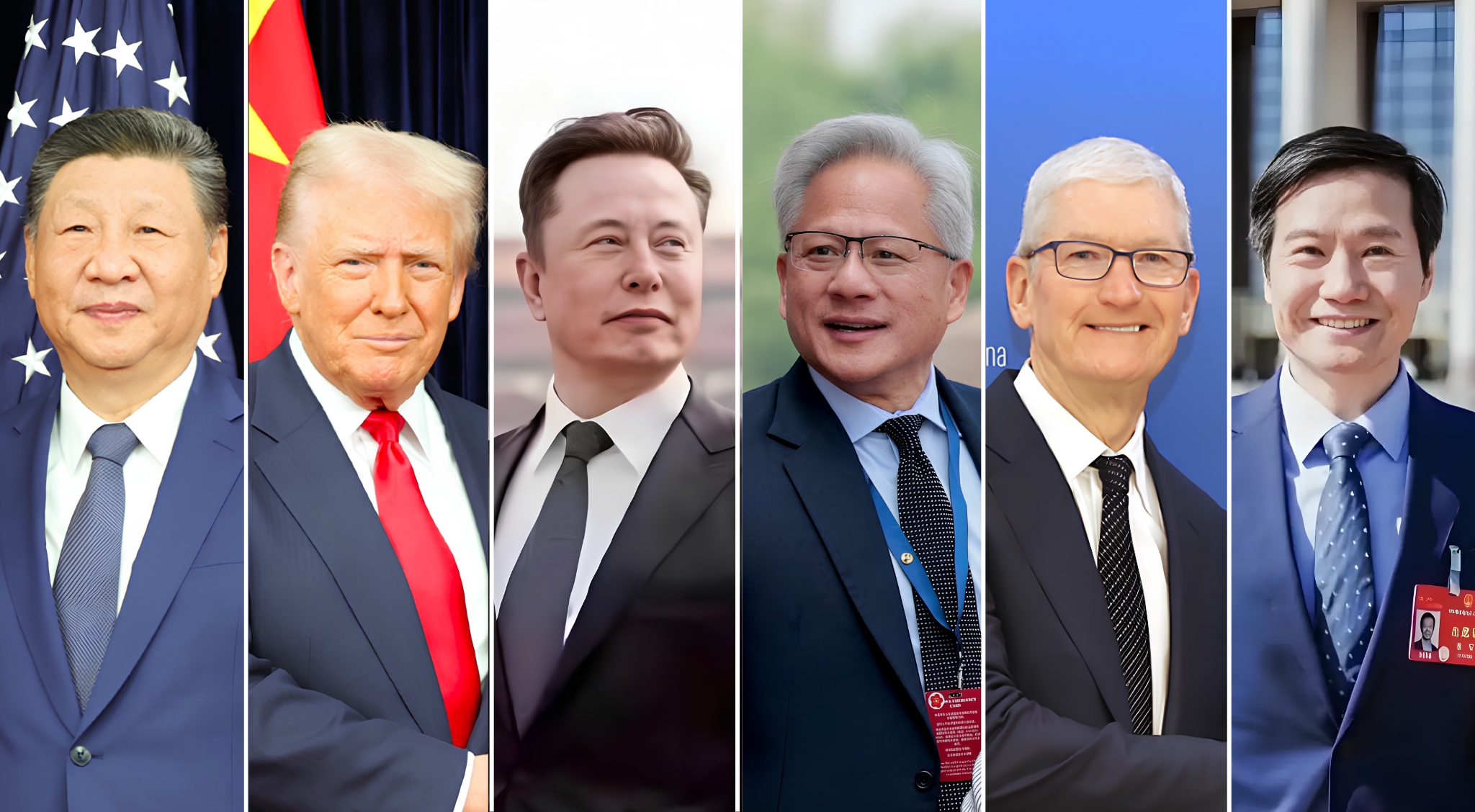
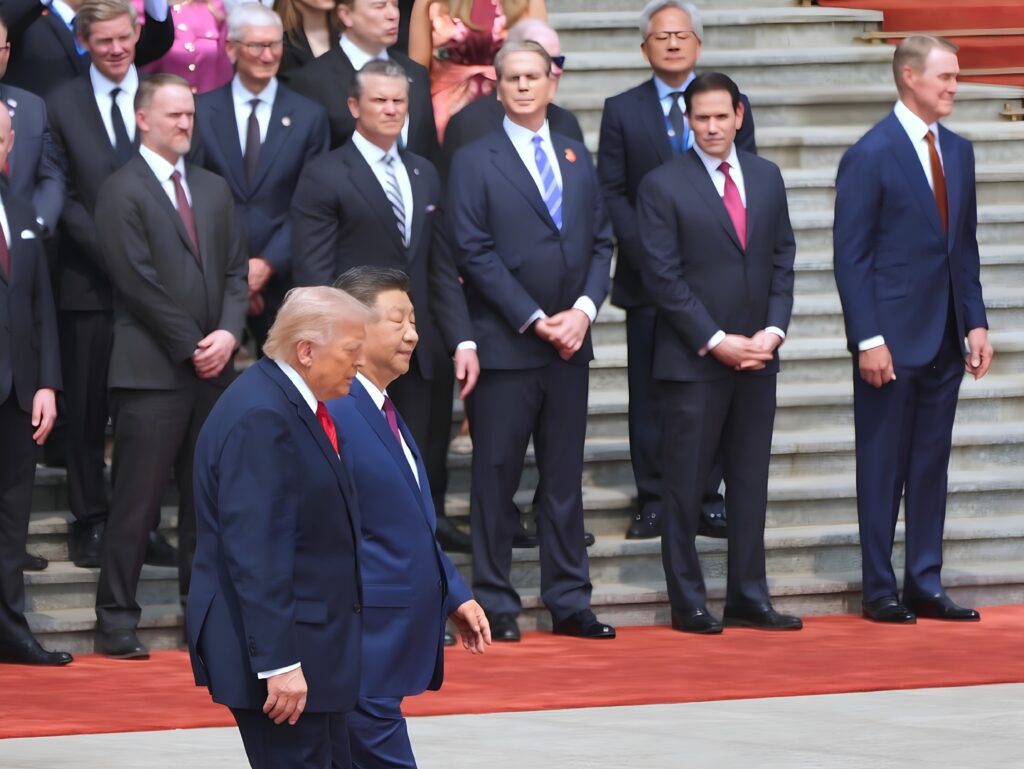
US President Donald Trump arrived alongside what observers described as a “CEO supergroup”, 17 of America’s most influential business leaders, and personally introduced them one by one to Chinese President Xi Jinping. Standing behind him were figures who collectively embodied the commanding heights of American technology and capital: Tesla and SpaceX founder Elon Musk; NVIDIA chief executive Jensen Huang, the dominant force in global AI chips; and Apple chief executive Tim Cook, head of the world’s most valuable technology company.
Commentators described the delegation as representing “half of corporate America”. These executives symbolised far more than Silicon Valley’s innovation engine. Together, they reflected America’s dominance across artificial intelligence, semiconductors, electric vehicles, consumer electronics, and global capital markets. As they entered the hall alongside Trump, they appeared not merely as businessmen, but as the collective projection of an entire American technological and industrial order.
Yet those seated opposite were no less formidable.
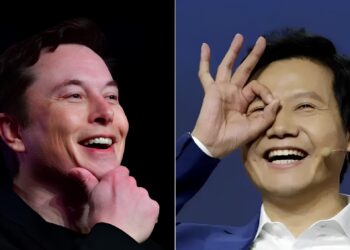
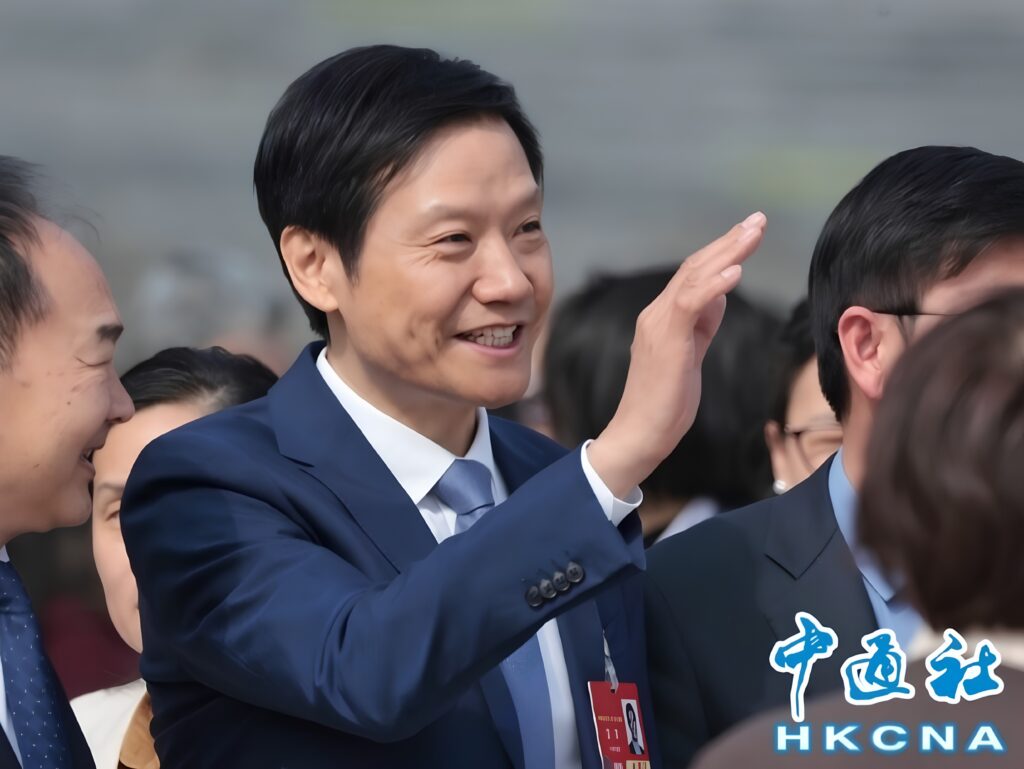
Xiaomi founder Lei Jun walked directly towards Musk, patting him lightly on the shoulder before shaking hands and raising a Xiaomi 17 Pro for a photograph. Musk turned to the cameras and responded with a playful wink (See: From Looking Up to Standing Equal: Thirteen Years of Reputation Capital for Trump, Xi Jinping, Musk, and Lei Jun). Nearby sat ByteDance chief executive Liang Rubo, quietly observing the occasion. Under his leadership, TikTok has amassed more than one billion active users worldwide, while becoming one of the most scrutinised and strategically sensitive Chinese technology platforms in Washington. Lenovo chairman Yang Yuanqing also witnessed the historic evening.
Behind these Chinese executives stood something equally powerful: the world’s most comprehensive manufacturing supply chain, a rapidly ascending electric vehicle sector, an expansive smart hardware ecosystem, and China’s accelerating push to shape the next global technological order.
As Chinese and American technology leaders sat around the same table, the world saw, perhaps for the first time with such clarity, two rival industrial superpowers confronting one another face to face.
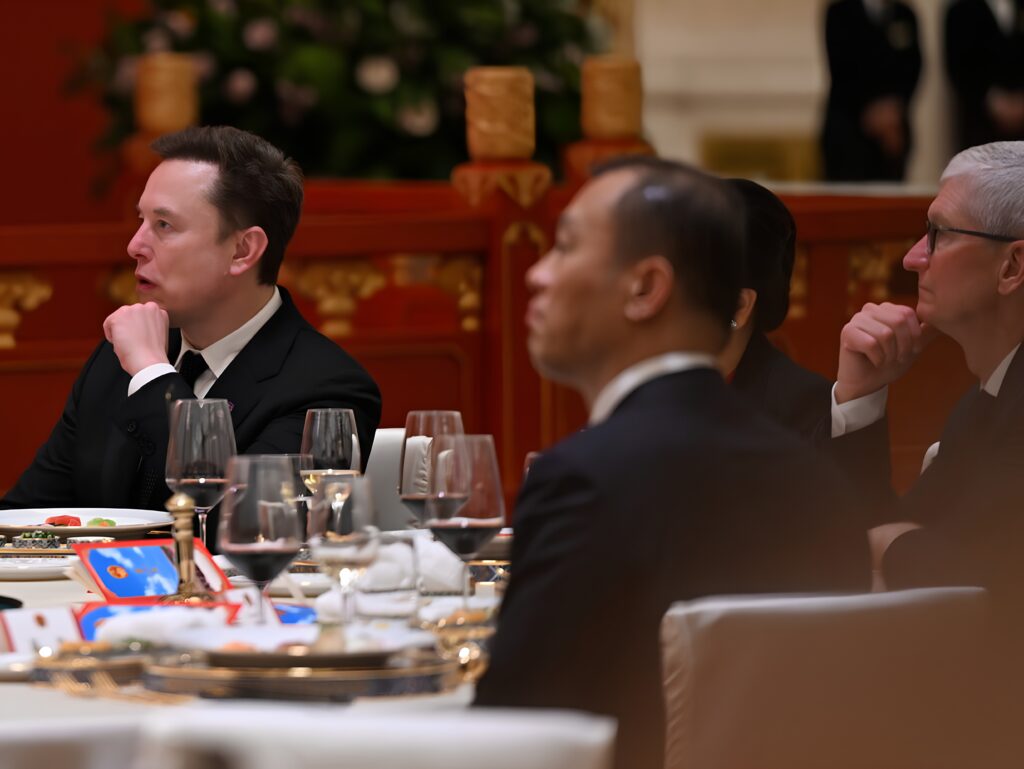
The evening banquet resembled less a diplomatic dinner than a silent summit on global power itself. Every handshake, glance, and exchange carried implications far beyond commercial cooperation. At stake was the redistribution of influence over technology, manufacturing, capital, and markets for the coming decade.
The United States seeks to preserve its leadership through AI, semiconductors, and innovation. China is advancing rapidly through manufacturing depth, supply chain efficiency, and market scale.
What appeared to be a calm and ceremonial dinner was, in reality, a rehearsal for the next world order.
Who will define the coming era? Who will command the arteries of the global industrial system?
The answer may already have begun to emerge, quietly, between the silhouettes of the world’s most powerful entrepreneurs.
A New Kind of Diplomacy
Trump’s visit was the first by a sitting American president to China in nearly a decade. The delegation he assembled was, by any measure, extraordinary. Alongside Musk, Huang and Cook came Goldman Sachs chief David Solomon, BlackRock‘s Larry Fink, Boeing‘s Kelly Ortberg, and more than a dozen other executives whose companies, between them, employ millions of people on both sides of the Pacific.
Before departing Washington, Trump wrote on Truth Social:
“I will be asking President Xi to ‘open up’ China to these great American business people, who will do a fantastic job, just as they have done in the United States, helping China reach new levels of success.”
Donald Trump, President of the United States, Truth Social, May 2026
The language was vintage Trump — blunt, transactional, deliberately informal. But the substance behind it deserves careful attention.
In previous eras, chief executives accompanied heads of state on trade missions as a form of commercial theatre. They were there to sign agreements, pose for photographs and provide cover for whatever political objectives their governments were quietly pursuing. They were, in the bluntest terms, props.
What happened in Beijing was categorically different. Musk, Huang and Cook were not props. They were the argument. Their presence — their reputations, their global standing, the weight their names carry in boardrooms and on trading floors from London to Shanghai — was itself the most powerful instrument Trump brought to the negotiating table.
This distinction matters enormously. It suggests that the diplomatic capital of a nation is no longer determined solely by the size of its military or the sophistication of its foreign service. It is also determined, increasingly, by the quality and depth of its leadership reputation ecosystem. That is a genuinely new variable in the geopolitics of the twenty-first century.
Musk: The Gravity of a Name
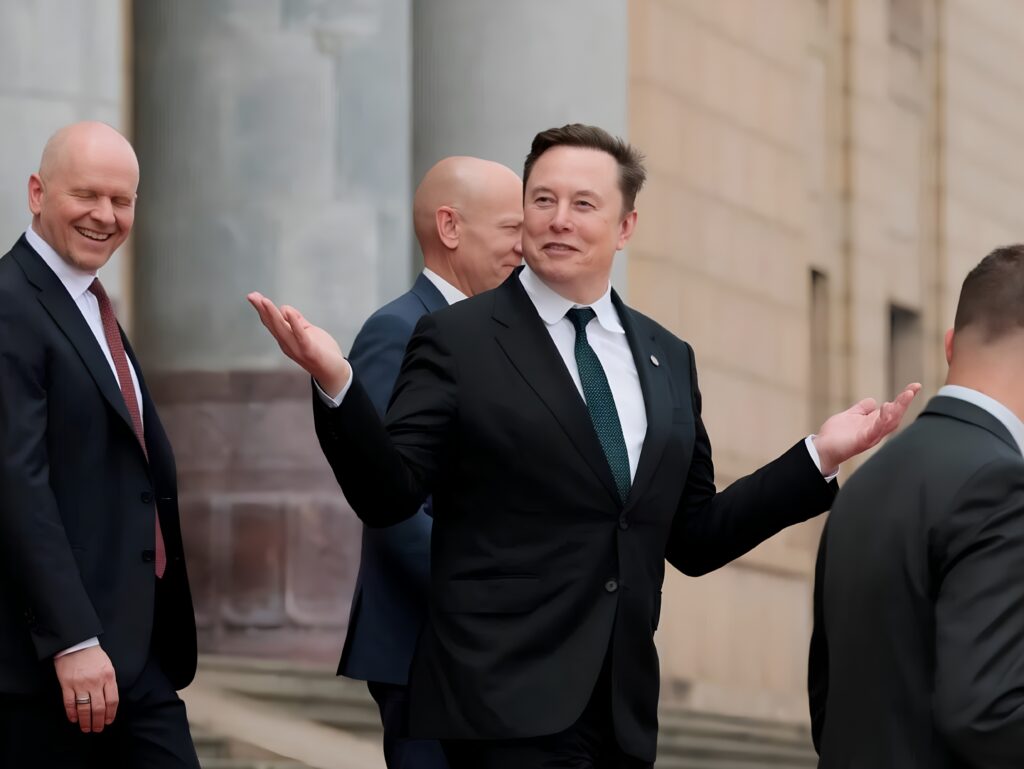
No figure at the Beijing summit illustrated this more vividly than Musk.
He said very little throughout the visit. He sat at the state banquet and accepted, with what appeared to be patient good humour, a succession of Chinese executives who wished to be photographed with him. He gave a brief remark to journalists as he departed. He winked at Lei Jun’s camera.
That wink was seen by more than 52 million people on Weibo within hours.
This is what a truly mature reputation looks like from the outside. It requires no active management. It generates influence without effort. The symbols Musk has spent decades accumulating — electric vehicles, space exploration, artificial intelligence, the restless disruption of established industries — communicate instantly, across every language and cultural context, without him needing to utter a word.
Upon leaving Beijing, he told reporters simply:
“We got a lot of good things done.”
Elon Musk, Chief Executive, Tesla Beijing, May 2026
Six words. Entirely sufficient.
Jensen Huang: The Art of the Calculated Entrance
If Musk’s power lay in his stillness, Jensen Huang’s lay in his timing.
NVIDIA’s chief executive was not, initially, on the delegation list. His absence was noted and questioned by the press. Then, as Air Force One refuelled in Anchorage, Alaska, Huang boarded the plane. When asked to explain himself, he offered the simplest possible answer:
“President Trump invited me.”
Jensen Huang, Chief Executive, Nvidia Beijing, May 2026
The understatement was deliberate and entirely effective.
NVIDIA’s graphics processing units are the indispensable hardware of the global artificial intelligence race. No serious discussion of the technology’s future can proceed without reference to the company Huang leads. His presence in Beijing was therefore not merely a gesture of corporate goodwill. It was a signal — to markets, to governments, to rivals — that the world’s most strategically significant technology company was engaged at the highest level of international affairs.
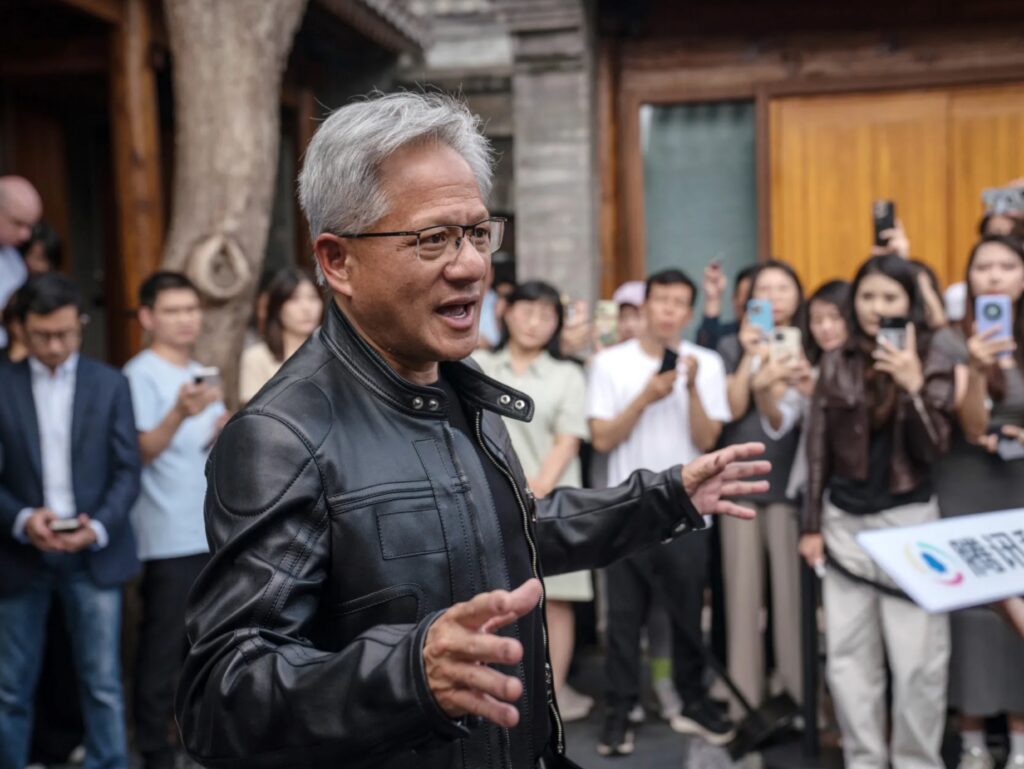
Later, Huang ate a bowl of noodles in a Beijing hutong alley. The image circulated widely across Chinese social media. He remarked afterwards:
“This morning’s welcome ceremony was exhilarating. President Xi was very inspiring, very warm and gracious, as was President Trump.”
Jensen Huang, Chief Executive, Nvidia Beijing, May 2026
A bowl of noodles. A few words of genuine warmth. In the hands of a leader whose reputation is sufficiently established, even the smallest gesture carries meaning.
Tim Cook: The Power of Saying Nothing
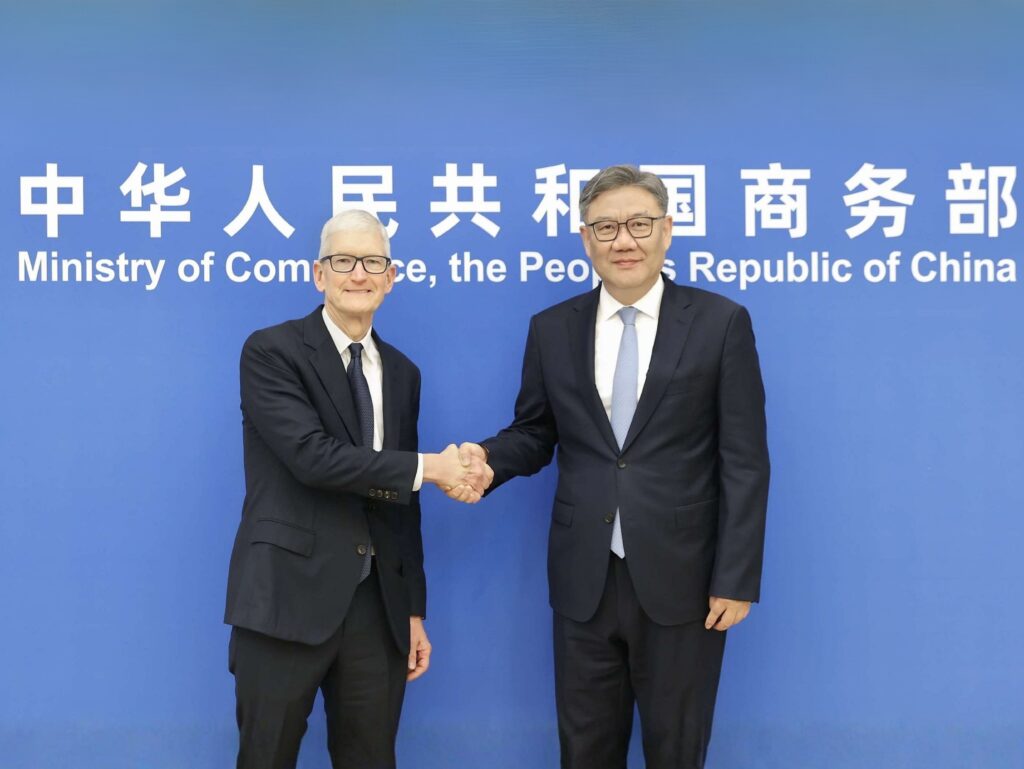
Apple’s chief executive arrived in Beijing, gave a thumbs-up to the assembled press corps, smiled, and said nothing at all.
He did not need to speak. Apple’s supply chain in China sustains millions of jobs. The commercial relationship between the company and the Chinese market is so deeply embedded in the economic interests of both countries that it has, over time, acquired something close to diplomatic immunity. Cook’s presence communicated all of this without a syllable.
There is a lesson here that is easily overlooked. The most durable reputations are not built on eloquence or visibility. They are built on years of genuine commitment — to markets, to partners, to the unglamorous work of creating real value in real places. Cook’s authority in that room derived not from anything he said or did on the day, but from three decades of patient, serious engagement with China that preceded it.
Lei Jun, Liang Rubo, Yang Yuanqing: Three Models of Chinese Reputation Capital
The Chinese executives present at the state banquet that evening represented three distinct approaches to building leadership reputation on the global stage.
Lei Jun’s gesture — crossing the room to photograph himself with Musk — was widely read in China as a moment of fanboy enthusiasm. That reading is too shallow. Lei has spent thirteen years studying Musk with the focused attention of a serious competitor. Xiaomi’s electric vehicles now outsell the Tesla Model 3 in China. The YU7 attracted more than 240,000 deposit commitments within eighteen hours of its pre-sale launch. When Lei Jun walked towards Musk that evening, he was not seeking validation. He was making a statement — quietly, lightly, and entirely on his own terms. Lei has said publicly on multiple occasions that benchmarking against the world’s best is the only path to genuine innovation. In the Great Hall of the People, that philosophy found its most vivid expression.
Liang Rubo’s presence carried a different kind of weight. ByteDance is the only purely digital platform company among the Chinese executives at the table — and its place there was earned through years of painstaking compliance work in the American market. Other Chinese internet companies of comparable scale were absent. ByteDance was not. The distinction is instructive. According to multiple reports, Liang has consistently argued that the company’s survival in complex international environments rests on the genuine value its products deliver to users, not on external circumstances. That argument, sustained over years of intense regulatory scrutiny, is what brought ByteDance its seat.
Yang Yuanqing represents the third model: the slow, deliberate accumulation of institutional credibility over three decades of global operations. Lenovo is the world’s largest personal computer manufacturer. Yang is a regular presence at Davos. His reputation is not built on a single dramatic moment but on the compound interest of consistent, serious engagement with the international business community over a career spanning thirty years. In that room, his presence required no explanation whatsoever.
Three executives. Three strategies. Three forms of reputation capital that are genuinely different from one another, and yet all sufficient to earn a place at the most consequential diplomatic table of the decade.
Reputation as National Infrastructure
The deeper significance of what happened in Beijing on the evening of 14 May 2026 will take time to absorb fully.
What we witnessed was not merely a trade summit with an unusually glamorous guest list. We witnessed the clearest demonstration yet of a shift that has been building for years: that the diplomatic capacity of a nation is no longer determined solely by the traditional instruments of statecraft. It is also determined by the depth and quality of its leadership reputation ecosystem, by the number of figures it can field, at a moment of geopolitical consequence, whose names carry sufficient weight to alter the texture of a negotiation simply by being present in the room.
Musk’s gravitational pull, Huang’s strategic positioning, Cook’s institutional depth — set alongside Lei Jun’s confident assertion of parity, Liang Rubo’s hard-won legitimacy, and Yang Yuanqing’s decades of accumulated trust — these are not merely personal achievements. They are national assets. And on this particular evening, they were deployed as such.
The twentieth century was built on armies and alliances.
The twenty-first is being built on something quieter, more durable, and considerably harder to acquire.
Recommend for you:
NVIDIA CEO Jensen Huang: AI and Sustainability Dual Engines Driving a New Era