
China hosted both the trilateral meeting and the APEC Economic Leaders’ Meeting in Shenzhen. From reducing nuclear risks to working together on food, energy and jobs, the two declarations show where great-power dialogue and sustainable development intersect.
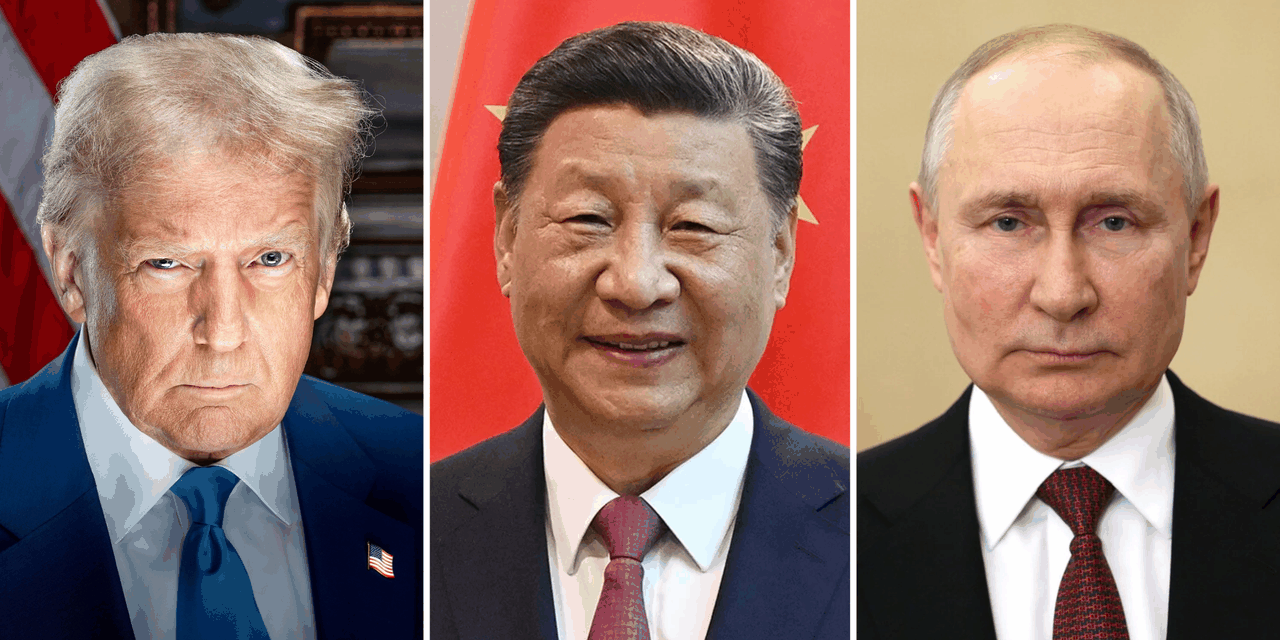
On 19 November 2026, Chinese President Xi Jinping met US President Donald Trump and Russian President Vladimir Putin at the Kylin Villa in Shenzhen. The declaration issued afterwards contained a detail worth noting: both visiting leaders thanked China for hosting the meeting. That acknowledgement appears in the texts published by the White House and China’s Ministry of Foreign Affairs. All three countries also committed to further talks on reducing nuclear risks and preventing the proliferation of nuclear weapons.
Xi also chaired the Asia-Pacific Economic Cooperation (APEC) Economic Leaders’ Meeting on 18 and 19 November, after which the 21 member economies issued a leaders’ declaration. The trilateral meeting dealt with relations among major powers and international security. APEC focused on economic co-operation across the region. Shenzhen gave both sets of participants a place to discuss shared interests. China brought the American and Russian presidents together with its own leader and chaired a regional meeting spanning trade, innovation, energy and livelihoods. Continued dialogue can reduce uncertainty, while a more stable regional environment gives governments and businesses greater scope to invest in work whose benefits take years to materialise.

China brings three powers to the table
According to China’s account of the meeting, Xi spoke of the responsibility of major powers to maintain peace and called for international disputes to be addressed through diplomacy. Putin said Russia was ready to engage China and the US on an equal footing and manage differences, citing open trade, food security and energy security as areas for co-operation. Trump spoke of the three countries’ shared responsibility for international stability and said he looked forward to working with Xi and Putin. Their declaration reaffirmed that a nuclear war cannot be won and must never be fought, and committed them to further dialogue on nuclear risk and non-proliferation. The undertaking speaks directly to SDG 16, Peace, Justice and Strong Institutions.

Direct dialogue gives leaders a chance to explain their priorities and their officials a basis for following up. In Shenzhen, the three governments set out their common concerns in a public document against which later progress can be assessed. China convened and chaired the meeting and took part in publishing its outcome. The American and Russian leaders’ public thanks offer a clear record of how the hosts’ role was received. The longer-term value of the meeting will depend on whether officials stay in contact and carry through on the promised dialogue.
Energy and food security are tests of co-operation
The trilateral declaration reaffirmed the importance of stable energy flows and set out plans to increase the production and supply of refined petroleum products. The APEC leaders’ declaration addressed reliable and affordable energy and the exchange of experience on emergency response, the recovery of critical infrastructure and the management of strategic reserves. Read alongside SDG 7, Affordable and Clean Energy, the documents raise two practical questions: how economies can keep supplies reliable, and how each can bring low-emissions energy into its long-term plans. In remote communities, the affordability of electricity and the speed with which it is restored after a disaster directly affect communications, care and the ability of businesses to stay open.
The APEC declaration also called for stronger agri-food supply chains, improvements in food safety and nutrition, and reductions in food loss and waste. These commitments relate to SDG 2, Zero Hunger, and SDG 12, Responsible Consumption and Production. For farmers, crops have to pass through storage, transport and sale before a harvest becomes income. For consumers, disruption can change prices and narrow choice, with less room to adjust for households on tight budgets. Economies that share ways to detect weak points early, manage disruption and reduce losses can improve outcomes for producers and consumers alike.

China puts resources behind APEC’s innovation agenda
As the 2026 host, China gave priority to openness, innovation and co-operation. In Shenzhen, Xi called for better regional digital infrastructure, wider applications of artificial intelligence and deeper economic and trade ties. He announced that China would provide US$20 million to support practical APEC co-operation. China also announced plans to set up an Asia-Pacific community research centre in Shenzhen and establish co-operation bodies for digital technology, cross-border data flows, clean energy and the development of small and medium-sized enterprises. The funding and institutional plans give participants concrete commitments to follow.
The declaration from the 21 economies also encouraged efforts to close the urban–rural digital divide, strengthen digital literacy and vocational skills, and help micro, small and medium-sized enterprises gain access to affordable tools. These priorities reflect SDG 8, Decent Work and Economic Growth, and SDG 9, Industry, Innovation and Infrastructure. Training can widen opportunity when it reflects the work people do and they have time to attend and use what they learn. Smaller firms also face costs for equipment, changes to working practices and staff training. The benefits will be visible in whether remote areas gain functional infrastructure, workers can adapt as jobs change, and smaller businesses reach markets previously beyond them.
From a summit to lasting partnerships
SDG 17, Partnerships for the Goals, offers a way to consider what comes next. The three governments identified subjects for further dialogue, while APEC’s economies found shared ground on regional economic co-operation. Their declaration welcomed a framework for trade digitalisation covering 2027 to 2030 and backed progress on paperless trade, cross-border e-commerce and digital customs procedures. Easier document exchange and clearer procedures could lower the administrative cost of entering new markets. Delivering those changes requires continued work among public authorities, businesses and technical teams.
APEC works by consensus, with voluntary and non-binding commitments. Progress after Shenzhen depends on how member economies turn agreements into policies and joint projects. The results can be tested against practical questions. Is less food lost before it reaches shops? Can communities restore essential services sooner after damage to the grid? Do workers have access to training that helps them move into new roles? China’s financial and institutional commitments can be assessed in the same way, by tracking how resources are used, whether partnerships continue and what support participants receive.
Two things happened in Shenzhen. China hosted a trilateral meeting at which the three leaders publicly undertook to continue talking. APEC members also agreed on priorities that affect food, energy and employment. The American and Russian leaders’ thanks recorded the goodwill of the encounter. Whether that goodwill lasts will be apparent in places far from the summit: in the reliability of a trade route, the time it takes to reconnect a remote community to the grid, or whether a course leads to a new job. Those are the terms on which the lasting value of the co-operation will be judged.

Editor’s Picks
Damilola Ogunbiyi: The Energy Transition Cannot Serve Only the World That Is Already Lit