
In the contemporary international market, the evaluation of art is no longer confined to mere visual aesthetics or auction prices. Instead, it has shifted towards a more macroscopic significance: ‘cultural impact’ and ‘social capital’. From Europe to Asia, major corporations and public institutions are seeking cultural content that can materialise ESG (Environmental, Social, and Governance) principles, attempting to establish a completely new commercial ecosystem capable of resolving social issues across transnational contexts.
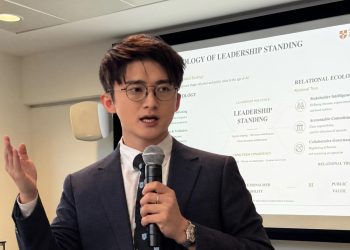
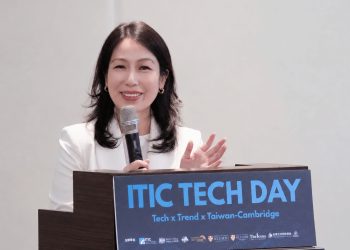
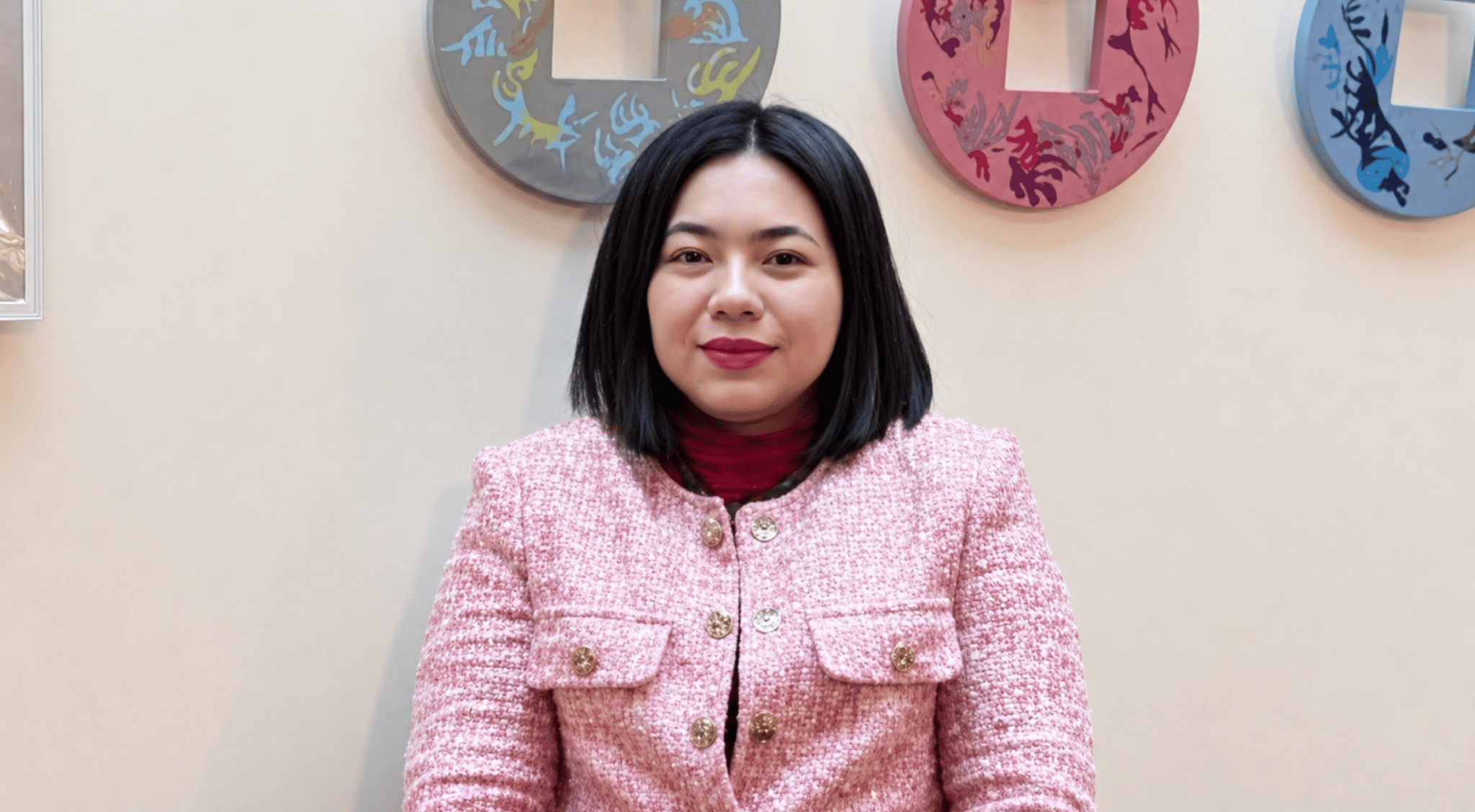
In an exclusive interview with the British global entrepreneurial media outlet The Icons, Kate Huang, founder of Young Power Art, stated: “When a work is placed within an international cultural context, the artist bears a social responsibility. When your influence grows, you must centre yourself on mindfulness, ensuring the world changes for the better.”
For her, art is not merely an expression of the inner self; it is an effective tool for intervening in social governance and cultural diplomacy.
For contemporary art to stand out in a fiercely competitive global market, the work itself is no longer sufficient to constitute absolute differentiation. The key lies in whether the creator possesses an irreplaceable narrative ability.
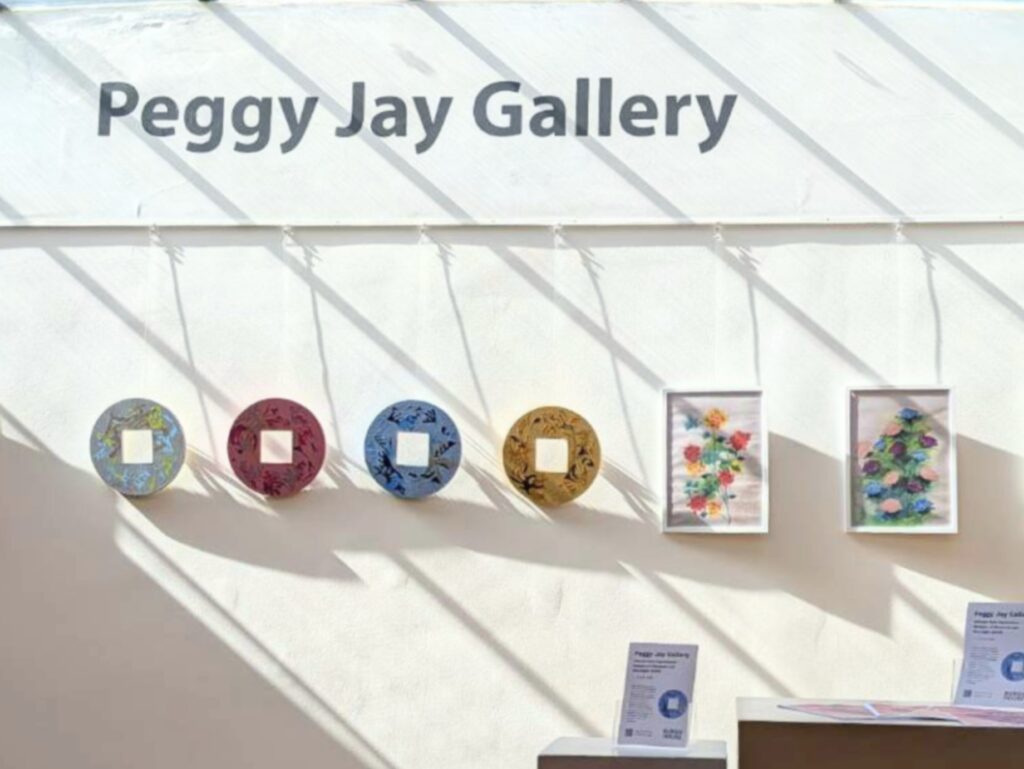
From winning the inaugural ‘Cross-border Co-prosperity Award’ from the Taiwan Creative Content Agency (TAICCA) to her solo exhibition at Burgh House in London, Kate Huang’s experiences demonstrate how an artist can break free from traditional frameworks, transform cultural heritage into sustainable social impact, and reposition herself within the global supply chain.
Refusing to Cater to the Mainstream: Elevating Narrative Value through Cultural Context
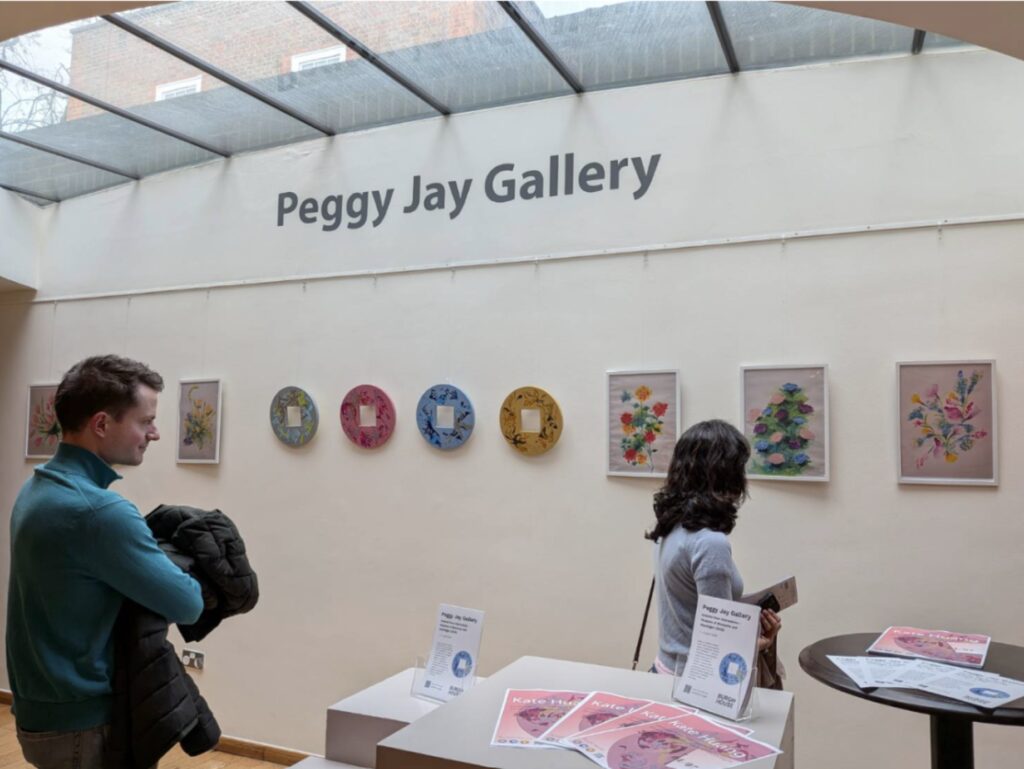
When creators from emerging markets attempt to penetrate the European mainstream art scene, the most common strategy is often to cater to Western perspectives. However, Kate Huang’s solo exhibition at Burgh House in London chose an alternative route. She intertwined Eastern philosophy, calligraphic vocabulary, and neuronal totems without deliberately modifying her style to fit in. “I do not want to be someone else’s shadow; I merely hope to retain the most original creative elements,”
she said.
European audiences were highly curious about her saturated visual language, rich in Eastern heritage, and often attempted to understand her work through existing national classifications. In light of this phenomenon, Kate Huang views it as an excellent opportunity for cultural exchange. “When an audience asks if this is ‘Taiwanese style’, it means my work is unique enough to have become a cultural label.”
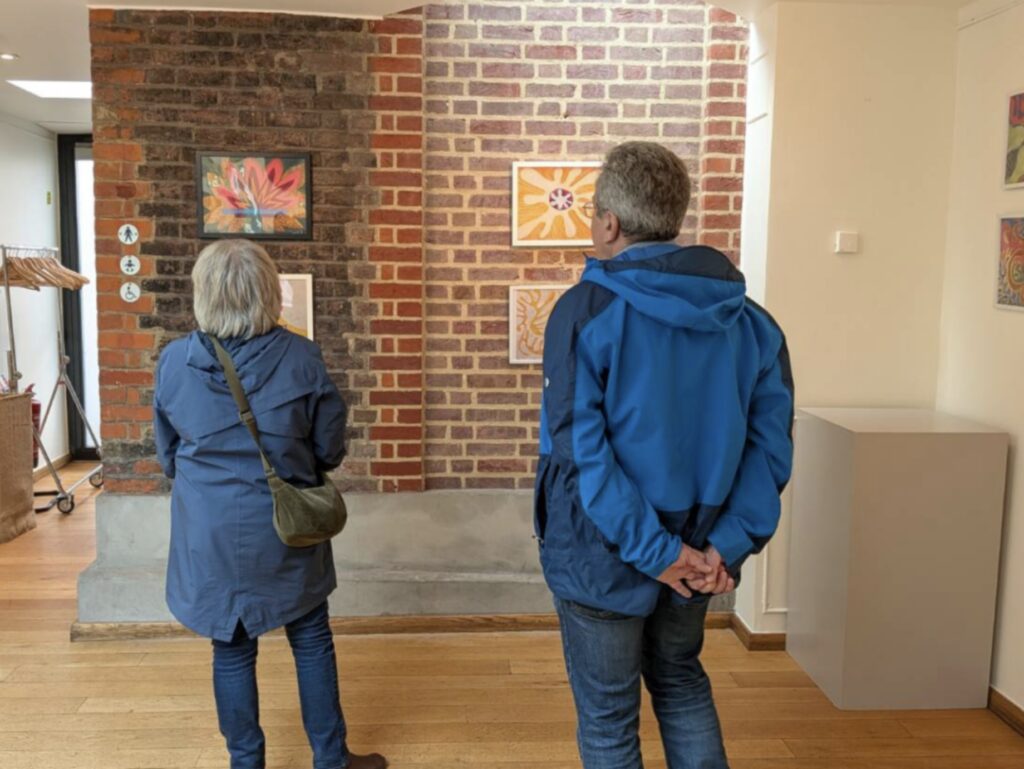
Artworks with penetrative power often possess clear cultural outlines. For Kate Huang, stepping onto the international stage has never been about diluting her own colours to gain Western mainstream approval, but rather allowing this uniqueness to become a new coordinate for overseas viewers to proactively explore. When she uses everyday language at Burgh House to unpack the transforming imagery of brain cells and neurons within her canvases, she has actually organically conveyed the depth of her life, tempered in Taiwan, to her European audience.
Art Intervening in Public Governance: Facing the Challenges of Cross-Disciplinary Dialogue
Transitioning from the sphere of personal creation to the centre of public narrative brings many challenges. Kate Huang’s turning point came when she realised that art cannot simply remain in galleries; it must become an ‘effective asset’ understood by healthcare systems, government bodies, and even corporate ESG reports. Her in-depth collaboration with psychiatrists stems from a desire to propel painting from emotional expression into a therapeutic mechanism with practical social significance.
However, institutional trust is not achieved overnight. “The most difficult part is actually convincing the establishment that you are not merely an idealist, but that you can genuinely deliver,”
Kate Huang noted, astutely pointing out the pain points when cultural workers interface with public systems. Compared to music therapy, which yields easily quantifiable data, painting therapy frequently faces scepticism within Taiwan’s medical and policy systems regarding the difficulty of evaluating its efficacy.
“If the government or society cannot understand your data, they will not necessarily recognise the therapeutic effects; this is truly a pity,”
she remarked. Faced with institutional conservatism, Kate Huang does not rush to argue, but rather chooses to piece together a ‘track record’ of media reports, exhibition practices, and medical advocacy.
Once the social utility of art can be concretely verified, which proves that it can truly remove the public stigma attached to mental illness and establish a mechanism for those in recovery to reintegrate into society, art practically breaks the framework of aesthetics, transforming into a concrete solution for social problems.
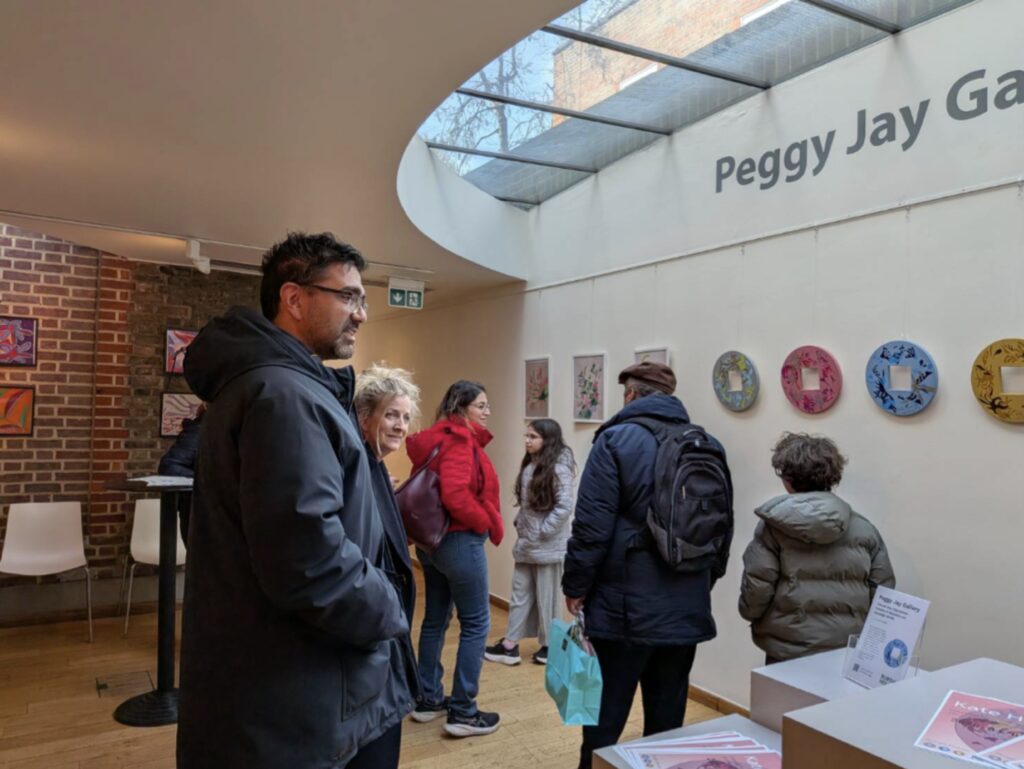
Kate Huang: Only When Rationality and Sensibility Go Hand in Hand Can Culture Truly Be Passed Down
To strike a balance between commerce and culture, passion alone is insufficient for long-term support; one must construct a stable operational logic. Kate Huang’s commercial and creative methodology is built upon a seemingly contradictory yet highly unified framework, combining the Eastern philosophy of ‘unity of knowledge and action’ with modern mind-mapping management tools. “Most companies lean towards sensibility when discussing cultural aspects,”
Kate Huang analyses the current market, “but my original intention is to place rationality and sensibility on the same central axis.”
Kate Huang’s ‘heart-brain unity’ strategy is applied not only on the canvas but also actualised in her approach to children’s art education. At Young Power Art’s educational sessions, she refuses to provide model answers or rote technical training. “I do not want children to paint exactly like the teacher,”
Kate Huang explains the profound meaning behind this decision. “Because when they grow up, no one can paint their lives for them.”
By forsaking the display of quick results, Kate Huang extends the cycle of impact, guiding her audience back to the essence of experience, and establishing self-identity through the process of trial, error, and reorganisation. This methodology proves that the sustainable management of the cultural industry does not need to rely on one-off, flash-in-the-pan effects, but rather on solid education and companionship, allowing creativity and independent thinking to become sustainably accumulated social capital.
Subverting Industry Frameworks and Forging the Power of Social Restoration
Kate Huang transforms her own life experiences and journey of recovery into the driving force behind a medical art foundation, building a platform for patients with mental health conditions to be heard and fundamentally altering society’s cognitive framework regarding psychological illnesses. “When you yourself are part of the problem, people are actually more willing to work with you.”
Her candour has become her most powerful cross-disciplinary resource.
Facing an international market full of variables, Kate Huang views her future strategy with immense resilience. “Art will not remain merely art, and culture will become increasingly diverse and inclusive. As long as we are willing to accept things that seem impossible, they can truly happen.”
From a creator to a cultural entrepreneur driving ESG impact, Kate Huang has proven that the ultimate value of art lies not only in leaving behind a masterpiece, but also in how a creator utilises their own experiences and ideals to mend the fractures within society.
When art is no longer confined to gallery displays, but can be concretely implemented as a force for social restoration, its worth has already broken through the values of the traditional art market, becoming a sustainable asset with long-term impact.
Recommend for you:
From London to the World: Kate Huang, Founder of Young Power Art — Art as Both Mirror and Illusion